Post Name

Losing your motorcycle key is stressful, but the solution is almost always simpler than riders think. Whether you’re dealing with a chipped key, a worn ignition, or a code you can’t find, there are clear steps you can follow to get back on the road fast.

This guide explains how replacement motorcycle keys really work — from cutting and key codes to immobilizer compatibility — with examples from real motorcycle brands and models.

What to Do First When You Lose Your Motorcycle Key


Act quickly but stay calm. Most motorcycles can be re-keyed or cut from code without replacing expensive parts.

Check for the key code.

Look for a small alphanumeric code stamped on the ignition, seat lock, fuel cap, or original key tag. If available, a new key can be cut in minutes.

Confirm your key type.

Bikes like the BMW C600 Sport, C650GT, G310R, Suzuki Boulevard, Yamaha YZF-R1, or Honda CB/CBR/CRF may use different blanks, cuts, or chips.

Decide between a dealer or emergency locksmith.

Dealers rely on VIN lookups but may take days or weeks. A locksmith can often produce a working key on-site.

If the key was stolen, secure the bike.

A locksmith can re-key the ignition or erase the lost transponder from your system.

Cutting a New Motorcycle Key: How It Actually Works


Motorcycle keys fall into three categories:

mechanical, transponder (chipped), and keyless fobs. Replacing them works differently for each.

Mechanical Keys (most Honda, Yamaha, older Suzuki, Vespa, Piaggio)

These are simple metal keys. They can be cut even if you lost the original — locksmiths read the code or decode the lock.

Examples from your catalogue with mechanical key options:

Honda: CB Series, CBR Series, CRF, FourTrax, Goldwing, XR/XL

Yamaha: YZF-R1, YZF-R6, XJR400, FJR1300, SR400

Suzuki: Boulevard (S40/S50), Intruder (700/750/800/1400), Madura, Savage

Vespa / Aprilia / Ducati / Piaggio: ZADI key ranges C5001–C6475

These can be cut to code and shipped via replacement key delivery.

Transponder Keys (chipped)


Modern bikes often use embedded RFID chips. A new key must be:

Cut to the correct mechanical pattern

Programmed to the bike’s immobilizer or ECU

Examples with chip or immobilizer systems:

Suzuki models using 4D60 DST40 chips

Indian / KTM / Honda ZADI-system motorcycles

Newer BMW Motorrad models

A dealer or well-equipped locksmith can program transponder keys. Many quoted ECU replacements are unnecessary — a good locksmith can usually pair a new chip directly.

Keyless Fobs


Some Harley-Davidson and BMW models use proximity fobs. Losing one often immobilizes the bike entirely. Replacements require programming, and towing may be necessary.

Examples from your listings:

Harley-Davidson saddlebag and fob-linked models (LL226–LL450 range)

BMW keyless systems on touring and maxi-scooter models

Where Key Codes Are Found (and Why They Matter)


Key codes are the fastest, cheapest way to get a replacement key. They define the exact cut pattern.

Common key code locations:

Ignition barrel underside

Seat or helmet lock

Fuel cap inner plate

Owner’s manual or original key tag

ZADI-based systems (used by Vespa, Aprilia, Ducati, Piaggio, Indian, KTM) typically use numeric ranges like C5001–C6475, which Mr-Key can cut perfectly.

If no code is present, a locksmith can decode the lock manually — no need for new hardware.

Dealer vs. Emergency Locksmith: Which Is Better?


Dealers

Can order keys by VIN

Often slow and expensive

May insist on full ignition or ECU replacement

Useful for rare models or restricted fobs

Emergency Locksmiths

Faster and mobile

Cheaper than dealerships

Can cut by code, impression, or lock decoding

Can program many transponders without ECU replacement

For many riders — especially with models like Honda CB/CBR, Yamaha YZF, Suzuki Intruder, BMW G310R, Vespa/Aprilia/Piaggio — locksmiths are the most efficient choice.
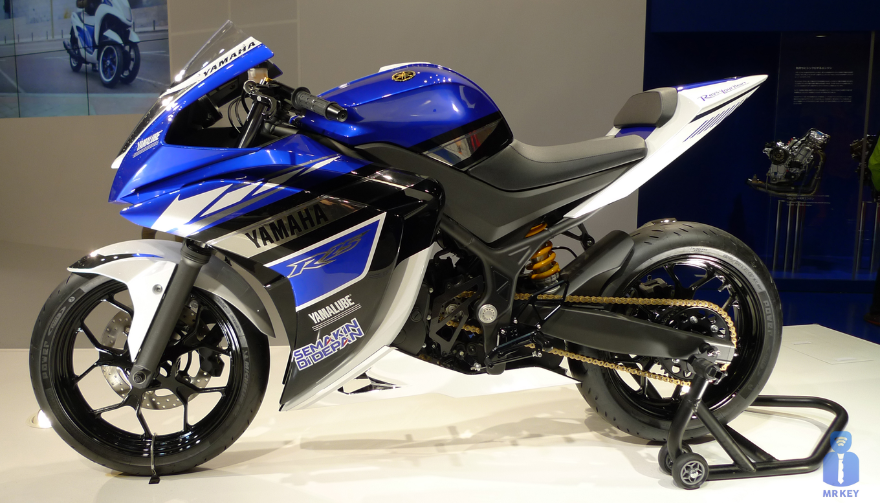
Examples of Motorcycles Mr-Key Supports


BMW

C600 Sport

C650GT

G310R

Honda

CB Series

CBR Series

CRF Series

FourTrax

Goldwing

XR / XL

Honda ATV (A00–A99 / B00–B99 codes, 1983–2022)

Yamaha

YZF-R1

YZF-R6

XJR400

FJR1300

SR400

Suzuki

Boulevard S40 / S50

Intruder 700 / 750 / 800 / 1400

Madura

Savage

4D60 DST40 transponder models

Harley-Davidson

Saddle Bag LL226–LL450

Keyless fob models

Vespa / Aprilia / Ducati / Piaggio

ZADI key codes C5001–C6475

Multiple standard ignition and seat locks

KTM / Indian

Supported in ZADI Indian/Vespa/KTM/Honda product line

How to Avoid Losing Your Key Again


Make a spare immediately and store it safely.

Add a bright keychain or Bluetooth tracker.

Know your emergency start PIN (for keyless bikes).

Keep your key code and VIN stored separately from the bike.

The AA advises riders to secure spares and document key numbers.

FAQ


Can a locksmith make a motorcycle key without the original?

Yes. Locksmiths can cut by code or decode your ignition/lock manually.

Can I get a new key using my motorcycle’s VIN?

Dealers can often retrieve the factory key code from the VIN, though delays are common.

What if my lost key had a chip?

You’ll need both cutting and immobilizer programming. Locksmiths handle this for most brands.

Do I need to replace the ignition?

Rarely. Only if the key was stolen and security is compromised — not because the key is lost.

Need a Replacement Motorcycle Key Fast?


If you need a mechanical, transponder, or ZADI-system motorcycle key — or a code-cut replacement delivered to your home — we specialize in fast, professional solutions.

Visit our shop at mr-key.com to order a replacement key or request an emergency locksmith.
Related Posts

How to identify the correct BMW key case?

How to identify the correct BMW key case?

Ordering the wrong BMW key case leads to delays, extra cost, and keys that won’t start your car. BMW has used multiple key designs across generations , so identifying your key type before buying is essential. This guide shows you how to correctly identify your BMW key case and avoid costly mistakes. Why Accurate Key Identification Matters BMW keys are part of the vehicle’s immobilizer system. If you choose the wrong case, your internal electronics and transponder chip may not fit correctly, leaving you with a remote that won’t start your engine. Many BMW key fobs look similar but differ in frequency, board layout, and blade type. Dealerships confirm keys by VIN and part number because BMW key components are not universal . Independent key services require the same accuracy. BMW Key Types (Quick Identification) BMW Key Style Model Years (Approx.) Identification Clues Classic metal key Pre-1995 No remote buttons, some have a small built-in torch light Diamond key (EWS) 1995–2005 Diamond shape, 3 buttons, no battery door , rechargeable inside ignition Slot-in rectangular key (CAS) 2004–2010 Flat fob, removable emergency key blade , sliding battery cover Comfort Access key (Keyless) 2010–2019 Keyless start, similar shape to slot key, CR2032 battery BMW Display Key 2016+ (high-end models) LCD touchscreen on fob Example model guidance: E46, E39, E53 X5: Diamond key E90, E60, E70, E87: Rectangular slot key F10, F30, F25: Comfort Access style G11 7-Series, i8: Display Key For model confirmation, use a free BMW VIN decoder such as the one referenced on the BMW Owners Portal . Step-by-Step: Confirm Your Correct BMW Key Case 1) Check physical shape and buttons Count buttons, note shape, and check for removable blade or battery hatch. 2) Look for FCC ID / Part Number Inside the shell or on the back you may find codes like: FCC ID: KR55WK49127, NBGIDGNG1 BMW part numbers starting with 66 12… Matching part numbers ensures correct fit, even for look-alike shells. 3) Confirm blade type (if applicable) Common BMW blade profiles: HU58, HU92, HU100 . 4) Cross-check model and production year BMW changed key systems by chassis generation. If unsure, a BMW dealer can confirm via VIN — per BMW policy, keys are VIN-matched for security. Ordering & Cutting Your BMW Key When you order a BMW key case online, you will either: ✔ Transfer your existing electronics No immobilizer programming required if you keep your transponder. ✔ OR get a new blade cut Professional cutting can be done by photo or by key code , allowing fast remote service without visiting a locksmith. Most BMW keys can be cut accurately from a high-resolution photo using digital bitting extraction, a process also documented in locksmith standards. Important: Shell-only replacements do not program the transponder; if you need a new key, a locksmith or dealer must program it to the vehicle. BMW Key Replacement FAQ Can I replace only the case? Yes. If electronics work, transfer them into a matching case. Do I need programming? Not if you keep the same transponder chip. New keys require programming. Can BMW keys be cut by photo? Yes. High-accuracy digital decoding allows cutting from an image. How long is BMW key delivery when ordering online? Typically 3-4 days depending on region and shipping speed. Do Comfort Access keys use a special case? Yes. Ensure the case is specified as Comfort Access compatible . Ready to Order the Correct BMW Key Case? If you’re unsure, send photos of your key and vehicle model details — our specialists will help identify the correct case before purchase. ✓ BMW key cases for all generations ✓ Key cutting via photo or code ✓ Fast worldwide BMW key delivery ✓ Secure and privacy-verified ordering Visit our shop at MR-KEY.com to identify and order the correct BMW key case.

Which Cars Benefit Most From Hydrogel Navigation Protection? (2026 Overview)

Which Cars Benefit Most From Hydrogel Navigation Protection? (2026 Overview)

Modern cars rely heavily on large navigation and infotainment screens. These displays are used constantly and exposed to scratches, fingerprints, dust, heat and direct sunlight. Repairs are expensive, and replacement screens can cost several hundred euros. A hydrogel screen protector adds a thin, flexible layer that guards the display without affecting clarity or touch response. Premium and Luxury Models Premium brands adopted large infotainment screens early, making them among the most likely to benefit. BMW models such as the 3 Series , 5 Series and X5 use wide, high-resolution displays (up to 14.9”). Audi cars like the A4 , A6 and Q5 include 10–12” touchscreens. Mercedes-Benz models such as the C-Class , E-Class and GLC use vertically oriented 11–12” MBUX screens. Porsche vehicles (Cayenne, Macan, Panamera) and Tesla models (Model 3, Y, S) use some of the largest screens in Europe. These vehicles benefit significantly from a hydrogel protector thanks to their large surfaces and frequent touch use. Popular European Models Mainstream European cars now feature screens as large as luxury models. Volkswagen offers 10–15” displays in models such as the Golf , Tiguan and Passat . Škoda uses up to 13” screens in the Octavia , Superb and Kodiaq . Dacia equips models like the Jogger , Duster and Sandero with 7–10” displays. Toyota (Corolla, RAV4, Yaris Cross). Renault (Captur, Clio, Megane E-Tech). Peugeot (208, 3008, 5008) Citroën (C4, C5 Aircross) Nissan (Qashqai, Juke, Leaf) Ford (Focus, Kuga) Kia (Sportage, Ceed, Niro, Picanto, Stonic, Rio, Sorento) all rely on large central touchscreens. As screens grow in size across all price segments, protection becomes increasingly important. Benefits of Hydrogel Screen Protectors Hydrogel film is thin, flexible and adheres tightly. It works on flat and curved surfaces where tempered glass cannot. The material absorbs small impacts and can self-heal minor marks. With its anti-glare properties It keeps the display clear, maintains original brightness and preserves smooth touch performance. It also helps reduce smudges and makes daily cleaning easier. Once you’ve chosen a hydrogel protector for your car, the next step is applying it correctly. Follow our step-by-step guide on how to install a hydrogel navigation screen protector for a perfect bubble-free result. Who Needs Hydrogel Protection the Most? Any car with: a large touchscreen (8” or more) glossy glass prone to fingerprints curved edges high cabin sun exposure Hydrogel is especially useful for daily drivers, family cars and vehicles where multiple people interact with the system. Rental, Company and Service Vehicles Benefit Even More Cars used for business—such as rental cars , company vehicles , fleet cars , taxis , and service vehicles —experience significantly higher daily usage than private cars. Their navigation screens are touched constantly by different drivers, exposed to dust, temperature changes and frequent cleaning. Because of this heavy wear, screens in rental and company vehicles are far more likely to show scratches, fingerprints and long-term damage. A hydrogel dashboard screen protector adds a durable layer that absorbs daily abuse, keeps the display clear for every driver and reduces maintenance costs for fleet managers. For any vehicle that is shared or driven by multiple users, screen protection is not just useful—it’s essential . FAQ What is a hydrogel screen protector? A thin, flexible film that protects a car’s navigation or dashboard display. How is it installed? Clean the screen, align the film and press it down. Dry installation is recommended. What are the benefits? Scratch resistance, impact absorption, reduced fingerprints and full coverage on curved screens. Is it compatible with all cars? Yes, if you choose a protector cut for your specific model. Does it affect touch response? No. Hydrogel keeps full touch accuracy. How long does it last? Usually 1–3 years, depending on use. Easy to replace. Hydrogel vs tempered glass? Hydrogel fits curved screens and absorbs impacts. Glass is harder but can crack and does not cover complex shapes. For more in depth guide check out Hydrogel vs Tempered Glass Navigation Protectors Comparison How can I protect my car’s navigation screen from scratches and fingerprints? If you want to know more about How to Protect Your Car’s Navigation Screen from Scratches and Fingerprints check out our guide. Visit mr-key.com to find a custom-cut hydrogel protector for your car model. Related Guides How to Install a Hydrogel Navigation Screen Protector How to Protect Your Car’s Navigation Screen from Scratches, Glare & Fingerprints Hydrogel vs Tempered Glass Navigation Protectors Comparison

How to Take the Perfect Photo of Your Key for Easy Replacement

How to Take the Perfect Photo of Your Key for Easy Replacement

When you need a replacement key , taking a clear, detailed photo of your key can make the process much faster and more accurate. A high-quality image helps key makers understand the exact specifications, cuts, and dimensions of your key, which is especially important if you don’t have a spare. In this guide, we’ll walk you through the best practices for photographing your key so you can get an accurate replacement with ease. Why a Clear Key Photo Matters Photographing a key might sound simple, but it requires a bit of attention to detail. A well-taken photo captures the key’s grooves and unique cuts clearly, helping the key cutter replicate the exact pattern. Saves Time : A high-quality photo reduces the need for multiple attempts to cut a new key . Ensures Accuracy : Clear images help capture specific details, leading to a more precise fit. Convenient Process : With just a smartphone and a few tips, you can photograph your key from home without needing special equipment. Essential Tools for Photographing Your Key To take a clear photo of your key, you don’t need much beyond a few household items. Here’s what you’ll need: Smartphone or Camera : A phone camera is usually sufficient, but a standard digital camera works well too. Plain Background : Choose a neutral, solid-colored background like a piece of white paper or a smooth table surface. Good Lighting : Natural daylight or a bright room light helps capture details without shadows. Small Object for Elevation : A coin or similar item can lift the key slightly, making it easier to photograph. Step-by-Step Guide to Taking the Perfect Key Photo Follow these steps to take a photo that ensures clarity and accuracy for key replacement. 1. Set Up the Background Place a piece of plain white paper or another smooth, light-colored surface under your key. The solid color helps the details of the key stand out without any visual distractions. Tip : Avoid backgrounds with patterns or textures, as these can obscure the key’s features. 2. Position the Key Correctly Lay the key flat on the background, with the grooves and cuts facing up. The key should be positioned horizontally to allow a clear view of all its details. Side Profile : Make sure to capture the side profile that shows the cuts and grooves. Elevate Slightly : Place a coin or small object under one end of the key to angle it slightly toward the camera. This can help reduce shadows and improve focus on the cuts. 3. Adjust Lighting Good lighting is essential for capturing details. If possible, photograph your key in natural daylight near a window or use a well-lit room. Avoid Shadows : Ensure that no shadows fall across the key, as they can obscure details. Diffuse Light : If using a lamp, consider placing a thin cloth over it to diffuse the light and reduce harsh reflections. 4. Focus and Zoom Make sure your camera or smartphone is focused directly on the key. You may need to tap the screen to bring it into sharp focus. Zoom in Carefully : If you’re using a smartphone, zoom in slightly to capture the details, but avoid over-zooming, which can blur the image. Test Multiple Angles : Sometimes a slight adjustment in angle can capture the cuts more effectively, so take a few shots from slightly different perspectives. 5. Capture Multiple Photos It’s always a good idea to take several photos to ensure you have the best one. Try different angles and lighting adjustments to capture as many details as possible. Close-Up of the Grooves : Take one close-up image focusing on the cuts and grooves of the key. Overall Image : Include one full-length photo that shows the entire key from end to end. Try Different Angles : Slightly tilt the key or move the camera to see which angle best captures the detail of the cuts. Common Mistakes to Avoid When Photographing Your Key To get the best results, steer clear of these common issues that can impact the quality of your key photo: Blurry Images : If your hand shakes, use a small tripod or prop your phone on a stable surface. Poor Lighting : Avoid taking photos in dim rooms; use bright light to ensure the key is clearly visible. Obstructed Details : Make sure the entire length of the key is visible, without any part being cut off or covered. Tips for Ensuring a Smooth Replacement Process Once you have a clear photo of your key, there are a few final steps to make the replacement process as efficient as possible. Check the Photos : Look over your photos before sending them to ensure that they’re clear and detailed. Label the Key : If you’re photographing multiple keys, label each one in the image or add a note to avoid confusion. Include Measurements : If possible, add the measurements of the key’s length and width in your notes for added accuracy. A clear, detailed photo of your key can save you time and effort when seeking a replacement. By following these simple steps, you’ll provide all the necessary details to ensure your new key is an accurate match. Remember, good lighting, focus, and capturing all the unique cuts are essential to achieving the best results. With these guidelines, you’re set to take a photo that will make your key replacement process smooth and hassle-free.

The Complete Guide to Roof Rack Replacement Keys

The Complete Guide to Roof Rack Replacement Keys

Finding the right replacement key for your roof rack doesn't have to be a nightmare — if you know where to look. Whether you've lost your Thule key on a ski trip , snapped a Mont Blanc key in the lock, or simply want a spare before disaster strikes, this guide covers everything: how roof rack key systems work, how to find your key code, which key fits which brand, and where to order a replacement fast. How Roof Rack Locking Systems Work Most roof racks — Thule , Yakima , Mont Blanc, Whispbar — use a barrel-style lock cylinder operated by a small, flat-profile key. Unlike car keys, these keys are not electronically coded. They are purely mechanical, which means replacement is straightforward — provided you know your key code. The code is stamped directly onto the lock cylinder or listed in your rack's original documentation. That code tells the manufacturer (and a replacement supplier) exactly which key blank to cut. No code? You still have options. More on that below. The Four Most Common Roof Rack Key Brands Thule Thule is the dominant brand in Europe and North America. Their lock systems use the N-series key codes (e.g. N001–N200+), clearly stamped on the lock barrel. Thule One-Key System locks share a single user-chosen code across all lock points — a major convenience and a reason to keep a spare. Key types: flat, small-profile, often with a distinctive squared bow. → See our full guide: [ Thule Roof Rack Key Replacement: How to Find Your Code and Order the Right Key ] Yakima Yakima uses a SKS (Same Key System) — one key code operates all locks on your rack. Codes are typically found on the lock core itself. Yakima keys have a round bow profile and a distinct blade pattern. Popular code ranges: SKS-101 through SKS-132 and beyond. Mont Blanc Mont Blanc roof racks are common across Europe. Their keys use a numeric code system printed on a small sticker inside the lock or on a code card supplied at purchase. Many Mont Blanc keys share profiles with generic "FO" or "MB" series blanks. GIVI and Other Brands GIVI produces roof boxes and racks primarily for the motorcycle and touring market. Key codes are typically found on the product label or lock face. Other brands — Kamei, G3, Farad — often use ISO-standard barrel profiles with numeric codes. How to Find Your Roof Rack Key Code This is the single most important step. Without the code, you cannot order the correct replacement key. Check these locations in order: The lock barrel itself — most manufacturers stamp the code directly on the visible face of the lock cylinder Your original paperwork — the key card or code card supplied at point of sale The rack manufacturer's website — some brands (Thule, Yakima) offer code lookup tools using serial number Receipt or order confirmation — if you registered your rack online, the code may be on file A locksmith or rack dealer — they can sometimes decode the lock visually or by impressioning If you cannot find the code and the lock is accessible, a specialist supplier can often identify the correct key from photos of the lock face. Can You Replace a Roof Rack Lock Without the Key Code? Yes — but it requires more steps. Option 1: Lock replacement. Order a new lock cylinder for your rack model. You'll get a new key with it. This costs more but solves the problem completely. Option 2: Locksmith decoding. A locksmith can decode the existing lock and cut a matching key — useful when the lock is still in place and functional. Option 3: Contact the manufacturer. Thule and Yakima both have customer service processes for lost key codes, particularly if you registered the product. Option 4: Photo identification. Send a clear photo of the lock face to a specialist supplier. Experienced teams can identify the key code from the keyway profile and stamping. Spare Keys: Why You Need One Before You Need One The worst time to discover you need a roof rack key is standing in a car park with a loaded bike rack you can't unlock. A replacement key from mr-key.com typically costs under €10. A locksmith call-out, a wasted trip, or a full lock replacement costs far more. Buy a spare when: You've just purchased a second-hand rack with only one key You're heading on a long trip with expensive cargo You're lending the rack to someone else You've already lost one key once Keep the spare somewhere separate from your main key — not on the same keyring. Ordering the Right Key: A Step-by-Step Checklist Before you order, confirm: Brand — Thule, Yakima, Mont Blanc, GIVI, other Key code — stamped on lock or from documentation Quantity — one replacement or two (spare included) Lock type — some racks have two lock types (e.g. foot lock + bar lock with different codes) If you're ordering for a Thule One-Key System, confirm whether the code covers all your lock points or just one. Roof Rack Key Replacement: What It Costs Mechanical roof rack keys are not expensive. A correctly coded replacement from a specialist supplier typically costs €5–€15 per key , depending on brand and profile. Avoid generic "universal" keys — they don't exist for barrel-style rack locks. The code is specific. An incorrectly matched key will not turn the cylinder. Full lock cylinder replacements cost more — typically €20–€50 per lock point — but are sometimes the only option when the code is completely unknown. FAQ Q: Can I use a car key cutting machine to cut a roof rack key? A: Yes — most roof rack keys use standard key blanks that any key cutting machine can handle. The critical input is the correct key code for your brand and model. Q: My Thule lock says N121 — what key do I need? A: You need a Thule N121 replacement key. This is a specific code in Thule's N-series range. Search by this exact code when ordering. Q: Are Thule and Yakima keys interchangeable? A: No. Thule and Yakima use different keyway profiles. A Thule key will not operate a Yakima lock and vice versa. Q: How many keys does a Thule One-Key System come with? A: Typically two keys per lock set. If you've lost both, you'll need to order by the N-series code stamped on the lock face. Q: Can I order a roof rack key without the code? A: It's difficult but not impossible. Send a clear photo of your lock face to a specialist supplier. Some brands also offer code lookup via registered serial number. Q: How long does replacement key delivery take? A: From mr-key.com, most European destinations receive orders within 2–5 business days depending on country and carrier. Q: What if the wrong key arrives? A: A reputable supplier will exchange or refund. Always double-check the code before ordering to avoid this. Q: Is it safe to store my key code somewhere? A: Yes — photograph the code stamped on your lock and save it to cloud storage. This makes future replacements instant. Order Your Roof Rack Replacement Key (Fast EU Shipping – Same-Day Dispatch) You now know exactly what you need. Don't wait until you're locked out on the roadside. Visit mr-key.com to find your replacement roof rack key by brand and code. We stock keys for Thule, Yakima, Mont Blanc, GIVI, and more — shipped across Europe within days. → Shop Roof Rack Replacement Keys at mr-key.com

Chat with us