Post Name

Finding the right replacement key for your roof rack doesn't have to be a nightmare — if you know where to look.

Whether you've lost your Thule key on a ski trip, snapped a Mont Blanc key in the lock, or simply want a spare before disaster strikes, this guide covers everything: how roof rack key systems work, how to find your key code, which key fits which brand, and where to order a replacement fast.

How Roof Rack Locking Systems Work

Most roof racks — Thule, Yakima, Mont Blanc, Whispbar — use a barrel-style lock cylinder operated by a small, flat-profile key. Unlike car keys, these keys are not electronically coded. They are purely mechanical, which means replacement is straightforward — provided you know your key code.

The code is stamped directly onto the lock cylinder or listed in your rack's original documentation. That code tells the manufacturer (and a replacement supplier) exactly which key blank to cut.

No code? You still have options. More on that below.

The Four Most Common Roof Rack Key Brands

Thule

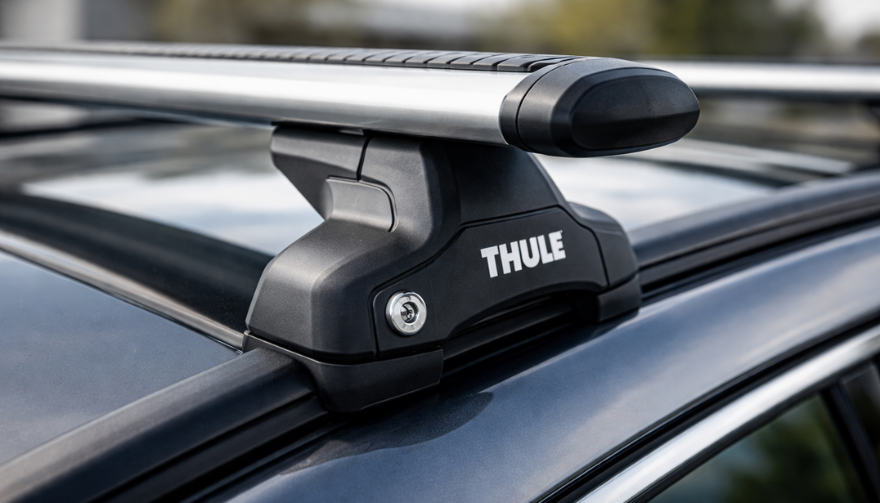
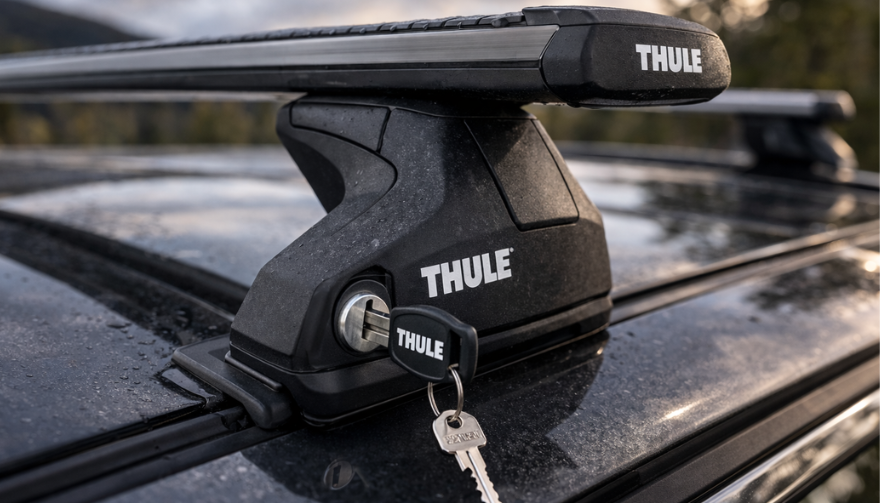
Thule is the dominant brand in Europe and North America. Their lock systems use the N-series key codes (e.g. N001–N200+), clearly stamped on the lock barrel. Thule One-Key System locks share a single user-chosen code across all lock points — a major convenience and a reason to keep a spare.

Key types: flat, small-profile, often with a distinctive squared bow.

See our full guide: [Thule Roof Rack Key Replacement: How to Find Your Code and Order the Right Key]

Yakima

Yakima uses a SKS (Same Key System) — one key code operates all locks on your rack. Codes are typically found on the lock core itself. Yakima keys have a round bow profile and a distinct blade pattern.

Popular code ranges: SKS-101 through SKS-132 and beyond.

Mont Blanc

Mont Blanc roof racks are common across Europe. Their keys use a numeric code system printed on a small sticker inside the lock or on a code card supplied at purchase. Many Mont Blanc keys share profiles with generic "FO" or "MB" series blanks.

GIVI and Other Brands

GIVI produces roof boxes and racks primarily for the motorcycle and touring market. Key codes are typically found on the product label or lock face. Other brands — Kamei, G3, Farad — often use ISO-standard barrel profiles with numeric codes.
How to Find Your Roof Rack Key Code

This is the single most important step. Without the code, you cannot order the correct replacement key.

Check these locations in order:

  1. The lock barrel itself — most manufacturers stamp the code directly on the visible face of the lock cylinder
  2. Your original paperwork — the key card or code card supplied at point of sale
  3. The rack manufacturer's website — some brands (Thule, Yakima) offer code lookup tools using serial number
  4. Receipt or order confirmation — if you registered your rack online, the code may be on file
  5. A locksmith or rack dealer — they can sometimes decode the lock visually or by impressioning

If you cannot find the code and the lock is accessible, a specialist supplier can often identify the correct key from photos of the lock face.

Can You Replace a Roof Rack Lock Without the Key Code?

Yes — but it requires more steps.

Option 1: Lock replacement. Order a new lock cylinder for your rack model. You'll get a new key with it. This costs more but solves the problem completely.

Option 2: Locksmith decoding. A locksmith can decode the existing lock and cut a matching key — useful when the lock is still in place and functional.

Option 3: Contact the manufacturer. Thule and Yakima both have customer service processes for lost key codes, particularly if you registered the product.

Option 4: Photo identification. Send a clear photo of the lock face to a specialist supplier. Experienced teams can identify the key code from the keyway profile and stamping.

Spare Keys: Why You Need One Before You Need One

The worst time to discover you need a roof rack key is standing in a car park with a loaded bike rack you can't unlock.

A replacement key from mr-key.com typically costs under €10. A locksmith call-out, a wasted trip, or a full lock replacement costs far more.

Buy a spare when:

  • You've just purchased a second-hand rack with only one key
  • You're heading on a long trip with expensive cargo
  • You're lending the rack to someone else
  • You've already lost one key once

Keep the spare somewhere separate from your main key — not on the same keyring.

Ordering the Right Key: A Step-by-Step Checklist

Before you order, confirm:

  • Brand — Thule, Yakima, Mont Blanc, GIVI, other
  • Key code — stamped on lock or from documentation
  • Quantity — one replacement or two (spare included)
  • Lock type — some racks have two lock types (e.g. foot lock + bar lock with different codes)

If you're ordering for a Thule One-Key System, confirm whether the code covers all your lock points or just one.

Roof Rack Key Replacement: What It Costs

Mechanical roof rack keys are not expensive. A correctly coded replacement from a specialist supplier typically costs €5–€15 per key, depending on brand and profile.

Avoid generic "universal" keys — they don't exist for barrel-style rack locks. The code is specific. An incorrectly matched key will not turn the cylinder.

Full lock cylinder replacements cost more — typically €20–€50 per lock point — but are sometimes the only option when the code is completely unknown.

FAQ

Q: Can I use a car key cutting machine to cut a roof rack key? A: Yes — most roof rack keys use standard key blanks that any key cutting machine can handle. The critical input is the correct key code for your brand and model.

Q: My Thule lock says N121 — what key do I need? A: You need a Thule N121 replacement key. This is a specific code in Thule's N-series range. Search by this exact code when ordering.

Q: Are Thule and Yakima keys interchangeable? A: No. Thule and Yakima use different keyway profiles. A Thule key will not operate a Yakima lock and vice versa.

Q: How many keys does a Thule One-Key System come with? A: Typically two keys per lock set. If you've lost both, you'll need to order by the N-series code stamped on the lock face.

Q: Can I order a roof rack key without the code? A: It's difficult but not impossible. Send a clear photo of your lock face to a specialist supplier. Some brands also offer code lookup via registered serial number.

Q: How long does replacement key delivery take? A: From mr-key.com, most European destinations receive orders within 2–5 business days depending on country and carrier.

Q: What if the wrong key arrives? A: A reputable supplier will exchange or refund. Always double-check the code before ordering to avoid this.

Q: Is it safe to store my key code somewhere? A: Yes — photograph the code stamped on your lock and save it to cloud storage. This makes future replacements instant.

Order Your Roof Rack Replacement Key Today

You now know exactly what you need. Don't wait until you're locked out on the roadside.

Visit mr-key.com to find your replacement roof rack key by brand and code. We stock keys for Thule, Yakima, Mont Blanc, GIVI, and more — shipped across Europe within days.
Shop Roof Rack Replacement Keys at mr-key.com

Related Posts

The Ultimate Guide to Opel, Peugeot, and Citroën Car Keys: Battery Replacement, Flip Key Issues, and Shell Compatibility

The Ultimate Guide to Opel, Peugeot, and Citroën Car Keys: Battery Replacement, Flip Key Issues, and Shell Compatibility

Car keys have come a long way from simple metal tools to advanced electronic devices. While they offer convenience and security, they're also prone to wear and tear over time. If you own an Opel, Peugeot, or Citroën, you've likely encountered a dead battery, faulty buttons, or a cracked key shell. These issues, though frustrating, are easy to fix with the right approach. This guide explores everything you need to know to maintain or restore your car key's functionality—without unnecessary expense. From understanding how these keys work, to step-by-step maintenance practices, we'll walk you through all the essentials to keep your keys working like new. How Car Keys Work Today Modern car keys are more than just tools to unlock and start your vehicle. They are miniaturized computers embedded with microchips, transponders, and signal systems that communicate with your car's onboard electronics. Most Opel, Peugeot, and Citroën models feature flip keys with integrated remote buttons, and inside each key fob lies a delicate configuration of electronics that perform critical functions like remote unlocking and engine ignition authorization. These keys depend heavily on power from a small coin-cell battery, usually the CR2032. While small and seemingly insignificant, the battery is the heart of your key fob. When it begins to fail, even slightly, the symptoms can range from reduced signal range to complete unresponsiveness. That’s why it’s crucial to replace it in time. Replacing the Battery in Opel Car Keys Your Opel car key is essential to your daily routine. Over time, the lithium CR2032 battery inside may weaken, resulting in slower response or reduced range. The good news is that replacing it is straightforward and requires only a few tools. Once you identify your key type—typically a flip key with two or three buttons—you can open the casing using a small screwdriver or plastic tool. Inside, you'll find a battery nestled within the key's internal framework. Carefully remove the old battery and insert a new CR2032, ideally a reliable model like the Panasonic CR2032 . Proper alignment is crucial; the wrong orientation can prevent the key from functioning entirely. Align the shell halves carefully and press them back together until they click into place. If your key shell is also showing signs of damage or wear, consider replacing it with this Opel 3-button key housing . Replacing the battery is a quick job, but it makes a world of difference in reliability and peace of mind. Plus, it spares you the inconvenience of getting stranded or needing dealer intervention. Common Peugeot Flip Key Issues and How to Fix Them Peugeot flip keys are compact and stylish, but frequent use can expose a few recurring problems. The flip mechanism may lose tension, buttons may stop responding, or the outer shell may crack. In many cases, the spring inside wears down, and the plastic buttons may degrade over time. Exposure to moisture, dirt, or accidental drops can also damage the key fob. These symptoms can often be resolved by replacing both the battery and the key shell. Thankfully, most replacement shells come with a new flip mechanism already installed, making the process quick and cost-effective. If you're dealing with a damaged shell or non-functional buttons, a compatible Peugeot key shell can restore both the look and performance of your key. To repair your key, begin by opening the shell using a thin screwdriver. Remove the internal circuit board and transponder chip carefully. Transfer them into the new shell, ensuring everything fits snugly. Insert a fresh CR2032 battery before closing the key shell, then test all functions. Unlike dealer replacements, this DIY approach is affordable and efficient, putting the control in your hands. Understanding Citroën Key Shell Compatibility Citroën keys often resemble Peugeot models but feature subtle design differences that can impact shell compatibility. Before purchasing a replacement shell, it's important to examine a few key details. First, confirm that the button layout matches exactly—some models include a trunk release, while others do not. Next, check the blade type, usually HU83 or VA2, and make sure your new shell supports that configuration. You’ll also need to ensure there’s a space for the transponder chip, as without it, your car won’t start. Lastly, confirm that your circuit board (PCB) fits securely in the new housing. If you're unsure, compare your key with this Citroën 3-button shell for reference. A mismatched shell can result in poor fitment, misaligned buttons, or failure to lock and unlock your car. That’s why it's important to compare your current key closely to any replacement product. Shell replacements are not one-size-fits-all—small deviations in size or design can render them useless. Going Beyond: Caring for Your Car Key Long-Term Maintaining your car key goes beyond occasional repairs. Think of it as part of your overall vehicle care routine. Keep your key clean by regularly wiping it down with a soft cloth. Avoid exposing it to moisture or extreme temperatures, which can damage the battery and internal electronics. If your key starts to feel loose or if the blade no longer flips smoothly, it's a sign that maintenance is due. Another often-overlooked aspect is the condition of your key ring. Overloaded or heavy keychains can put unnecessary strain on the ignition switch and the key’s blade over time. Keeping your key light and secure can prolong both the key and the ignition system’s lifespan. If you find yourself frequently pressing buttons or experiencing lag in signal response, don't ignore it. These early symptoms are usually signs that a new battery is needed, or the shell's contacts are worn. Addressing small problems before they escalate can save you from full key failure. Car Key Maintenance Caring for your car key doesn’t have to be a daunting task. Whether you drive an Opel, a Peugeot, or a Citroën, regular maintenance and minor DIY repairs can significantly extend the life of your key. Replacing a worn battery and upgrading a broken shell not only restores functionality but also revives the overall appearance of your key. Use quality components, take your time during repairs, and always test your key before final assembly. By taking these small steps, you can avoid costly replacements and enjoy reliable key performance for years to come. Explore trusted replacement parts and accessories online at mr-key.com to keep your car keys in top condition year-round.

Top 10 Fascinating Facts About BMW: Engineering Precision, Motorsport DNA, and Driving Pleasure

Top 10 Fascinating Facts About BMW: Engineering Precision, Motorsport DNA, and Driving Pleasure

BMW stands for precision engineering and pure driving pleasure. Founded in 1916 in Bavaria, BMW began as an aircraft engine manufacturer before reshaping the automotive world. Its guiding philosophy, “Aus Freude am Fahren” (Sheer Driving Pleasure), has defined the brand for decades. Today, BMW builds everything from electric city cars to high-performance M models. What connects them all is balance, control, and a driver-first mindset. These BMW facts reveal how the brand earned its reputation. 1. Munich’s Four-Cylinder Headquarters BMW’s headquarters in Munich is instantly recognizable. The building, completed in 1972, resembles four vertical engine cylinders joined together. BMW’s headquarters in Munich is instantly recognizable. The building, completed in 1972, resembles four vertical engine cylinders joined together. 2. Logical Model Names Since 1972 BMW’s naming system is deliberately simple. Introduced with the first 5 Series in 1972, the three-digit structure tells you exactly where a model sits in the lineup. The first number shows the series. The remaining digits traditionally indicated engine size. Letters like i , d , and x were later added to explain fuel type or drivetrain. BMW drivers can often decode a car before even opening the door. 3. The Only BMW With a Real Name Almost every BMW uses numbers—except one. The BMW Isetta remains the brand’s only mass-produced car with a proper name. Licensed from Italian manufacturer ISO in the 1950s, the Isetta featured a single front-opening door and ultra-compact dimensions. It helped BMW survive financially after the war and became a design icon in Europe. 4. Motorsport DNA: The Birth of BMW M BMW’s M division was created in 1972 to support racing programs. Its purpose was simple: win races and transfer that knowledge to road cars. BMW M cars quickly became benchmarks for performance sedans and coupes. The connection runs deep—BMW even powered a Formula 1 championship-winning car in 1983. Motorsport is not branding for BMW; it’s engineering validation. 5. Safety Innovations Ahead of Their Time In 1972, BMW revealed the Turbo concept car. It introduced ideas that would later become industry standards. Crumple zones, energy-absorbing steering columns, and even early collision-warning concepts were present. Decades before modern driver-assist systems, BMW was already testing how to protect drivers without compromising performance. 6. Hydrogen Engines in the 1970s BMW experimented with hydrogen power long before electrification became mainstream. In 1979, BMW tested a hydrogen-powered 5 Series sedan. The car looked ordinary but ran on modified combustion technology. This early project showed BMW’s willingness to explore alternative energy paths well ahead of regulations or market demand. 7. Project i and the Electric Breakthrough BMW’s modern electric strategy began in 2007 with Project i. The initiative was designed to rethink mobility from scratch. The result was the BMW i3, launched in 2013. It combined carbon-fiber construction, electric drive, and sustainable materials. Project i shaped BMW’s current EV lineup and proved electric cars could still deliver driving pleasure. 8. Limited-Run BMW Special Models BMW frequently builds rare, limited-production vehicles to showcase design and engineering freedom. Models like the modern 3.0 CSL tribute or special M editions celebrate milestones and motorsport heritage. These cars often sell out instantly, reinforcing BMW’s reputation for exclusivity and craftsmanship. 9. Precision Manufacturing With BMW iFACTORY BMW applies the same precision to manufacturing as it does to driving dynamics. The BMW iFACTORY concept integrates AI, robotics, and digital twins into production. Quality control is automated and continuously monitored. The result is consistent build quality across plants in Europe and beyond—something BMW drivers notice long after purchase. 10. Steering-Wheel Controls Before Anyone Else BMW introduced steering-wheel-mounted controls in the early 1990s. Inspired by Formula 1, the goal was simple: keep the driver’s hands on the wheel. Functions like audio and cruise control became easier to manage. Today this feature is universal, but BMW was among the first to make it standard in luxury cars. FAQ What does BMW stand for? BMW means Bayerische Motoren Werke (Bavarian Motor Works). The company was founded in Munich in 1916 and originally produced aircraft engines. Why do BMW drivers value the brand so highly? Balance, rear-wheel-drive heritage, motorsport DNA, and consistent engineering philosophy all contribute to BMW’s loyal following. What should you do if you lose your BMW key? BMW keys are coded and must match the vehicle’s security system. Owners usually replace them through dealers, but specialist suppliers can also provide compatible keys and cases . Platforms like MR-KEY help BMW owners replace worn or lost keys while maintaining proper ownership verification. Visit our shop at mr-key.com

Lost Your Motorcycle Key? Here's What To Do

Lost Your Motorcycle Key? Here's What To Do

Losing your motorcycle key is stressful, but the solution is almost always simpler than riders think. Whether you’re dealing with a chipped key, a worn ignition, or a code you can’t find, there are clear steps you can follow to get back on the road fast. This guide explains how replacement motorcycle keys really work — from cutting and key codes to immobilizer compatibility — with examples from real motorcycle brands and models. What to Do First When You Lose Your Motorcycle Key Act quickly but stay calm. Most motorcycles can be re-keyed or cut from code without replacing expensive parts. Check for the key code. Look for a small alphanumeric code stamped on the ignition, seat lock, fuel cap, or original key tag. If available, a new key can be cut in minutes. Confirm your key type. Bikes like the BMW C600 Sport, C650GT, G310R , Suzuki Boulevard , Yamaha YZF-R1 , or Honda CB/CBR/CRF may use different blanks, cuts, or chips. Decide between a dealer or emergency locksmith. Dealers rely on VIN lookups but may take days or weeks. A locksmith can often produce a working key on-site. If the key was stolen, secure the bike. A locksmith can re-key the ignition or erase the lost transponder from your system. Cutting a New Motorcycle Key: How It Actually Works Motorcycle keys fall into three categories: mechanical , transponder (chipped) , and keyless fobs . Replacing them works differently for each. Mechanical Keys (most Honda, Yamaha, older Suzuki, Vespa, Piaggio) These are simple metal keys. They can be cut even if you lost the original — locksmiths read the code or decode the lock. Examples from your catalogue with mechanical key options: Honda : CB Series, CBR Series, CRF, FourTrax, Goldwing, XR/XL Yamaha : YZF-R1, YZF-R6, XJR400, FJR1300, SR400 Suzuki : Boulevard (S40/S50), Intruder (700/750/800/1400), Madura, Savage Vespa / Aprilia / Ducati / Piaggio : ZADI key ranges C5001–C6475 These can be cut to code and shipped via replacement key delivery . Transponder Keys (chipped) Modern bikes often use embedded RFID chips. A new key must be: Cut to the correct mechanical pattern Programmed to the bike’s immobilizer or ECU Examples with chip or immobilizer systems: Suzuki models using 4D60 DST40 chips Indian / KTM / Honda ZADI-system motorcycles Newer BMW Motorrad models A dealer or well-equipped locksmith can program transponder keys. Many quoted ECU replacements are unnecessary — a good locksmith can usually pair a new chip directly. Keyless Fobs Some Harley-Davidson and BMW models use proximity fobs. Losing one often immobilizes the bike entirely. Replacements require programming, and towing may be necessary. Examples from your listings: Harley-Davidson saddlebag and fob-linked models (LL226–LL450 range) BMW keyless systems on touring and maxi-scooter models Where Key Codes Are Found (and Why They Matter) Key codes are the fastest, cheapest way to get a replacement key. They define the exact cut pattern. Common key code locations: Ignition barrel underside Seat or helmet lock Fuel cap inner plate Owner’s manual or original key tag ZADI-based systems (used by Vespa, Aprilia, Ducati, Piaggio, Indian, KTM ) typically use numeric ranges like C5001–C6475 , which Mr-Key can cut perfectly. If no code is present, a locksmith can decode the lock manually — no need for new hardware. Dealer vs. Emergency Locksmith: Which Is Better? Dealers Can order keys by VIN Often slow and expensive May insist on full ignition or ECU replacement Useful for rare models or restricted fobs Emergency Locksmiths Faster and mobile Cheaper than dealerships Can cut by code, impression, or lock decoding Can program many transponders without ECU replacement For many riders — especially with models like Honda CB/CBR , Yamaha YZF , Suzuki Intruder , BMW G310R , Vespa/Aprilia/Piaggio — locksmiths are the most efficient choice. Examples of Motorcycles Mr-Key Supports BMW C600 Sport C650GT G310R Honda CB Series CBR Series CRF Series FourTrax Goldwing XR / XL Honda ATV (A00–A99 / B00–B99 codes, 1983–2022) Yamaha YZF-R1 YZF-R6 XJR400 FJR1300 SR400 Suzuki Boulevard S40 / S50 Intruder 700 / 750 / 800 / 1400 Madura Savage 4D60 DST40 transponder models Harley-Davidson Saddle Bag LL226–LL450 Keyless fob models Vespa / Aprilia / Ducati / Piaggio ZADI key codes C5001–C6475 Multiple standard ignition and seat locks KTM / Indian Supported in ZADI Indian/Vespa/KTM/Honda product line How to Avoid Losing Your Key Again Make a spare immediately and store it safely. Add a bright keychain or Bluetooth tracker. Know your emergency start PIN (for keyless bikes). Keep your key code and VIN stored separately from the bike. The AA advises riders to secure spares and document key numbers. FAQ Can a locksmith make a motorcycle key without the original? Yes. Locksmiths can cut by code or decode your ignition/lock manually. Can I get a new key using my motorcycle’s VIN? Dealers can often retrieve the factory key code from the VIN, though delays are common. What if my lost key had a chip? You’ll need both cutting and immobilizer programming. Locksmiths handle this for most brands. Do I need to replace the ignition? Rarely. Only if the key was stolen and security is compromised — not because the key is lost. Need a Replacement Motorcycle Key Fast? If you need a mechanical, transponder, or ZADI-system motorcycle key — or a code-cut replacement delivered to your home — we specialize in fast, professional solutions. Visit our shop at mr-key.com to order a replacement key or request an emergency locksmith.

The Importance of Having a Spare Car Key: What Every Driver Should Know

The Importance of Having a Spare Car Key: What Every Driver Should Know

When it comes to car ownership, many of us take pride in maintaining our vehicles. We keep up with oil changes, tire rotations, and insurance renewals. But there’s one crucial aspect that many drivers overlook: having a spare car key. It might seem like a small detail, but nearly 40% of car owners don’t have a backup key for their vehicle. That’s a risk you might not want to take. Let’s explore why having a spare car key is so important and how it can save you time, money, and frustration. The Hidden Risks of Having Only One Key You may think that having just one car key is fine—after all, you always know where it is, right? But life has a funny way of surprising us, and car keys get lost or damaged more often than you might think. Here are some common risks you face when relying on just one key: Lost Keys : Losing your only car key can leave you stranded. Whether you're in a rush for work or on your way to an important event, misplacing your key means you're stuck until you find it—or worse, until you get a replacement. Key Damage : Keys, like anything else, wear out over time. A bent or broken key can cause problems with your car’s ignition, and if it's your only one, you’re in for a headache. Lockouts : It’s easy to accidentally lock your keys inside your car. Without a spare key, you’ll need to figure out how to regain access—both costly and inconvenient. Theft : If someone steals your key, not only are you locked out of your car, but you also face a potential security risk. A spare key can give you quick access and peace of mind while you handle the situation. Why a Spare Key Is a Lifesaver Having a spare key is more than just a backup plan; it’s a practical solution that can save you in many situations. Here’s why having a spare key should be on your to-do list: Saves You Time : If you’ve ever lost a key, you know how time-consuming it can be to get a replacement. With a spare key, you can avoid the wait and get back on the road quickly. Prevents Expensive Lockouts : Getting locked out of your car is stressful and costly. Emergency situations like this can cost you not just time but money, and depending on the circumstances, you might even need additional assistance. Convenience for Multiple Drivers : If you share your car with a spouse, roommate, or family member, having a spare key allows both of you to have access without needing to coordinate every trip. Peace of Mind : With a spare key, you won’t have to worry about the “what if” scenarios. It’s a simple safety net that ensures you’re never completely stranded. Affordable Solutions for Replacing Your Car Key You might be wondering how to go about getting a spare key. Fortunately, the process has never been easier or more affordable. Gone are the days when you had to rely on expensive or complicated processes to secure a replacement key. Here are some practical ways to get a spare key: Online Key Replacement Services : Many services offer easy, affordable options for getting a spare car key. Simply upload a photo of your key, and you’ll receive a replacement. Automotive Dealerships : Dealerships provide spare keys for almost any car make or model. However, this option is often more costly and may require you to bring the car in for verification and programming. How to Choose the Right Key Replacement Option When deciding on how to get a spare key, consider these factors: Cost : Depending on the service or method you choose, prices can vary. Evaluate your budget and the type of key your car requires before proceeding. Convenience : For some, the most convenient option is one that doesn’t require in-person visits. Research which option offers the best balance between time and convenience for your needs. Speed : Depending on your urgency, choose an option that fits your timeframe. Some services offer express options, while others may take longer. Don’t Wait Until It’s Too Late Many car owners don’t think about getting a spare key until they’re faced with an emergency. Don’t let that be you. Having a backup key is a small investment that can save you from significant stress and financial strain down the line. Take action today and make sure you have a spare key for your vehicle. Whether it’s for a just-in-case moment or for daily convenience, having that extra key can make all the difference when you need it most.

Chat with us