Post Name

Losing your motorcycle key is stressful, but the solution is almost always simpler than riders think. Whether you’re dealing with a chipped key, a worn ignition, or a code you can’t find, there are clear steps you can follow to get back on the road fast.

This guide explains how replacement motorcycle keys really work — from cutting and key codes to immobilizer compatibility — with examples from real motorcycle brands and models.

What to Do First When You Lose Your Motorcycle Key


Act quickly but stay calm. Most motorcycles can be re-keyed or cut from code without replacing expensive parts.

Check for the key code.

Look for a small alphanumeric code stamped on the ignition, seat lock, fuel cap, or original key tag. If available, a new key can be cut in minutes.

Confirm your key type.

Bikes like the BMW C600 Sport, C650GT, G310R, Suzuki Boulevard, Yamaha YZF-R1, or Honda CB/CBR/CRF may use different blanks, cuts, or chips.

Decide between a dealer or emergency locksmith.

Dealers rely on VIN lookups but may take days or weeks. A locksmith can often produce a working key on-site.

If the key was stolen, secure the bike.

A locksmith can re-key the ignition or erase the lost transponder from your system.

Cutting a New Motorcycle Key: How It Actually Works


Motorcycle keys fall into three categories:

mechanical, transponder (chipped), and keyless fobs. Replacing them works differently for each.

Mechanical Keys (most Honda, Yamaha, older Suzuki, Vespa, Piaggio)

These are simple metal keys. They can be cut even if you lost the original — locksmiths read the code or decode the lock.

Examples from your catalogue with mechanical key options:

Honda: CB Series, CBR Series, CRF, FourTrax, Goldwing, XR/XL

Yamaha: YZF-R1, YZF-R6, XJR400, FJR1300, SR400

Suzuki: Boulevard (S40/S50), Intruder (700/750/800/1400), Madura, Savage

Vespa / Aprilia / Ducati / Piaggio: ZADI key ranges C5001–C6475

These can be cut to code and shipped via replacement key delivery.

Transponder Keys (chipped)


Modern bikes often use embedded RFID chips. A new key must be:

Cut to the correct mechanical pattern

Programmed to the bike’s immobilizer or ECU

Examples with chip or immobilizer systems:

Suzuki models using 4D60 DST40 chips

Indian / KTM / Honda ZADI-system motorcycles

Newer BMW Motorrad models

A dealer or well-equipped locksmith can program transponder keys. Many quoted ECU replacements are unnecessary — a good locksmith can usually pair a new chip directly.

Keyless Fobs


Some Harley-Davidson and BMW models use proximity fobs. Losing one often immobilizes the bike entirely. Replacements require programming, and towing may be necessary.

Examples from your listings:

Harley-Davidson saddlebag and fob-linked models (LL226–LL450 range)

BMW keyless systems on touring and maxi-scooter models

Where Key Codes Are Found (and Why They Matter)


Key codes are the fastest, cheapest way to get a replacement key. They define the exact cut pattern.

Common key code locations:

Ignition barrel underside

Seat or helmet lock

Fuel cap inner plate

Owner’s manual or original key tag

ZADI-based systems (used by Vespa, Aprilia, Ducati, Piaggio, Indian, KTM) typically use numeric ranges like C5001–C6475, which Mr-Key can cut perfectly.

If no code is present, a locksmith can decode the lock manually — no need for new hardware.

Dealer vs. Emergency Locksmith: Which Is Better?


Dealers

Can order keys by VIN

Often slow and expensive

May insist on full ignition or ECU replacement

Useful for rare models or restricted fobs

Emergency Locksmiths

Faster and mobile

Cheaper than dealerships

Can cut by code, impression, or lock decoding

Can program many transponders without ECU replacement

For many riders — especially with models like Honda CB/CBR, Yamaha YZF, Suzuki Intruder, BMW G310R, Vespa/Aprilia/Piaggio — locksmiths are the most efficient choice.
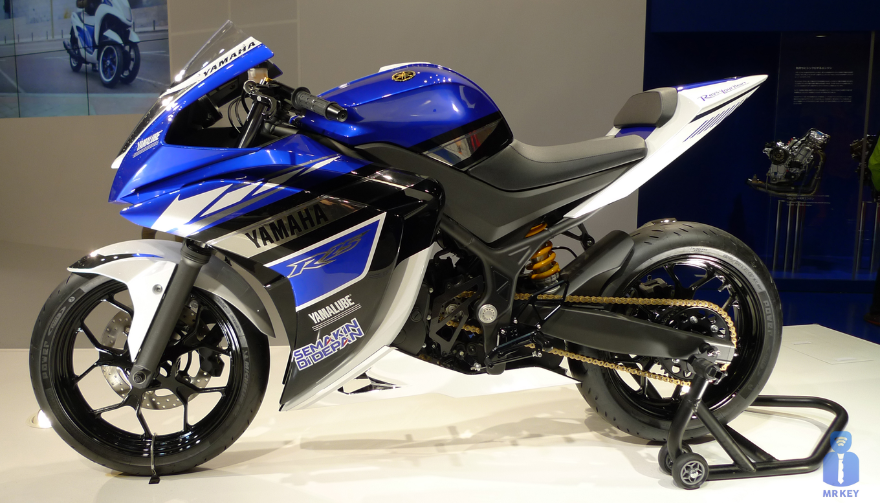
Examples of Motorcycles Mr-Key Supports


BMW

C600 Sport

C650GT

G310R

Honda

CB Series

CBR Series

CRF Series

FourTrax

Goldwing

XR / XL

Honda ATV (A00–A99 / B00–B99 codes, 1983–2022)

Yamaha

YZF-R1

YZF-R6

XJR400

FJR1300

SR400

Suzuki

Boulevard S40 / S50

Intruder 700 / 750 / 800 / 1400

Madura

Savage

4D60 DST40 transponder models

Harley-Davidson

Saddle Bag LL226–LL450

Keyless fob models

Vespa / Aprilia / Ducati / Piaggio

ZADI key codes C5001–C6475

Multiple standard ignition and seat locks

KTM / Indian

Supported in ZADI Indian/Vespa/KTM/Honda product line

How to Avoid Losing Your Key Again


Make a spare immediately and store it safely.

Add a bright keychain or Bluetooth tracker.

Know your emergency start PIN (for keyless bikes).

Keep your key code and VIN stored separately from the bike.

The AA advises riders to secure spares and document key numbers.

FAQ


Can a locksmith make a motorcycle key without the original?

Yes. Locksmiths can cut by code or decode your ignition/lock manually.

Can I get a new key using my motorcycle’s VIN?

Dealers can often retrieve the factory key code from the VIN, though delays are common.

What if my lost key had a chip?

You’ll need both cutting and immobilizer programming. Locksmiths handle this for most brands.

Do I need to replace the ignition?

Rarely. Only if the key was stolen and security is compromised — not because the key is lost.

Need a Replacement Motorcycle Key Fast?


If you need a mechanical, transponder, or ZADI-system motorcycle key — or a code-cut replacement delivered to your home — we specialize in fast, professional solutions.

Visit our shop at mr-key.com to order a replacement key or request an emergency locksmith.

Related Posts

Top 10 Most Common Car Key Problems (And How to Fix Them)

Top 10 Most Common Car Key Problems (And How to Fix Them)

Car keys have changed dramatically in the last 20 years. What was once a simple mechanical tool has become an essential electronic device packed with functionality. From remote locking and trunk opening to push-start ignition systems and proximity sensors, today's car keys do a lot more than just turn in the ignition. However, this increased functionality also means more components that can fail—and when they do, the inconvenience can be frustrating or even immobilizing. For many drivers, key problems seem to come out of nowhere. A button stops working, the car doesn’t start, or a backup key won’t respond. Understanding the most common issues with modern car keys can help you avoid unnecessary trips to the dealership and identify quick fixes at home. Below, we’ll explore the ten most frequent car key problems, how to recognize the symptoms, and what steps to take to get your key working again—often without spending a fortune. 1. The Key Fob Has Stopped Responding One of the most common complaints drivers have is that their key fob simply stops responding. The remote may no longer lock or unlock the vehicle, the trunk button might stop working, or there may be no visible LED indicator when you press a button. In most cases, the culprit is a dead battery—something that’s inexpensive and easy to replace. Most key fobs use a CR2032 coin-cell battery, which can typically be changed with a small screwdriver or a plastic pry tool. If replacing the battery doesn’t bring the fob back to life, the issue may be with the internal electronics. Moisture, drops, and general wear over time can corrode or damage the tiny circuit board inside. In such cases, replacing the outer shell might not be enough—you may need to invest in a full replacement or transplant the electronics into a new case if only the buttons or housing are damaged. 2. The Car Doesn't Detect the Key Another increasingly common issue—especially in vehicles with push-to-start systems—is that the car doesn’t detect the key, even though it's inside the cabin or close to the sensor. You might see a warning on the dashboard such as “Key Not Detected” or “No Key Present.” This can happen due to a nearly dead battery in the fob, radio frequency interference from nearby electronics, or a fault in the key’s transponder chip. The first step is always to replace the key’s battery. If the issue persists, try holding the key closer to the start button or steering column—some vehicles have hidden backup sensors that detect the key at close range in emergencies. If none of that works, the problem could be with the chip inside the fob or the vehicle’s receiver, requiring diagnosis by a qualified locksmith or dealership technician. 3. The Key Turns in the Ignition, But Nothing Happens This issue is particularly frustrating: you insert your key into the ignition, it turns freely, but the car doesn’t respond at all. Often, this is a sign that the vehicle’s immobilizer system isn’t recognizing the key. Modern car keys contain a small RFID chip that communicates with the car’s anti-theft system. If this chip is damaged or unprogrammed, the vehicle will not start—no matter how well the mechanical part of the key works. Try using a spare key if you have one. If the backup works, you’ll know the issue lies within the primary key. If neither key works, the problem could be with the vehicle’s receiver, antenna ring, or immobilizer control unit. A professional diagnostic scan is typically needed to pinpoint the cause. 4. The Key Won’t Turn in the Door or Ignition If your key suddenly stops turning in the door or ignition cylinder, the cause may be as simple as wear and tear. Key blades—especially older ones—can become worn down over time, resulting in poor contact with the internal pins in the lock. Dirt, rust, or debris inside the lock can also prevent the key from turning, particularly if the vehicle hasn’t been manually unlocked in a while. First, try using a backup key. If it turns smoothly, your main key is likely worn. If both keys struggle, apply a non-residue contact cleaner or lock lubricant to clean out the cylinder. For long-term solutions, you may need to replace either the key blade or the ignition/door lock entirely. Don’t attempt to force the key, as this could cause the blade to bend or snap inside the lock. 5. The Buttons Feel Mushy or Stuck Physical wear is one of the most overlooked causes of key fob failure. Over time, the rubber buttons on your remote can wear down, become loose, or stop pressing properly. You might notice that only one or two buttons respond, or that they must be pressed harder than usual to work. In many cases, the outer shell has simply degraded, while the electronic board inside remains perfectly functional. The most effective fix is to replace the key shell. These replacement housings are inexpensive and widely available for most major vehicle brands. Simply open the fob, transfer the circuit board, battery, and buttons into the new shell, and your key will feel and function like new again—without any need for reprogramming. 6. Your Key Fob Got Wet Water and electronics rarely mix well, and key fobs are no exception. Whether your key was left out in the rain, fell into a puddle, or went through the washing machine, moisture can quickly short-circuit the internal components or lead to long-term corrosion. If your key gets wet, act fast. Remove the battery immediately and open the case to allow air circulation. Use desiccants such as silica gel packets to dry out the internal parts—avoid using rice, which is far less effective. If corrosion is visible, gently clean it with isopropyl alcohol and a cotton swab. If the key still doesn’t work after drying, the damage may be permanent and require replacement. 7. The Key Shell Is Cracked or Broken Keys endure daily use, pocket pressure, accidental drops, and exposure to the elements. Over time, the plastic casing of the fob can crack, split, or completely fall apart, leaving internal electronics vulnerable. Although a broken shell doesn’t necessarily mean the key is non-functional, it can make usage difficult and risky. Thankfully, key shell replacements are an easy and budget-friendly solution. You can often reuse all your original components, including the battery, buttons, and transponder chip. Replacing just the shell avoids costly reprogramming and restores your key’s durability and appearance. 8. The Key Still Doesn’t Work After Replacing the Battery Replacing a fob battery is supposed to solve the problem—but sometimes it doesn’t. If your remote remains unresponsive after a battery change, you may have installed the wrong type of battery, inserted it incorrectly, or failed to clean the contact points inside the fob. In some cases, the circuit board itself may be damaged or shorted out. Double-check that the battery type matches the original (commonly CR2032). Ensure it’s properly seated and that the metal contact tabs are clean and secure. If the problem continues, the issue likely lies with the circuit board, and the fob may need to be replaced entirely. 9. You’ve Lost Your Only Key Few things are more stressful than losing your only car key—especially if you don’t have a spare. Most modern vehicles require the key to be electronically paired with the car, so simply cutting a new blade isn’t enough. You’ll need your Vehicle Identification Number (VIN), proof of ownership, and a visit to either a dealership or a certified locksmith. Some aftermarket services can offer replacement keys that are compatible with your vehicle at a lower price than the dealership. Once the new key is cut and programmed, be sure to create and safely store a backup key to avoid being locked out in the future. 10. The Spare Key Doesn’t Work Anymore Spare keys are often kept in drawers or glove compartments for years without use. When finally needed, many drivers are surprised to find that the backup key doesn’t work. Batteries may have died, circuit boards may have degraded, or the key may have fallen out of sync with the vehicle. Start by replacing the battery. If that doesn’t work, the spare may need to be reprogrammed to the car. Keeping your spare key in a safe, climate-controlled environment and testing it occasionally is the best way to ensure it's ready when needed. Car key problems can range from mildly inconvenient to seriously disruptive—but the majority are entirely fixable, often at home and at minimal cost. Understanding the common causes behind these issues allows you to respond quickly, avoid dealership prices, and extend the life of your keys. At mr-key.com , you’ll find a wide selection of replacement key shells , batteries , blades , and complete electronic keys compatible with dozens of vehicle brands. With proper care and the right tools, you can keep your key in excellent condition and avoid ever being stranded due to a faulty fob.

Here’s 1 Crazy Mistake 40% of Car Owners Make

Here’s 1 Crazy Mistake 40% of Car Owners Make

When it comes to car ownership, most of us are pretty diligent. We make sure our insurance is up to date, change the oil like clockwork, and even rotate our tires to avoid any wear and tear. But there’s one crucial aspect that many car owners overlook: having a spare key . It seems like a small detail, right? Yet, nearly 40% of car owners don’t have a backup key for their vehicle. And that’s a huge risk. Why? Because losing your only car key can cause a headache you’re not prepared for—and it’s a lot more common than you might think. The Hidden Dangers of Only Having One Car Key It’s easy to get comfortable with just one key. After all, it’s always in your pocket, bag, or hanging on your keychain. But life happens. Keys get lost, misplaced, or even stolen, and when that happens, you’re looking at a nightmare scenario. Here’s why: Costly Lockouts : Lose your key, and you’re locked out of your car, stranded until you can get help. Calling a tow truck or emergency locksmith is not only frustrating but can cost you hundreds of dollars. Inconvenient Delays : Have an important meeting? Picking the kids up from school? With only one key, losing it means your entire day—or week—grinds to a halt. Damaged Key, No Backup : Keys wear down over time, and if you only have one, a damaged key could lead to ignition problems. Suddenly, your car won’t start, and now you’re stuck paying for both a repair and a replacement. Security Risk : Lost keys are more than just a hassle—they’re a potential security threat. If your key falls into the wrong hands, your vehicle becomes vulnerable. The Pricey Locksmith Option Once you’re locked out or your key is lost, your options become limited—and expensive. Going to a local locksmith is one route, but here’s what you’re facing: High Prices : Traditional locksmiths can charge anywhere from €150 to €400 just to cut and program a new car key. Depending on your car model, it could be even more. Inconvenient : Many locksmiths don’t work around your schedule, and waiting for them to arrive or driving to their location takes time you don’t have. The Smart, Affordable Solution: Mr-Key.com Fortunately, there’s an easier and much more affordable option— Mr-Key.com . Instead of paying top dollar and wasting time, here’s how you can get a spare key in just a few simple steps: Take a Picture : Simply snap a photo of your existing key. Send It to Us : Upload the picture to Mr-Key.com using our secure service. Get Your Key Delivered : We’ll cut a perfect match and deliver it right to your door at a fraction of the cost of a traditional locksmith. Don’t Wait for a Crisis—Get Your Spare Key Now! Why risk being locked out or paying hundreds when you can have peace of mind for less? Visit Mr-Key.com today and get a spare car key cut from just a picture. It’s quick, it’s easy, and it’s affordable. Don’t be part of the 40% that gambles with just one key—protect your car and your schedule with Mr-Key.com!

Thule Roof Rack Key Replacement: How to Find Your Code and Order the Right Key

Thule Roof Rack Key Replacement: How to Find Your Code and Order the Right Key

Thule is the world's best-selling roof rack brand. Their key system is logical, well-documented — and still confusing if you've never dealt with it before. This guide cuts straight to what you need: how Thule's lock system works, where your code is, and how to order the right key without guesswork. How Thule's Lock System Works Thule roof racks use a barrel lock system with small flat-profile mechanical keys. There is no electronic component — the key is purely mechanical, cut to a specific profile that matches the lock cylinder. Every Thule lock is stamped with a code from their N-series range (e.g. N001, N047, N121). That code is all you need to order the correct replacement. The Thule One-Key System Thule's One-Key System (also called the Thule Lock System or TLS) lets you set all lock points on your rack to the same key code. This means one key opens every clamp, every bar end, and every accessory lock on your setup. It's a significant convenience — and it means losing that one key locks you out of everything at once. If you use the One-Key System, your single N-series code covers all your locks. Order that code and you're back in business. Where to Find Your Thule Key Code The code is always present — you just need to know where to look. 1. On the lock barrel face Look at the front of any Thule lock on your rack. The N-series code is stamped directly on the metal face of the cylinder. It typically reads: N followed by three digits (e.g. N047). 2. On your original key If you still have one working key, the code is usually stamped on the bow (the flat part you grip). 3. On the key card When Thule locks are sold new, they include a small plastic or paper key card with the code. Check your rack's original packaging or documents. 4. Via Thule's website Thule offers a code lookup service on their website for registered products. You'll need the product serial number. 5. Ask your dealer If you bought the rack from a specialist retailer, they may have a record of the code linked to your purchase. Thule N-Series: Common Codes and What They Cover Thule N-series codes run from N001 upward. Not all codes are in active use — the range was introduced progressively and some early codes are discontinued. Commonly requested codes include: N001–N030 — older Thule rack generations, still widely fitted to cars from the 2000s–2010s N031–N100 — mid-generation racks, very common on European vehicles N101–N200+ — current generation, including Thule Evo, Edge, and WingBar systems If your rack is from 2010 or later and was purchased in Europe, your code almost certainly falls in the N031–N200 range. Thule Lock Types: Are They All the Same Key? No. Thule uses more than one lock type depending on the rack system. Foot locks — secure the rack feet to the car's roof rails or gutters. These use the N-series code. Bar end locks — secure the crossbars. On newer systems these are integrated into the foot lock and share the same code. On older systems they may be separate. Accessory locks — Thule bike carriers, ski holders, and box locks can be keyed to match your rack. If they were purchased as part of a One-Key set, they share your N-code. If your rack has multiple lock types with different codes, you'll need to identify each one separately. What to Do When You Can't Find the Code The lock is still on the car and functional: A locksmith can decode the lock — either by reading the key cuts visually or by cutting a new key through impressioning. This is the fastest physical solution. The lock is damaged or the key is broken inside: You'll need a replacement lock cylinder. Order the correct Thule lock set for your rack model — it will come with two new keys and a new code card. You have a photo of the lock face: Send it to a specialist supplier like mr-key.com. Experienced teams can often identify the code from the keyway and stamping visible in a photo. Thule Key Replacement: Step by Step Locate any Thule lock on your rack Read the N-series code stamped on the lock face (e.g. N121) Check how many locks you have — do they all share the same code, or are there different codes? Order replacement keys by that exact code — one to replace the lost key, one spare Store your code — photograph it and save it somewhere permanent Thule Rack Models and Their Lock Compatibility Rack System Lock Type Code Format Thule Evo (current) Integrated T-track N-series Thule Edge Flush integrated N-series Thule WingBar Evo Bar + foot lock N-series Thule SmartRack Gutter mount N-series Thule ProBar (older) Separate bar locks N-series Thule 754 / 751 feet Classic feet N-series All current Thule lock systems use the N-series. If your rack is a Thule product from the last 20 years, the N-series code applies. How Many Keys Should You Have? Thule recommends two. One to use, one to keep somewhere safe — not on your keyring. A Thule replacement key costs under €10. A Thule lock cylinder costs €25–€40 per point. A full lock set replacement for a four-point rack with accessories can easily reach €150+. The spare key is the cheapest insurance you'll ever buy for your rack. FAQ Q: My Thule key says N047 — is that the same as just "47"? A: Yes. Some suppliers list codes without the N prefix. N047 and 047 refer to the same Thule key. Always include the N prefix when searching to avoid confusion. Q: Can I rekey my Thule locks to a different code? A: Yes, with Thule's One-Key System. You can purchase new lock cylinders set to a code of your choice and replace the existing cylinders. This is useful when buying a second-hand rack with an unknown code. Q: Will a Thule key from an old rack open a new one? A: Only if the N-series code matches. The physical code, not the age of the rack, determines compatibility. Q: I have four lock points but only two show a code — do the other two share the same code? A: On One-Key System setups, yes. All lock points are set to the same code. Read one, you know them all. Q: My key broke off inside the lock — what do I do? A: Do not force it. A locksmith can extract a broken key from a barrel lock. Once extracted, order your replacement by the code stamped on the lock face. Q: Can I order just one key or do I need to buy a pair? A: You can order a single key. We recommend ordering two — one replacement and one spare. Q: How fast can I get a replacement Thule key? A: From mr-key.com, delivery to most European countries takes 2–5 business days. Germany, France, Italy, Greece, Romania: typically 2–4 days. Order Your Thule Replacement Key (Fast EU Shipping – Same-Day Dispatch) You have the code. You know the system. There's nothing left to do but order. Visit mr-key.com and search by your Thule N-series code . We cut and ship Thule replacement keys across Europe — fast, accurate, and at a fraction of dealer prices. → Find Your Thule Key at mr-key.com Also read: The Complete Guide to Roof Rack Replacement Keys

Which Cars Benefit Most From Hydrogel Navigation Protection? (2026 Overview)

Which Cars Benefit Most From Hydrogel Navigation Protection? (2026 Overview)

Modern cars rely heavily on large navigation and infotainment screens. These displays are used constantly and exposed to scratches, fingerprints, dust, heat and direct sunlight. Repairs are expensive, and replacement screens can cost several hundred euros. A hydrogel screen protector adds a thin, flexible layer that guards the display without affecting clarity or touch response. Premium and Luxury Models Premium brands adopted large infotainment screens early, making them among the most likely to benefit. BMW models such as the 3 Series , 5 Series and X5 use wide, high-resolution displays (up to 14.9”). Audi cars like the A4 , A6 and Q5 include 10–12” touchscreens. Mercedes-Benz models such as the C-Class , E-Class and GLC use vertically oriented 11–12” MBUX screens. Porsche vehicles (Cayenne, Macan, Panamera) and Tesla models (Model 3, Y, S) use some of the largest screens in Europe. These vehicles benefit significantly from a hydrogel protector thanks to their large surfaces and frequent touch use. Popular European Models Mainstream European cars now feature screens as large as luxury models. Volkswagen offers 10–15” displays in models such as the Golf , Tiguan and Passat . Škoda uses up to 13” screens in the Octavia , Superb and Kodiaq . Dacia equips models like the Jogger , Duster and Sandero with 7–10” displays. Toyota (Corolla, RAV4, Yaris Cross). Renault (Captur, Clio, Megane E-Tech). Peugeot (208, 3008, 5008) Citroën (C4, C5 Aircross) Nissan (Qashqai, Juke, Leaf) Ford (Focus, Kuga) Kia (Sportage, Ceed, Niro, Picanto, Stonic, Rio, Sorento) all rely on large central touchscreens. As screens grow in size across all price segments, protection becomes increasingly important. Benefits of Hydrogel Screen Protectors Hydrogel film is thin, flexible and adheres tightly. It works on flat and curved surfaces where tempered glass cannot. The material absorbs small impacts and can self-heal minor marks. With its anti-glare properties It keeps the display clear, maintains original brightness and preserves smooth touch performance. It also helps reduce smudges and makes daily cleaning easier. Once you’ve chosen a hydrogel protector for your car, the next step is applying it correctly. Follow our step-by-step guide on how to install a hydrogel navigation screen protector for a perfect bubble-free result. Who Needs Hydrogel Protection the Most? Any car with: a large touchscreen (8” or more) glossy glass prone to fingerprints curved edges high cabin sun exposure Hydrogel is especially useful for daily drivers, family cars and vehicles where multiple people interact with the system. Rental, Company and Service Vehicles Benefit Even More Cars used for business—such as rental cars , company vehicles , fleet cars , taxis , and service vehicles —experience significantly higher daily usage than private cars. Their navigation screens are touched constantly by different drivers, exposed to dust, temperature changes and frequent cleaning. Because of this heavy wear, screens in rental and company vehicles are far more likely to show scratches, fingerprints and long-term damage. A hydrogel dashboard screen protector adds a durable layer that absorbs daily abuse, keeps the display clear for every driver and reduces maintenance costs for fleet managers. For any vehicle that is shared or driven by multiple users, screen protection is not just useful—it’s essential . FAQ What is a hydrogel screen protector? A thin, flexible film that protects a car’s navigation or dashboard display. How is it installed? Clean the screen, align the film and press it down. Dry installation is recommended. What are the benefits? Scratch resistance, impact absorption, reduced fingerprints and full coverage on curved screens. Is it compatible with all cars? Yes, if you choose a protector cut for your specific model. Does it affect touch response? No. Hydrogel keeps full touch accuracy. How long does it last? Usually 1–3 years, depending on use. Easy to replace. Hydrogel vs tempered glass? Hydrogel fits curved screens and absorbs impacts. Glass is harder but can crack and does not cover complex shapes. For more in depth guide check out Hydrogel vs Tempered Glass Navigation Protectors Comparison How can I protect my car’s navigation screen from scratches and fingerprints? If you want to know more about How to Protect Your Car’s Navigation Screen from Scratches and Fingerprints check out our guide. Visit mr-key.com to find a custom-cut hydrogel protector for your car model. Related Guides How to Install a Hydrogel Navigation Screen Protector How to Protect Your Car’s Navigation Screen from Scratches, Glare & Fingerprints Hydrogel vs Tempered Glass Navigation Protectors Comparison

Chat with us