Post Name

Finding the right replacement key for your roof rack doesn't have to be a nightmare — if you know where to look.

Whether you've lost your Thule key on a ski trip, snapped a Mont Blanc key in the lock, or simply want a spare before disaster strikes, this guide covers everything: how roof rack key systems work, how to find your key code, which key fits which brand, and where to order a replacement fast.

How Roof Rack Locking Systems Work

Most roof racks — Thule, Yakima, Mont Blanc, Whispbar — use a barrel-style lock cylinder operated by a small, flat-profile key. Unlike car keys, these keys are not electronically coded. They are purely mechanical, which means replacement is straightforward — provided you know your key code.

The code is stamped directly onto the lock cylinder or listed in your rack's original documentation. That code tells the manufacturer (and a replacement supplier) exactly which key blank to cut.

No code? You still have options. More on that below.

The Four Most Common Roof Rack Key Brands

Thule

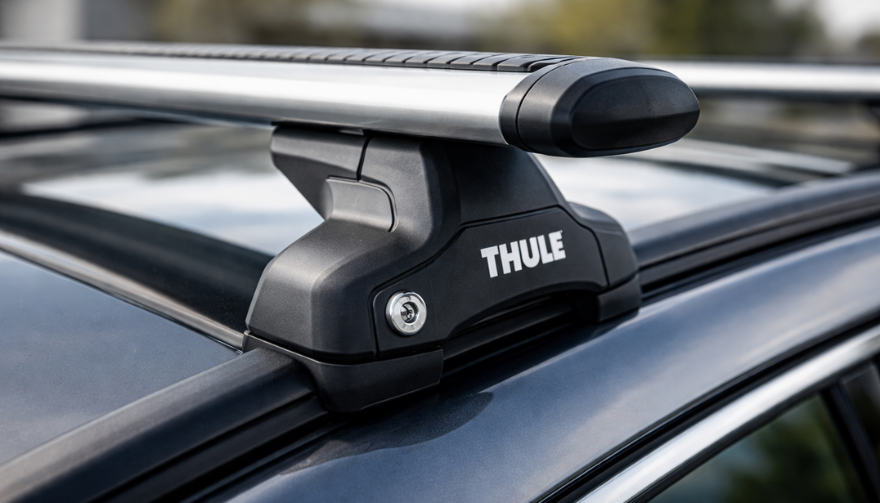
Thule is the dominant brand in Europe and North America. Their lock systems use the N-series key codes (e.g. N001–N200+), clearly stamped on the lock barrel. Thule One-Key System locks share a single user-chosen code across all lock points — a major convenience and a reason to keep a spare.

Key types: flat, small-profile, often with a distinctive squared bow.

See our full guide: [Thule Roof Rack Key Replacement: How to Find Your Code and Order the Right Key]

Yakima

Yakima uses a SKS (Same Key System) — one key code operates all locks on your rack. Codes are typically found on the lock core itself. Yakima keys have a round bow profile and a distinct blade pattern.

Popular code ranges: SKS-101 through SKS-132 and beyond.

Mont Blanc

Mont Blanc roof racks are common across Europe. Their keys use a numeric code system printed on a small sticker inside the lock or on a code card supplied at purchase. Many Mont Blanc keys share profiles with generic "FO" or "MB" series blanks.

GIVI and Other Brands

GIVI produces roof boxes and racks primarily for the motorcycle and touring market. Key codes are typically found on the product label or lock face. Other brands — Kamei, G3, Farad — often use ISO-standard barrel profiles with numeric codes.
How to Find Your Roof Rack Key Code

This is the single most important step. Without the code, you cannot order the correct replacement key.

Check these locations in order:

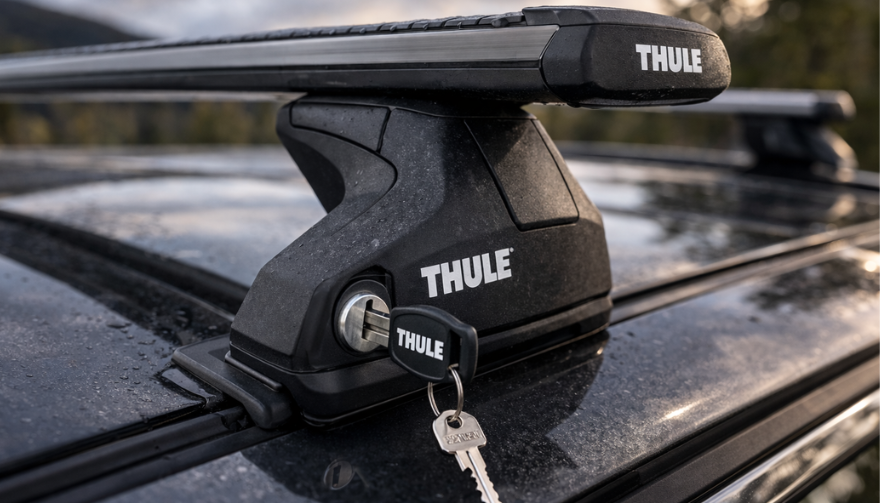
  1. The lock barrel itself — most manufacturers stamp the code directly on the visible face of the lock cylinder
  2. Your original paperwork — the key card or code card supplied at point of sale
  3. The rack manufacturer's website — some brands (Thule, Yakima) offer code lookup tools using serial number
  4. Receipt or order confirmation — if you registered your rack online, the code may be on file
  5. A locksmith or rack dealer — they can sometimes decode the lock visually or by impressioning

If you cannot find the code and the lock is accessible, a specialist supplier can often identify the correct key from photos of the lock face.

Can You Replace a Roof Rack Lock Without the Key Code?

Yes — but it requires more steps.

Option 1: Lock replacement. Order a new lock cylinder for your rack model. You'll get a new key with it. This costs more but solves the problem completely.

Option 2: Locksmith decoding. A locksmith can decode the existing lock and cut a matching key — useful when the lock is still in place and functional.

Option 3: Contact the manufacturer. Thule and Yakima both have customer service processes for lost key codes, particularly if you registered the product.

Option 4: Photo identification. Send a clear photo of the lock face to a specialist supplier. Experienced teams can identify the key code from the keyway profile and stamping.

Spare Keys: Why You Need One Before You Need One

The worst time to discover you need a roof rack key is standing in a car park with a loaded bike rack you can't unlock.

A replacement key from mr-key.com typically costs under €10. A locksmith call-out, a wasted trip, or a full lock replacement costs far more.

Buy a spare when:

  • You've just purchased a second-hand rack with only one key
  • You're heading on a long trip with expensive cargo
  • You're lending the rack to someone else
  • You've already lost one key once

Keep the spare somewhere separate from your main key — not on the same keyring.

Ordering the Right Key: A Step-by-Step Checklist

Before you order, confirm:

  • Brand — Thule, Yakima, Mont Blanc, GIVI, other
  • Key code — stamped on lock or from documentation
  • Quantity — one replacement or two (spare included)
  • Lock type — some racks have two lock types (e.g. foot lock + bar lock with different codes)

If you're ordering for a Thule One-Key System, confirm whether the code covers all your lock points or just one.

Roof Rack Key Replacement: What It Costs

Mechanical roof rack keys are not expensive. A correctly coded replacement from a specialist supplier typically costs €5–€15 per key, depending on brand and profile.

Avoid generic "universal" keys — they don't exist for barrel-style rack locks. The code is specific. An incorrectly matched key will not turn the cylinder.

Full lock cylinder replacements cost more — typically €20–€50 per lock point — but are sometimes the only option when the code is completely unknown.

FAQ

Q: Can I use a car key cutting machine to cut a roof rack key? A: Yes — most roof rack keys use standard key blanks that any key cutting machine can handle. The critical input is the correct key code for your brand and model.

Q: My Thule lock says N121 — what key do I need? A: You need a Thule N121 replacement key. This is a specific code in Thule's N-series range. Search by this exact code when ordering.

Q: Are Thule and Yakima keys interchangeable? A: No. Thule and Yakima use different keyway profiles. A Thule key will not operate a Yakima lock and vice versa.

Q: How many keys does a Thule One-Key System come with? A: Typically two keys per lock set. If you've lost both, you'll need to order by the N-series code stamped on the lock face.

Q: Can I order a roof rack key without the code? A: It's difficult but not impossible. Send a clear photo of your lock face to a specialist supplier. Some brands also offer code lookup via registered serial number.

Q: How long does replacement key delivery take? A: From mr-key.com, most European destinations receive orders within 2–5 business days depending on country and carrier.

Q: What if the wrong key arrives? A: A reputable supplier will exchange or refund. Always double-check the code before ordering to avoid this.

Q: Is it safe to store my key code somewhere? A: Yes — photograph the code stamped on your lock and save it to cloud storage. This makes future replacements instant.

Order Your Roof Rack Replacement Key (Fast EU Shipping – Same-Day Dispatch)

You now know exactly what you need. Don't wait until you're locked out on the roadside.

Visit mr-key.com to find your replacement roof rack key by brand and code. We stock keys for Thule, Yakima, Mont Blanc, GIVI, and more — shipped across Europe within days.

Shop Roof Rack Replacement Keys at mr-key.com

Related Posts

Top 5 Interesting Facts About Audi: The Legacy Behind the Four Rings

Top 5 Interesting Facts About Audi: The Legacy Behind the Four Rings

When you think of Audi , luxury, innovation, and performance probably come to mind. But behind the sleek design and advanced technology, Audi’s story is filled with fascinating history and achievements. Whether you’re a long-time fan or new to the brand, there’s a lot to discover. In this article, we’ll uncover five of the most interesting facts about Audi that every car enthusiast should know. 1. The Meaning Behind Audi’s Four Rings At first glance, Audi’s logo—four interlocking rings—seems like a simple yet stylish design. However, these rings have deep significance. Each ring represents one of the four founding companies that came together in 1932 to form Auto Union: Audi , DKW, Horch, and Wanderer. A Rich History : This merger marked the beginning of what would eventually evolve into Audi, and the four rings symbolize the unity of these brands. It’s more than just a logo; it’s a reminder of Audi’s prestigious heritage and long-standing dedication to automotive innovation. Survival Through the Ages : Despite wars, economic downturns, and changes in the automotive landscape, the legacy of these four companies continues to live on in Audi’s cutting-edge vehicles. 2. Audi Was the First to Introduce Quattro All-Wheel Drive In 1980, Audi made waves in the automotive world by introducing the Quattro all-wheel-drive system. Originally developed for rally racing, the Quattro system was revolutionary, giving drivers improved traction, handling, and stability in all types of weather conditions. A Game-Changer for Drivers : This innovative system quickly became a staple for Audi vehicles, giving them superior control and stability. Today, the Quattro system is still a key feature, especially in models designed for performance and sport. Setting the Standard : Audi’s Quattro system not only changed the way we think about driving in tough conditions but also set the benchmark for all-wheel-drive technology, making it one of the most trusted names in the industry. 3. The Name "Audi" Has Latin Origins Did you know that the name "Audi" has an interesting linguistic history? The name comes from the Latin translation of the German word “Horch,” which means “listen.” August Horch, the founder of Audi, had to change the name of his company due to legal reasons after he left the Horch company. Rather than giving up his name completely, he chose to translate it into Latin, giving birth to the name “Audi.” An International Touch : This name change added an international flair to the brand and has since become synonymous with high performance and luxury. A Tribute to the Founder : Audi’s name serves as a lasting tribute to August Horch’s vision and his pioneering spirit in the world of automobiles. 4. Audi’s Revolutionary Win at Le Mans In 2006, Audi made history by becoming the first car manufacturer to win the prestigious 24 Hours of Le Mans race using a diesel engine. Audi’s R10 TDI was not only fast but also fuel-efficient, demonstrating the potential of diesel technology in endurance racing. Fuel Efficiency Meets Performance : The victory wasn’t just about speed; it was about showcasing how efficiency and performance could work hand in hand. This win cemented Audi’s reputation for innovation and opened the door for more advanced technologies in racing. Multiple Wins : Audi’s dominance at Le Mans didn’t stop there. Over the years, the brand has secured numerous wins at the event, further proving that Audi’s commitment to excellence extends to the world of motorsports. 5. Audi’s Focus on Lightweight Design: The Audi A8 Audi has always been at the forefront of automotive design, and the Audi A8 is a testament to that. Introduced in the 1990s, the A8 was one of the first vehicles to feature an all-aluminum body, significantly reducing its weight while enhancing performance and fuel efficiency. Aluminum Innovation : By using lightweight aluminum in place of traditional steel, Audi was able to create a vehicle that not only performed better but was also more fuel-efficient and environmentally friendly. An Industry Leader : This innovative approach to vehicle design has influenced the automotive industry as a whole, and the Audi A8 remains a leader in the luxury sedan market. Audi’s Legacy of Innovation Audi is more than just a luxury car brand—it’s a company that consistently pushes the boundaries of what’s possible in automotive technology. From pioneering all-wheel-drive systems to revolutionizing motorsports, Audi has proven time and time again that it’s a brand dedicated to innovation, performance, and quality. As a car owner, whether you’re drawn to Audi for its history or its cutting-edge technology, it’s important to ensure you have reliable and convenient solutions for every aspect of car ownership, including your car keys. Audi’s legacy of innovation can serve as a reminder that planning ahead—whether in technology or practical matters like having a spare key—can save you from unexpected hassles down the road.

Why Every Caravan Owner Needs a Spare Key Before Traveling

Why Every Caravan Owner Needs a Spare Key Before Traveling

Before every caravan trip, owners plan routes, book campsites, check electrics and pack supplies. Yet one small detail is often forgotten until it’s too late — the spare caravan key. Losing access to your caravan while traveling can instantly turn a holiday into a stressful, expensive problem. Being locked out of your own caravan or motorhome is more common than most people think, and it usually happens far from home. A spare key is not an accessory. It’s insurance. The real risk of traveling with only one caravan key Caravan keys are easy to lose. They fall out of pockets while setting up awnings. They get misplaced during campsite check-ins. They’re locked inside caravans more often than most owners admit. Unlike car keys, caravan keys are rarely duplicated by default. Many owners travel with a single original key that may already be years old. If that key breaks, bends, or disappears, access to the caravan stops instantly. No entry. No access to personal belongings. No overnight stay. In some cases, insurance claims are delayed because forced entry damages locks or doors. Why a spare caravan key is no longer optional Modern caravan travel is more international than ever. Owners regularly cross borders, take ferries, and stay in remote locations where help is limited. A spare caravan key gives you: • Immediate access if the original is lost • Freedom to leave one key with a travel partner • Security if a lock mechanism fails • Peace of mind when moving between countries Many experienced caravan owners now carry two spare keys , not one — one kept in the tow vehicle, another stored securely. The cost of producing a spare key before traveling is minimal compared to emergency lockouts abroad. Why caravan key replacement is difficult on the road Caravan keys are not universal. Most campsites and local locksmiths do not stock caravan-specific blanks. Unlike house keys, caravan keys are often brand-specific and cut to manufacturer profiles. Finding a replacement locally can be slow or impossible. Common problems include: • Locksmiths refusing caravan keys • Incorrect blanks being used • Locks damaged by forced opening • Waiting days for parts This is why caravan key replacement should never be left until after a key is lost — especially while traveling. Different caravan keys require different solutions Not all caravan keys are the same. We at MR-KEY offer a large variety of caravan and motorhome keys, including many popular and hard-to-find models used across Europe. Some of the keys caravan owners commonly need include: • ZADI caravan and motorhome keys • Eurolocks caravan keys • Union and Yale caravan door keys • HUWIL and HUF caravan keys • DOM caravan and utility locks • Weco and Abus caravan keys Each manufacturer uses different key profiles, depths, and tolerances. A correct match matters. Having a properly cut spare key — not a generic copy — ensures smooth operation and avoids lock wear. Replacement key delivery vs local locksmiths When keys are lost during a trip, caravan owners usually face two options: Option 1: Local locksmith This rarely works well for caravan keys. Most locksmiths focus on domestic locks and vehicles. Caravan keys require the correct blank and accurate cutting. In many regions, locksmiths simply don’t stock caravan blanks at all. Option 2: Replacement key delivery A specialist service that offers replacement key delivery can often deliver the correct spare key directly to your campsite, hotel, or ferry terminal. This approach: • Avoids damaging the lock • Uses the correct key profile • Works even when abroad • Saves time and stress Pre-travel preparation makes replacement faster if something goes wrong. What to do immediately if you lose your caravan keys If your caravan or motorhome keys are lost during a trip, time matters. Your first step is to assess whether access is possible without forcing the lock. Forced entry often causes expensive damage and may invalidate insurance claims. If you’re unsure how to proceed, read this in-depth guide on what to do if you lose your caravan, motorhome, or camper keys . It explains safe options, next steps, and how to avoid costly mistakes. Knowing what not to do is just as important as knowing what to do. The hidden costs of not having a spare key Many caravan owners assume key loss is rare. Insurance providers see it differently. Emergency call-outs, replacement locks, accommodation changes, and trip delays quickly add up. In some cases, caravan doors or lockers are permanently damaged due to incorrect entry attempts. A spare key prevents most of these scenarios entirely. According to caravan safety organisations and consumer travel reports, lockouts are among the most common non-mechanical travel disruptions for leisure vehicles. For broader caravan travel safety guidance, reliable resources include: • The Camping and Caravanning Club (UK) • The NCC (National Caravan Council) These organisations consistently recommend preparing spare access solutions before travel. FAQ's How many spare caravan keys should I carry? At least one spare is essential. Two spares are recommended for longer or international trips. Can caravan keys be copied from photos? In some cases yes, but accuracy depends on the key type. For best results, providing the key number or lock code is safer. Are caravan door keys different from locker keys? Yes. Caravan exterior doors, storage lockers, toilet hatches and gas compartments often use different locks and keys. Is caravan key replacement expensive? No. Preparing a spare key in advance is inexpensive compared to emergency lock replacement abroad. Can replacement keys be delivered while traveling? Yes. With specialist services offering replacement key delivery, keys can be shipped to many locations across Europe. Don’t leave without a spare Every serious caravan trip deserves proper preparation. A spare caravan key is one of the smallest items you can pack — and one of the most valuable when something goes wrong. If you’re preparing for your next journey, make sure you’re covered. Visit mr-key.com and secure the right spare key before you travel. Related guides What to Do If You Lose Your Caravan, Motorhome or Camper Keys?

Comprehensive Guide: Common Car Key Problems and How to Solve Them

Comprehensive Guide: Common Car Key Problems and How to Solve Them

Your car key is a small but essential part of your daily life. When it stops working properly—whether due to a dead battery, water exposure, signal interference, or ignition issues—it can quickly disrupt your plans. Fortunately, many common car key problems can be identified early and resolved effectively with the right approach. In this comprehensive guide, we explore four of the most frequent car key issues and provide detailed solutions to help you stay on the road with confidence. Recognizing a Failing Car Key Battery The battery inside your car key fob is designed to last, but not indefinitely. On average, a CR2032 battery will power a key fob effectively for one to three years, depending on usage patterns and environmental conditions. A weakening battery usually does not fail suddenly; it provides warning signs that many drivers overlook. One of the earliest indications is a noticeable decrease in the remote’s operating range. You may find yourself needing to stand closer to the vehicle for the key fob to work. As the battery continues to lose power, the fob may start working inconsistently, responding only after multiple button presses or with a delay. Some vehicles will display a low battery warning on the dashboard, providing a clear signal that replacement is necessary. Allowing the battery to fully deplete can leave you unable to unlock or start your car at a critical moment. By promptly replacing the battery with a reliable product, such as the Panasonic CR2032, you can restore full functionality and prevent future inconvenience. Addressing Water Damage in Car Keys Water damage is a common cause of key fob failure. Whether it’s from rain exposure, dropping the key in water, or accidental washing, moisture can cause both immediate and long-term damage to the key's internal components. When water enters the fob, it can short-circuit the delicate electronics, rendering the key inoperative. In other cases, corrosion may develop slowly, causing the key to malfunction days or weeks after the exposure. If your car key gets wet, the first step is to remove the battery immediately to minimize damage. Dry the key as thoroughly as possible using a soft cloth and allow it to air dry in a warm, ventilated space for at least 24 hours. It is crucial to avoid using heat sources like hair dryers, which can damage sensitive components. After drying, install a fresh battery and test the key. If the key still does not function, the internal circuits may have been irreparably damaged, and a professional evaluation or shell replacement may be necessary. Understanding Weak Signal Issues in Car Keys A weak key fob signal can lead to frustration and can often be mistakenly attributed to a battery issue alone. While a low battery is a common cause, signal strength can also be affected by other factors. Physical impacts, such as dropping the key, can disrupt the internal connections or damage the antenna, reducing the fob's ability to communicate effectively with the car. Environmental factors can also interfere with the signal. Parking near large metal structures, power lines, or areas with strong electronic interference can block or weaken the signal temporarily. Additionally, worn buttons that no longer make proper contact with the internal circuit board can result in poor signal transmission, even if the battery is new. When experiencing signal issues, it is important to inspect the key carefully. Replacing the battery, ensuring all components are securely seated, and considering the replacement of worn key shells can often restore proper function. Persistent problems, however, may require professional assessment to ensure the key and vehicle are correctly paired. Dealing with Ignition Problems When the Car Key Won’t Turn One of the most alarming car key issues is inserting the key into the ignition only to find it won’t turn. This problem can stem from several sources, and identifying the correct cause is essential for a safe and effective fix. A worn key blade is a common culprit, especially in vehicles with many years of use. Over time, the precision cuts on the key blade can wear down, making it difficult for the key to properly engage the pins within the ignition cylinder. Another frequent cause is the steering wheel lock mechanism. If the steering wheel locks in place, it can prevent the key from turning until the wheel is gently moved to relieve the pressure. In some cases, the ignition cylinder itself may become dirty, misaligned, or mechanically worn. If you have a spare key, testing it can help determine whether the issue lies with the key or the ignition. Cleaning the ignition slot with compressed air can sometimes resolve minor blockages. If the problem persists, professional servicing of the ignition system may be necessary to avoid more serious mechanical failures. Car Key Maintenance and Problem Solving Car key problems are a common inconvenience that most drivers will face at some point. However, understanding the signs and causes of these issues can empower you to act quickly and avoid more significant disruptions. Whether dealing with a failing battery, water exposure, weak signal, or ignition lockout, timely intervention and proper maintenance can prevent escalation. Regularly checking your key's condition, replacing batteries with trusted products, and ensuring your key shell remains intact are simple yet effective practices that can extend the life of your car key. By addressing small issues early, you can maintain reliable access to your vehicle and reduce the risk of unexpected problems. For high-quality replacement shells, batteries, and accessories, visit mr-key.com and explore solutions designed to keep your car key functioning like new.

How to Identify the Right Replacement Key Shell for Your Car

How to Identify the Right Replacement Key Shell for Your Car

If your car key shell is cracked, worn, or the buttons no longer press properly, replacing it with a new shell is often the most affordable and effective solution. But one major challenge stands in the way: figuring out exactly which replacement shell you need. With so many variations in blade types, button layouts, and internal compatibility, it’s easy to buy the wrong part—and waste both time and money. This guide breaks down how to identify the correct key shell for your car, so you can upgrade or replace your damaged remote housing without confusion. Step 1: Identify Your Key Blade Type One of the most important features is the key blade. Even within the same car brand, different models and years may use different blade types. Two of the most common are: HU83 blade – Used by many Peugeot and Citroën models. It has a curved groove on both sides. VA2 blade – Similar in appearance but has a flat groove instead of a curve. Other types include TOY43, TOY47, and SIP22, often used in Toyota, Fiat, and other manufacturers. If you're unsure, comparing your blade side-by-side with online reference images helps avoid errors. Tip: Never rely only on the number of buttons—focus on the blade profile first. Step 2: Count and Match the Button Layout Next, verify how many buttons your original key has, and in what layout. Common options include: 2 buttons: Lock / Unlock 3 buttons: Lock / Unlock / Trunk Smart keys: May have a more complex layout or hidden emergency blade Even a small difference in layout can prevent the rubber buttons from pressing the internal switches correctly. Also check whether the button pad is integrated into the case or if it’s a separate piece. That may affect your fit. Step 3: Check the Internal Electronics Placement When swapping a shell, you’ll be transferring the circuit board and (in most cases) a transponder chip. The replacement case must have: The same mounting points and slots Space for the battery (check if yours is CR1620, CR2032, etc.) A similar design to support the flip mechanism, if your original key has one If the internal layout doesn’t match, your circuit board may not sit securely—or your buttons may not work. Bonus tip: Open your old key carefully and take photos of the internal structure before ordering a shell. Step 4: Consider the Key Type – Flip or Fixed There are two main styles: Flip keys: Blade folds into the case and pops out with a button press Fixed blade keys: Blade is static and exposed You must match your replacement with the original style, unless you're intentionally upgrading. Flip key conversions are popular, but they require extra parts and a bit more installation effort. Step 5: Check the Model Compatibility List Many key shells are marketed as being compatible with a range of car models. Look for a list that includes: Your vehicle’s make and model The production years (e.g., “Peugeot 207 2010–2014”) Even then, cross-reference with your physical key—models change subtly across production years. Step 6: Know What You're Not Getting A replacement key shell typically does not include: The circuit board (you must transfer it from your old key) The transponder chip A pre-cut blade (unless stated) You’ll likely need to cut the new blade or reuse the old one if it's detachable. Choosing the right replacement key shell doesn't have to be trial and error. By focusing on blade type, button layout, and internal structure, you can confidently find a case that fits your needs—and your key electronics. It’s a simple fix that extends the life of your existing key without the cost of a full replacement. Just take your time, check the details, and match your original key carefully. A few minutes of inspection now can save hours of hassle later.

Chat with us