Post Name

The ignition switch is one of the most important electrical components in any car. When it starts to fail, the symptoms can appear suddenly, seem unrelated, and quickly leave you stranded. This guide explains the real-world signs, the common causes, the most accurate diagnosis steps, and a clear ignition switch replacement guide that helps any driver understand what’s happening and what to do next.

If you’re dealing with car ignition lock problems, this article gives you the clarity you need to fix the issue fast and safely.


What the Ignition Switch Actually Does

The ignition switch has two critical jobs:

1. Electrical power distribution

It sends power to the dashboard, fuel pump, ignition system, starter motor, and electronic modules.

2. Starting the engine

When you turn the key (or press the button), it bridges electrical circuits, enabling the starter motor to crank the engine.

When the ignition switch begins failing, even slightly, it disrupts these circuits. That’s why symptoms can range from flickering dash lights to complete engine shutdown.


Symptoms of a Failing Ignition Switch


These are the most common, proven symptoms that mechanics use to identify ignition switch problems.

1. Car Won’t Start or Cranks Intermittently


If turning the key does nothing—or the engine cranks sometimes but not always—the ignition switch may not be sending power consistently to the starter relay.

Typical behavior includes:

Silence when turning the key

Clicks but no cranking

Starts only after multiple attempts

Total power loss during cranking

This is one of the most classic ignition switch symptoms.

2. Stalling While Driving


A failing ignition switch can cut power to the engine while you’re moving.

Common signs:

Sudden stall for no reason

All dash lights go off instantly

Engine dies when hitting bumps

Engine cuts out but restarts immediately

This is dangerous and needs urgent attention.

3. Dashboard Lights Flickering or Turning Off


When the internal contacts inside the switch wear out, they create tiny power interruptions.

You may see:

Speedometer drops to zero

Warning lights randomly appear

Interior electronics momentarily cut out

Radio resets or flickers

These short power losses are a major red flag.

4. Key Feels Hot or Hard to Turn


If the key is warm after driving, the switch may be overheating internally.

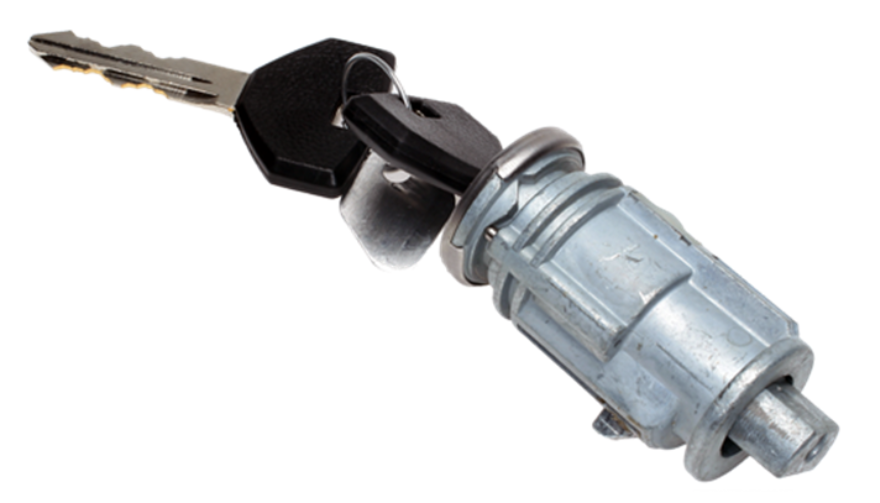
If the key becomes difficult to rotate, the ignition cylinder (mechanical part) may be worn — which often leads to switch failure later.

5. Accessories Don’t Work in ACC Mode


If turning the key to ACC does not activate:

radio

wipers

power windows

heater fan

…the accessory circuit inside the switch may be failing.

6. No Sound from the Fuel Pump When Turning the Key


You should hear a soft humming for 1–2 seconds.

If you don’t, it may mean the ignition switch isn’t powering the pump relay.


What Causes Ignition Switch Problems?


Ignition switches fail for predictable and well-documented reasons.

1. Internal Wear Over Time


Inside the ignition switch are metal contact plates.

After thousands of cycles, these contacts burn, corrode, or lose tension.

Symptoms develop slowly:


random stalling

needing to wiggle the key

intermittent power

This is the most common cause.

2. Heavy Keychains


Many drivers don’t realise this:

A heavy keychain constantly pulls on the ignition cylinder.

Over years, this causes:

internal looseness

misalignment

premature switch failure

If your keychain has more than a few items, it may be contributing.

3. Heat and Electrical Overload


Faulty relays, worn fuel pumps, or aftermarket accessories can overload the ignition switch.

Excess heat damages the internal copper contacts, causing:

hot key symptoms

partial circuit failure

total switch burnout

4. Moisture or Dirt in the Cylinder


Moisture or dust causes the mechanical part of the ignition to jam or bind.

This forces extra pressure onto the switch every time the key turns.


5. Faulty Key or Worn Key Blade


If your key doesn’t rotate smoothly, it can damage both the cylinder and the switch.

Worn keys often lead to electrical faults later.


How to Diagnose Ignition Switch Problems Accurately


Before replacing parts, you should confirm the ignition switch is truly the issue. These steps follow the same logic professional mechanics use.


1. Check if Dashboard Lights Turn On


Turn the key to ON without starting the engine.

If:

no lights come on

lights flicker

radio stays off

…the ignition switch might not be sending voltage.

2. Try Starting with Accessories On


Turn the key to ACC.

If the accessories work in ACC but the engine won’t start, the “start circuit” inside the ignition switch may be failing.


3. Wiggle Test


Gently wiggle the key while:

trying to start

with ACC on

with the engine idling


If wiggling makes electronics turn on/off, the switch is internally worn.

4. Bump Test While Driving


If the car stalls when hitting bumps or potholes, the switch is losing internal contact momentarily.

This is one of the strongest indicators of a failing switch.

5. Test Voltage at the Ignition Switch (Advanced)


Using a multimeter, check for:

constant power

switched power

accessory power

start signal power

If any circuit fails randomly, it confirms an ignition switch fault.


If you need a safety reference for electrical testing, you can check the UK Government’s general vehicle safety guidance here:


Prevention: How to Avoid Ignition Switch Problems


Ignition switch failures can often be prevented with small habits.

1. Keep Your Keychain Light


Remove heavy accessories.

This reduces stress on the ignition cylinder and switch dramatically.

2. Avoid Resting Hands on the Key While Driving


Constant pressure on the key twists the internal contacts.

3. Only Use Correct, Undamaged Keys


Bent, cracked, or worn keys can damage:

the cylinder

the switch

the steering lock


If your key is worn, replace it before it causes further problems.


4. Address Electrical Problems Early


A failing alternator, weak battery, or short circuits can overload the ignition switch.

If you notice dim headlights or battery warnings, fix those early.

5. Keep Dust and Moisture Out of the Cylinder


Avoid spraying WD-40 or household lubricants into the ignition—it attracts dust.

Use proper graphite lock lubricant if needed.


Ignition Switch Replacement Guide


You should only replace the ignition switch if diagnosis confirms it.

Below is a clear replacement overview used by both DIYers and technicians.


Note: Procedures vary by vehicle, but the overall steps are similar.

1. Disconnect the Battery


Always disconnect the negative terminal.

This prevents:

accidental airbag deployment

electrical shorts

damage to modules

2. Remove Steering Column Covers


Most cars use simple screws underneath.

Once removed, the top and bottom covers split apart.

3. Locate the Ignition Switch Module


It is usually mounted behind the ignition cylinder.

Depending on the car:

it may be held by two screws

or secured with clips

or integrated into a combined steering lock module

4. Remove the Electrical Connector


Ignition switches usually have one large multi-pin connector.

Release the locking tab and pull it gently.

5. Remove and Replace the Switch


Install the new switch in the exact orientation as the old one.

Common mistakes to avoid:

misaligning the switch’s internal slot

tightening screws unevenly

damaging wiring during removal

6. Reassemble and Test Thoroughly


After reassembly, test:

ACC mode

ON mode

engine start

headlights

indicators

wipers

radio

If everything works consistently, the replacement is successful.


Is It Safe to Drive with a Bad Ignition Switch?


Usually no.

A failing ignition switch can:

stall the engine suddenly

disable power steering

shutdown ABS

cut power to headlights at night


The RAC warns that electrical failures causing engine cut-outs are a serious safety risk.

If your switch is failing, get it inspected immediately.


FAQ: Car Ignition Switch Problems


1. How much does ignition switch replacement cost?

Most replacements cost £80–£300 depending on the vehicle. Some modern cars require coding, making the cost higher.

2. Can a bad ignition switch cause the car to stall?

Yes. Loss of electrical contact in the switch can cut power to the engine instantly.

3. Is a failing ignition switch the same as a bad starter?

No.

A bad starter prevents the engine from cranking.

A bad ignition switch prevents power from reaching the starter or other systems.

4. Can a locksmith replace an ignition switch?

In many cases, yes — especially for older vehicles.

For modern immobilizer systems, a vehicle technician may be required.

5. Can I drive with ignition switch problems?

It’s unsafe. The engine can cut out while driving, especially on bumps or turns.

6. Does a bad ignition switch affect accessories only?

It can affect:

accessories

engine start

fuel pump

dashboard power

ECU communication

It depends on which internal circuit fails.

7. What’s the lifespan of an ignition switch?

Most last between 10–15 years, depending on usage and electrical load.

8. Do push-button cars have ignition switches?

Yes — they use an electronic ignition switch module instead of a mechanical one.

Failure symptoms are similar.

9. What does a worn key have to do with ignition switch problems?

A badly worn key can cause mechanical strain on the cylinder, which then stresses the electrical switch linked behind it.

10. Can I prevent ignition switch issues?

Yes — keep your keychain light, avoid forcing the key, and keep electrical systems maintained.


For high-quality replacement automotive parts and spare key, visit our shop at mr-key.com.
Related Posts

Lost Your Roof Rack Key? Here's Exactly What to Do

Lost Your Roof Rack Key? Here's Exactly What to Do

Losing a roof rack key is more common than manufacturers like to admit. The good news: it's almost always solvable — quickly, cheaply, and without a locksmith. Here's the exact sequence to follow, from the moment you realise the key is gone. Step 1: Don't Panic — and Don't Force It The first instinct is to try to open the lock anyway. Don't. Forcing a barrel lock with the wrong tool damages the cylinder, strips the keyway, and turns a simple €8 key replacement into a €40 lock cylinder replacement. Leave the lock alone until you have the right key or professional help. Step 2: Check for the Key Code Before you do anything else, find your key code. This is the number stamped on your lock barrel, printed on your original key card, or listed in your rack documentation. Where to look: The lock face — look at the front of any lock point on your rack. The code is usually stamped directly on the metal Your original key — if you have one remaining key, the code is often stamped on the bow (the flat grip section) Paperwork — the key card or code card that came with your rack at purchase Registration confirmation — if you registered your rack online with Thule, Yakima, or Mont Blanc, the code may be on your account Found the code? You're done with the hard part. Jump to Step 5. No code visible? Continue to Step 3. Step 3: Photograph the Lock Take a clear, close-up photograph of the lock face in good light. This photo can do two things: Help a specialist identify your key — experienced suppliers can often determine the correct key from the keyway profile and any partial stamping visible in a photo Help a locksmith decode the lock — a physical locksmith can sometimes read the code from the lock face or decode it by impression Send the photo to a specialist before assuming you're stuck. Step 4: Identify Your Brand and Model If the code is genuinely unreadable, your brand and rack model narrows down the options considerably. Thule — uses N-series codes (N001–N200+), stamped on the lock barrel. If you know your N-code, the key is in stock. Yakima — uses SKS (Same Key System) codes, typically found on the lock core. Common range: SKS-101 to SKS-132+. Mont Blanc — numeric code system, on a sticker inside the lock or on the original key card. GIVI — code found on the product label or lock face. Other brands — most use ISO-standard barrel formats with numeric codes. Once you have brand + model, a specialist supplier can suggest the most likely code ranges for your rack generation and help you narrow it down. Step 5: Order the Replacement Key With your code confirmed, ordering is straightforward. What you need to provide: Brand (Thule, Yakima, Mont Blanc, GIVI, other) Exact key code (e.g. N121, SKS-115) Quantity — we recommend ordering two: one replacement and one spare From mr-key.com, keys ship to most European destinations within 2–5 business days . No locksmith. No dealer visit. No full rack replacement. Step 6: What If You Still Can't Unlock the Rack? If you have cargo on the rack that you need to remove urgently — bikes, a roof box, ski equipment — and you cannot wait for a replacement key, you have limited but real options. Option A: Call a locksmith A locksmith experienced with barrel locks can open your rack lock without damage and, in many cases, cut you a working key on the spot. This costs €50–€120 depending on location and time of day. Option B: Contact your rack manufacturer Thule and Yakima both have customer service lines. With proof of purchase or registered ownership, they may be able to supply a replacement key or lock service. Option C: Remove the lock cylinder On some rack models, the lock cylinder can be removed from the outside with the rack foot or arm partially dismantled. This requires mechanical confidence and the correct tools — consult your rack's installation manual first. Once the cylinder is out, a locksmith can decode it or you can replace it entirely. Roof Rack After the Crisis: What to Do Next Once you have access and a replacement key in hand, take 10 minutes to prevent this from happening again. Photograph your key code. Take a photo of the code stamped on your lock face. Store it in cloud storage or email it to yourself with the subject line "roof rack key code — [your rack brand]." Buy a spare key. It costs less than €10. Keep it somewhere separate from your main keyring — a drawer at home, your work locker, your other car. Register your rack. Thule and Yakima both offer product registration. Registering links your key code to your account, making future replacements instant. Label your key. If you have multiple sets of keys — car, house, garage, rack — label your rack key clearly so it's never confused and never left behind. Roof Rack Key Replacement: Brand-by-Brand Quick Reference Brand Where to Find Code Key Format Notes Thule Stamped on lock face N001–N200+ One-Key System: one code for all locks Yakima On lock core SKS-101–SKS-132+ Same Key System: one code for all locks Mont Blanc Inside lock or key card Numeric Sticker sometimes fades — check paperwork GIVI Product label or lock face Numeric Primarily motorcycle/touring racks Kamei / G3 / Farad Lock face or documentation Varies Contact supplier with photo if unsure FAQ Q: I lost both keys — can I still get a replacement? A: Yes. The key code is stamped on the lock itself, not on the key. As long as you can read the code on the lock face, you can order a replacement. If the code is unreadable, send a photo to a specialist supplier. Q: My rack is second-hand and came with no keys — what are my options? A: Check the lock face for a stamped code. If none is visible, a locksmith can decode the lock. Alternatively, order a replacement lock cylinder for your rack model — it will arrive with new keys and a new code. Q: How long will a locksmith take to open a roof rack lock? A: Most experienced locksmiths can open a barrel-style rack lock in under 10 minutes. The challenge is finding one who works on non-automotive locks — call ahead and confirm. Q: Can I drill out a roof rack lock myself? A: Technically yes, but this destroys the lock cylinder and leaves your rack unsecurable until you replace the full lock assembly. Only consider this if the cargo is time-critical and a locksmith is not available. Q: Will my insurance cover a lost roof rack key? A: Home contents or vehicle insurance sometimes covers key replacement, including accessories like rack locks. Check your policy — the cost of a specialist supplier is low, but it's worth reclaiming if covered. Q: I found a spare key in my car — how do I know if it's the right one? A: Try it carefully and gently. If it inserts smoothly and turns without force, it's the correct key. If it doesn't insert fully or requires force, stop — it's the wrong profile and forcing it risks damaging the cylinder. Q: Can I order a replacement key for an old rack that's no longer sold? A: In most cases yes. Key codes from established brands like Thule and Yakima remain in production for decades. Discontinued rack models still use the same N-series or SKS key codes. Get Your Replacement Key (Fast EU Shipping – Same-Day Dispatch) You know the code. You know the process. Don't leave it until the next trip. Visit mr-key.com to order your replacement roof rack key by brand and code. We ship to Germany, France, Italy, Greece, Netherlands, Romania, Spain, the UK, and across Europe — with tracking on every order. → Order Your Roof Rack Key at mr-key.com Also read: The Complete Guide to Roof Rack Replacement Keys | Thule Roof Rack Key Replacement: How to Find Your Code and Order the Right Key

Can I order a replacement car key online with delivery?

Can I order a replacement car key online with delivery?

Short answer: Yes. You can order a replacement car key online in the UK and have it delivered in 3–4 days. Choose the right key type, provide a photo or key code for cutting, and have a local locksmith program it when it arrives. Why trust this guide: With over 25 years in the locksmith trade and more than 650,000 satisfied customers, Mr-Key explains exactly how online key replacement works — clearly, securely, and step by step. When online replacement works (and when it doesn’t) Ordering online is ideal if you need a spare, a like-for-like remote, or a replacement for a lost or damaged key. It’s the fastest and most convenient way to get OEM-grade parts delivered to your door. You simply order the correct key, have it cut from a photo or key code, then let a local locksmith program it to your vehicle. Online ordering doesn’t replace immobiliser pairing. Modern vehicles still require professional programming once the key arrives. Key types explained Transponder keys These have a mechanical blade and an electronic chip that communicates with your car’s immobiliser. Remote fobs Include lock/unlock buttons plus a built-in transponder. We supply the pre-cut blade (if requested) and tested electronics. Proximity or smart keys Keyless entry and push-start units. Delivered ready for your locksmith to pair with the car. Key shells & batteries Replace worn housings or dead batteries without any programming. Also available: caravan keys, ATV keys , roof-rack keys , mailbox keys, towbar keys , and more. Browse our full range at mr-key.com . How online ordering works 1. Identify your key Use your vehicle make, model, and year. Match your key shape, button layout, and frequency markings. 2. Choose how to cut it By photo: send a clear image of your existing key. By key code: provide the manufacturer’s key code for factory-accurate cutting. 3. We cut and test Keys are machine-cut and tested for precision. Electronics are checked before dispatch. 4. Delivery in 3–4 days Typical UK delivery with tracking and updates. 5. Local programming Arrange a nearby automotive locksmith to pair the key. Most jobs take 15–30 minutes. What affects cost Key type — proximity and smart keys cost more than basic transponders. Electronics and frequency — differ by brand and year. Cutting method — photo or code; standard or laser blade. Programming complexity — varies by model. Extras — spare shells, emergency blades, or upgraded housings. Pro tip: Order two keys now — you’ll save money on future locksmith visits and prevent lockouts. Programming: DIY vs local locksmith Modern immobilisers are secure by design. Mr-Key does not supply pairing or programming kits. A professional locksmith uses diagnostic tools to safely program your new key and verify vehicle ownership. It’s faster, safer, and ensures full functionality. Shipping, warranty & returns Delivery: 3–4 days across the UK. Warranty: 12-month full coverage on keys and electronics. Returns: Contact support before programming — unused items are easier to exchange. Dealer vs local locksmith vs online Option Speed Convenience Programming Best for Main dealer Medium–slow Appointment required Dealer tools Brand-new cars, under warranty Local locksmith Fast Mobile visit Done on site Emergencies, quick help Online (Mr-Key) 3–4 days Order from home Done by locksmith Planned replacements, spares Most UK drivers choose online ordering + local locksmith pairing — the fastest, most cost-efficient combination. Troubleshooting after delivery Key turns but car won’t start Blade fits, but immobiliser isn’t paired yet. Book a locksmith. Remote buttons not working Replace the battery and re-pair during programming. Proximity key not detected Use the emergency start position (usually near the steering column) and ask your locksmith to register it. Blade feels rough Use light graphite lubricant or send a photo for recheck. How to avoid another lockout Order a second key and keep it at home. Replace weak remote batteries yearly. Label your spare with the vehicle reg. For keyless cars, store keys away from doors and use a signal-blocking pouch. FAQ Can I order a replacement car key online and get it delivered? Yes. Send your key photo or code, receive delivery in 3–4 days, and have it programmed locally. Do I need proof of ownership? Your locksmith may ask for it. For UK vehicle documentation, see GOV.UK – V5C log book . What’s the difference between key types? Transponder keys start the car; remote fobs add buttons; proximity keys enable keyless entry/start. Can you cut my key from a photo? Yes. Clear, well-lit images allow accurate decoding and cutting. Can I program the key myself? No. Only an automotive locksmith can safely pair it. How long does delivery take? Usually 3–4 days within the UK. Do you cover my vehicle? Almost all brands plus caravans, ATVs, lockers, and more. What warranty do I get? 12-month full warranty on all keys and electronics. What if the battery is dead? Replace it with the correct cell. If issues continue, have the locksmith check frequency and pairing. What if I’ve lost all keys? Order online and arrange programming. Mobile locksmiths can often attend on site. Can I order two keys? Yes — it’s the smartest option to prevent future emergencies. Shop now: https://mr-key.com

How to Identify Your Key Type for Easy Replacement

How to Identify Your Key Type for Easy Replacement

Replacing a lost or broken key might seem straightforward, but identifying the correct type of key is crucial to getting an exact replacement. Whether you need a car key, a house key, or even a cabinet key, each type has specific features that determine its function and fit. Here’s a step-by-step guide to understanding your key type, so you can save time and avoid unnecessary frustration when ordering a replacement. Why Key Identification is Important Keys come in many shapes and sizes, each designed for specific types of locks. Understanding your key’s unique characteristics ensures you get the right replacement and avoid wasted time or money on mismatched keys. Avoid Extra Costs : Ordering the wrong key can mean additional fees for reordering. Save Time : Getting the right key from the start saves the hassle of sending it back and waiting for the correct replacement. Enhance Security : Accurate key identification ensures your security by avoiding compromised, incorrect key fits. Types of Keys: Which One is Yours? Understanding the different types of keys can help you determine what you have. Here are the common types and what makes each unique. 1. Household Keys Household keys are typically designed for residential locks like front doors, back doors, and garage doors. These keys are often small and have either a single or double-sided cut pattern along the edges. Some household keys are unique in design, making them specific to a particular lock type. Common Features : Smaller, single or double-sided cuts. Typical Use : Standard residential door locks, such as deadbolts and knob locks. Tip : Look for any identifying numbers or letters on the key itself. These may indicate a specific lock series, making it easier to identify. 2. Car Keys Car keys come in various styles, depending on the make, model, and year of the vehicle. While older cars may use basic metal keys, most modern vehicles use transponder keys or fob keys with embedded chips for added security. Basic Car Keys : Metal keys without electronic components. Transponder Keys : These have a small chip embedded in the head, which communicates with the car to prevent theft. Key Fobs : Some cars use a fob that contains a keyless entry system, which requires programming specific to your vehicle. Tip : If your car uses a transponder or fob key, you may need assistance programming the replacement. 3. Padlock Keys Keys for padlocks can be small and compact, with a straightforward design. These keys often have a unique series number printed on them, making it easier to match them to a specific lock model. Common Features : Small size, usually single-sided. Typical Use : Storage units, gym lockers, and outdoor gates. 4. Furniture and Cabinet Keys Furniture and cabinet keys are typically found on desks, filing cabinets, and other types of lockable furniture. These keys are generally small, with a straight or tubular shaft, and they often have numbers or letters for identification. Common Features : Compact, single or double-sided cuts, often with identification codes. Typical Use : Office furniture, personal storage, and older-style drawers. 5. High-Security Keys High-security keys are specifically designed to prevent unauthorized duplication. These keys have unique, intricate cut patterns and require special authorization for copying. Common Features : Complex, often multi-sided cuts with additional security features. Typical Use : High-security doors in residential or commercial settings, safes, and secure access points. Key Identification Tips: What to Look For Once you know the type of key, you’ll want to examine specific details that will help with identification. Here’s what to look for: Keyway and Shape : The groove pattern, or “keyway,” is specific to the key type. Take note of the key’s shape and groove configuration. Markings and Codes : Look for any numbers or letters printed on the key. These often refer to specific lock brands or key series. Size and Length : Measure your key’s length, as some keys are longer or shorter depending on the lock type. Metal Head Design : Certain keys, like car keys, may have plastic or rubberized heads, which can indicate the need for a transponder or chip inside. Steps to Identify Your Key Type Inspect for Markings : Look closely at your key for any stamped numbers, letters, or symbols. These markings can often be referenced to find a matching lock or brand series. Measure Your Key : Use a ruler or tape measure to record the length and width of your key. These dimensions can help narrow down the exact key type. Examine the Cut Pattern : Take note of the number of cuts and whether they are on one or both sides. Identify the Head Style : If it’s a car key with a transponder, the head might be plastic or rubber. Check for a Code on the Lock : Some padlocks and cabinet locks have codes printed on them that correspond to a specific key model. What to Do When You Can't Identify the Key If your key has no visible markings or the cuts are unusual, consider taking a photo to help in the identification process. For specialty keys or hard-to-identify types, you may want to seek professional help or consult a detailed online database for reference. Preventing Future Key Confusion Once you’ve identified your key, take a few steps to prevent future issues with identification. Label Your Keys : Adding a small tag with a brief description can help you remember the type of key. Keep Spare Keys in a Safe Place : Having a backup key prevents you from needing a replacement immediately. Store Key Codes or Information : If your key or lock has a series code, store it in a safe place in case you need it for future reference. Identifying your key type is essential for getting a precise replacement without unnecessary hassle. By taking the time to understand your key’s unique features, you can save both time and money when it’s time to replace it. Following these steps will help ensure that your replacement key works as smoothly as the original.

The Impact of Artificial Intelligence on Automotive Innovation: A Glimpse into the Future of Driving

The Impact of Artificial Intelligence on Automotive Innovation: A Glimpse into the Future of Driving

The automotive industry is experiencing a transformative shift, and at the center of this revolution is artificial intelligence (AI). From the development of fully autonomous vehicles to enhancements in key systems, AI is changing how we drive, maintain our vehicles, and secure them. While these advancements promise increased efficiency and convenience, they also raise new questions, particularly regarding cost, accessibility, and how car owners will interact with their vehicles in the future. Let’s take a closer look at how AI is reshaping the automotive world and why it’s important for car owners to understand these changes. Smarter Cars, Smarter Keys Artificial intelligence isn’t just revolutionizing self-driving cars—it’s also transforming the traditional car key. What once required a physical key is now being replaced by more advanced, secure alternatives. With the rise of smart keys, biometric access, and mobile apps, car keys are becoming increasingly sophisticated. AI-powered keyless entry systems allow you to unlock and start your car without needing to take a physical key out of your pocket or bag. The car senses your presence and communicates wirelessly to grant access. Additionally, biometric keys such as fingerprint or facial recognition are gaining traction, ensuring that only authorized users can access the vehicle. These systems are nearly impossible to duplicate, offering an unparalleled level of security. While these innovations add layers of convenience, they also highlight the growing need for professional key replacement services to ensure your car's security isn’t compromised. Autonomous Vehicles: A Step Toward the Future The idea of self-driving cars has long been a futuristic concept, but AI is making it a reality. Although fully autonomous vehicles are not yet mainstream, the technology is evolving quickly. AI algorithms are able to process data from sensors, cameras, and radars in real-time, allowing the car to navigate without human input. While fully autonomous driving has the potential to reduce accidents caused by human error—responsible for over 90% of crashes today—there are still many challenges to overcome. Self-driving cars must be equipped with robust systems capable of handling emergencies and unpredictable situations, which are crucial for ensuring safety. Even if true autonomy is still a few years away, many modern vehicles already feature semi-autonomous capabilities, such as adaptive cruise control, automatic emergency braking, and automated parking. These features, powered by AI, offer significant improvements in driving safety and convenience. Predictive Maintenance: Preventing Problems Before They Happen Imagine a world where your car could tell you when it’s about to break down. With AI, this is becoming a reality. Predictive maintenance, powered by AI, is revolutionizing how we approach vehicle care. AI-driven systems can analyze your car’s performance in real-time, predicting when parts need servicing before they fail. Examples of Predictive Maintenance : Notifications for upcoming maintenance, such as oil changes or brake pad replacements. Alerts about issues like low tire pressure or a battery nearing its end. Suggestions for repairs based on your driving patterns, reducing the chances of unexpected breakdowns. By identifying potential issues before they become major problems, AI helps save you time and money, providing a smoother, more reliable driving experience. Enhanced Driving Experience AI is not only about improving vehicle performance but also enhancing your overall driving experience. Through smart technologies, driving has become more intuitive and enjoyable. Voice assistants, for example, allow you to control various functions hands-free, from adjusting climate settings to managing calls and navigation. AI also customizes your vehicle experience based on your preferences. Over time, AI learns your favorite seating positions, climate control settings, and even your regular routes, making every drive more comfortable. With AI-powered infotainment systems, you can enjoy real-time traffic updates, personalized music playlists, and even hands-free control over entertainment choices. These innovations make driving safer, more enjoyable, and tailored to your individual needs. Transforming Vehicle Security The introduction of AI in automotive security is setting new standards. As vehicles become increasingly connected, the potential for cyber threats rises. Fortunately, AI is being implemented to protect against these risks, offering peace of mind for car owners. AI-enhanced Security Features: Advanced Theft Protection : AI systems can detect unusual activities, like attempted break-ins, and alert you immediately via your smartphone. Geo-fencing : Some vehicles now allow you to create safe zones. If your car moves outside the designated area, you’ll receive an instant notification. Anti-Hacking Measures : As cars become more integrated with the internet, AI helps protect against cyberattacks, ensuring your vehicle's systems remain secure. These features not only protect your vehicle from theft but also provide you with more control over your car’s safety, no matter where you are. What This Means for Key Replacements As AI continues to evolve in the automotive industry, the process of replacing and programming car keys is becoming more complex. Advanced keys, such as those based on biometric authentication or smartphone applications, are more expensive to replace than traditional metal keys. Furthermore, these modern systems require specialized equipment and expertise to program properly. For car owners, it’s essential to stay informed about your vehicle’s key system. Always keep a spare key on hand and familiarize yourself with emergency unlocking features, so you're prepared if something goes wrong. Challenges of AI in Cars While the benefits of AI in automotive innovation are clear, there are also some challenges to consider. AI can drive up the cost of manufacturing and repairs, and adapting to new features can sometimes be overwhelming for drivers. High Costs : Implementing AI technologies in vehicles can increase both the initial price and the cost of repairs. Learning Curve : Some drivers may find it difficult to adapt to new, AI-driven features, especially if they are not technologically inclined. Dependence on Connectivity : Many AI-powered systems require an internet connection, which can be problematic in remote areas or locations with poor service. Being aware of these challenges will help you navigate the evolving automotive landscape and make informed decisions about your car’s technology. Embracing the Future of Driving Artificial intelligence is rapidly transforming the automotive industry, changing everything from how we drive to how we secure and maintain our vehicles. For car owners, these innovations bring immense convenience and enhanced security. But they also require a deeper understanding of the systems that power your car, from keyless entry to semi-autonomous driving features. As AI continues to develop, staying informed will help you make the best decisions for your lifestyle and budget. Whether you’re exploring new key technologies or considering a fully autonomous vehicle, the future of driving is undeniably shaped by AI—and it’s already here.

Chat with us