Post Name

In an age where smartphones can locate us with pinpoint accuracy and lost luggage can be tracked halfway around the world, it’s easy to assume car keys are just as smart. But for many frustrated drivers, losing a car key feels like sending it into a black hole. The lack of a clear way to find them often leads to stress, wasted time, and sometimes costly replacements. So here’s the big question: Do car keys have GPS, and can they be tracked like other smart devices?

This article explains the technology behind key tracking, compares GPS with Bluetooth, and offers practical ways to find lost keys in a connected world.


The Truth About GPS in Car Keys

While GPS technology has become common in many consumer devices, the vast majority of car keys do not include built-in GPS. Even the most modern remote key fobs, which allow for keyless entry and push-button start, generally lack the components necessary for GPS functionality. These components include a satellite GPS receiver, a data transmission module, and a sustainable power source—none of which are typically found in a key fob. The design of a car key prioritizes compactness, cost-efficiency, and low energy usage. Adding GPS would not only increase manufacturing costs but also introduce battery life challenges. That’s why most manufacturers have opted against including GPS tracking in car keys.

GPS requires constant power and data transmission — something a small coin cell battery in a typical key fob can’t support." – Marcus Lee, Automotive Tech Analyst


How Can Car Keys Be Tracked?

Although your keys may not have GPS, there are other technologies that make it possible to track or locate them when they’re lost. These include Bluetooth trackers, crowdsourced networks, and GPS systems that track the vehicle instead of the key itself.

1. Bluetooth Trackers (Apple AirTag, Tile, Chipolo)

These small, attachable gadgets can be added to your keychain and linked to a mobile app. They rely on Bluetooth to provide location data when within a certain range. If your keys are somewhere nearby—like in your home or office—these trackers can play a sound or show you their last known position on a map. The range is generally up to 120 meters (400 feet), and battery life can last up to a year, making them a practical, low-maintenance option for most users.

2. Crowdsourced Networks (Find My, Tile Network)

If your Bluetooth tracker is out of range, some brands offer a smart workaround. Apple’s AirTag, for instance, uses the “Find My” network, which consists of millions of iPhones around the world. If someone with an Apple device passes near your lost keys, the location is anonymously and securely sent to your phone. This creates a global, decentralized tracking system that mimics GPS functionality without requiring satellites or cellular connections.

3. Car GPS Systems (Vehicle Only, Not the Key)

Some high-end cars offer integrated GPS systems, but these track the vehicle, not the keys. Brands like Tesla, BMW, and Mercedes-Benz allow owners to locate their car through mobile apps. If your keys are left inside the car, you may be able to find them by locating the vehicle. However, once the keys are removed, they cannot be tracked unless equipped with a separate Bluetooth tracker.


GPS vs Bluetooth: What’s the Difference?

To better understand why GPS isn’t commonly included in car keys, it’s useful to compare the two technologies:
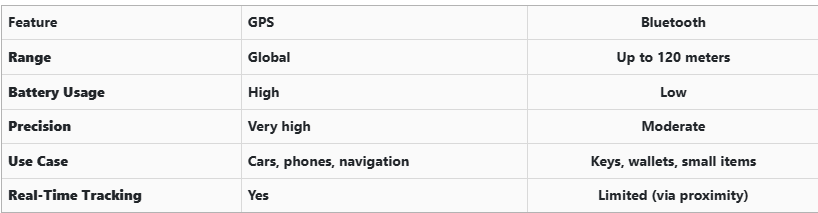
GPS provides global, real-time tracking with high precision, but it’s power-intensive and costly. Bluetooth, while more limited in range, is ideal for small items and short distances, offering a cost-effective solution for everyday use.


Global Perspectives on Key Tracking

Around the world, the adoption of key tracking technologies differs based on privacy laws, tech infrastructure, and consumer behavior. In Japan and South Korea, smart home and car integration are advanced, yet GPS-enabled keys are still not the norm. In many parts of Europe, particularly in countries like Germany, Bluetooth solutions are favored due to strict data privacy regulations. In contrast, the U.S. market has embraced personal tracking devices like Apple AirTag and Tile, making them increasingly common accessories. These differences highlight how technology adoption often reflects broader cultural and legal norms, as well as the balance between convenience and privacy.


Smart Tips to Keep Track of Your Keys

Whether your keys have advanced tech or not, you can take simple steps to avoid losing them. Attaching a Bluetooth tracker is a great first line of defense. Keeping your keys in a consistent, designated place at home reduces the chances of misplacement. Many tracking apps also offer “left behind” alerts, which notify you if you leave your keys behind when moving out of range. It's also smart to keep a spare key somewhere safe and consider going keyless if your next car allows it. Implementing a few of these habits can save you time, frustration, and the cost of replacing a lost key.


The Future of Key Tracking

While car keys may not have built-in GPS, technology continues to evolve with practical alternatives. Bluetooth trackers, supported by app alerts and community networks, already provide effective ways to find lost keys. As innovation progresses, we can expect even more seamless solutions, such as Ultra Wideband (UWB) technology and Internet of Things (IoT) integrations, to become mainstream.

As our tools become smarter, so must the way we use and manage them. With a little foresight and the right accessories, you'll never lose track of your keys again.

Related Posts

The Fascinating History of Car Safety Features: How Far We’ve Come to Keep You Safe

The Fascinating History of Car Safety Features: How Far We’ve Come to Keep You Safe

When you think about cars, what comes to mind? Speed, design, or maybe the feeling of freedom when you hit the open road? But there’s one crucial aspect of driving that you might not think about as much—safety. Cars today are safer than ever, thanks to decades of innovations and advancements. But how did we get here? Let’s dive into the history of car safety features and see just how far we’ve come to protect you and your loved ones on the road. The Early Days: A Lack of Safety Awareness Back in the early 1900s, cars were viewed as luxury items and status symbols. Safety wasn’t really a concern. Cars had no seat belts, no airbags, and certainly no crumple zones. People focused more on making vehicles go faster and look better than on keeping passengers safe. In those days, accidents were far more dangerous, often leading to severe injuries or fatalities. It wasn’t until the rise of car ownership in the 1920s and 1930s that people began to notice just how dangerous cars could be. The growing number of vehicles on the road led to more accidents, and the need for safety features became evident. The Invention of Seat Belts: The First Major Breakthrough Seat belts were one of the first car safety features to be introduced. But they didn’t become standard right away. In fact, the idea of a seat belt first appeared in the late 19th century, designed for use in airplanes, not cars. It wasn’t until the 1950s that the seat belt began to find its way into automobiles, thanks to Swedish engineer Nils Bohlin, who designed the three-point seat belt in 1959. Bohlin’s invention, which you still use today, was a game-changer. It saved countless lives and reduced serious injuries in crashes. Volvo was the first company to introduce the three-point seat belt in their vehicles, and soon after, other manufacturers followed suit. Airbags: A Revolutionary Step Forward As seat belts became more common, automakers started looking for additional ways to protect drivers and passengers. Enter the airbag. The airbag was initially developed in the 1950s, but it took decades of refinement before it became a standard feature in cars. The first production car equipped with an airbag was the 1973 Oldsmobile Toronado, but it wasn’t until the 1990s that airbags became widely available. Today, airbags are a critical component of vehicle safety systems, with front, side, and even curtain airbags designed to protect you from all angles in a crash. Alongside seat belts, airbags are now seen as one of the most effective life-saving technologies in modern vehicles. Crumple Zones: Protecting You in a Collision Crumple zones are another innovation that may not be immediately obvious, but they play a huge role in keeping you safe. In the event of a crash, crumple zones are designed to absorb and dissipate energy, reducing the force transferred to passengers. Introduced in the 1950s by Mercedes-Benz, crumple zones help reduce the impact of a collision by sacrificing the car’s body to protect the occupants. Today, crumple zones are standard in virtually every car, and their design continues to evolve, improving crash safety with each new model year. Anti-lock Brakes: Helping You Keep Control The introduction of anti-lock braking systems (ABS) in the 1970s was another massive leap forward in car safety. ABS prevents the wheels from locking up during braking, which helps maintain steering control during an emergency stop. This system is especially useful on slippery surfaces like rain-soaked or icy roads. Before ABS, sudden braking could lead to skidding, causing drivers to lose control of their vehicles. ABS has significantly reduced the number of accidents caused by loss of control and has become a staple of modern driving safety. Electronic Stability Control: The Technology That Saves Lives Electronic Stability Control (ESC) was a groundbreaking safety feature that hit the market in the 1990s. ESC helps you maintain control of your car during skids or oversteering by automatically applying brakes to individual wheels. Studies have shown that ESC can reduce the risk of a fatal crash by as much as 50%. In fact, the National Highway Traffic Safety Administration (NHTSA) now mandates that all cars sold in the United States come equipped with ESC. This technology has proven to be especially helpful in preventing rollovers, which are among the most dangerous types of accidents. The Future of Car Safety: What’s Next? Car safety features have come a long way, but we’re not done yet. The future of vehicle safety lies in advanced driver-assistance systems (ADAS), which use sensors, cameras, and radar to detect potential hazards and prevent accidents before they happen. Some of the technologies that are becoming increasingly common include lane departure warnings, automatic emergency braking, and adaptive cruise control. And let’s not forget the promise of self-driving cars, which could drastically reduce accidents caused by human error, which accounts for the majority of crashes today. The Importance of Car Safety As we look back on the history of car safety features, it’s incredible to see how far we’ve come. From the early days of no seat belts or airbags to today’s cutting-edge technology, the automotive industry has made safety a top priority. The next time you get behind the wheel, take a moment to appreciate all the safety features designed to protect you. Whether it’s a simple seat belt or a high-tech stability control system, these innovations have made driving safer for everyone. And remember, no matter how advanced your car’s safety systems are, the best protection is still responsible driving. Stay alert, drive safely, and always buckle up!

The Secret Life of Car Keys: Unlocking Their Evolution and Hidden Potential

The Secret Life of Car Keys: Unlocking Their Evolution and Hidden Potential

In the modern age of technology, where smartphones dominate our lives, it’s easy to overlook the small yet significant gadgets we use daily—like car keys. What was once a simple metal tool has now transformed into a sophisticated device, integrating technology, convenience, and security. But how did we get here? And what surprising secrets do car keys hold? This journey into the secret life of car keys will reveal their evolution, innovative features, and potential future. From Metal to Smart: A Brief History of Car Keys The history of car keys is a fascinating reflection of automotive innovation. In the early 20th century, cars relied on simple ignition switches, but by the 1940s, car keys became standard. These were basic metal tools designed to operate mechanical locks and ignitions. The 1980s marked a significant milestone with the introduction of remote keyless entry systems. Suddenly, unlocking a car was as simple as pressing a button, a feature that quickly became a standard in most vehicles. By the early 2000s, car keys had evolved into smart keys, incorporating technology that allowed keyless ignition and enhanced security. These advancements weren’t just about convenience—they were a response to rising concerns about car theft. Today, digital car keys take innovation even further. Some manufacturers now allow drivers to unlock and start their vehicles using smartphone apps, integrating biometric authentication for added security. This evolution highlights how far we’ve come from the humble metal key. Hidden Features: What Your Car Key Can Do Modern car keys are more than just tools for unlocking and starting your car—they’re packed with features that many drivers don’t even realize exist. Panic Button : Most car key fobs have a panic button, which emits a loud alarm to deter potential threats or help locate your car in a crowded area. Remote Start : Certain keys allow you to start your car from a distance, a lifesaver in extreme weather conditions. Window Control : Some key fobs can roll your windows up or down remotely, perfect for venting a hot car before stepping inside. Valet Mode : This feature limits the speed and access to certain compartments when you hand over your keys, enhancing security. These features reflect how car keys have grown beyond their traditional roles, becoming integral to the driving experience. Car Keys Across the Globe: Different Innovations, Same Purpose Car key technology isn’t uniform—it varies across regions, catering to different needs and preferences. Asia : In countries like Japan and South Korea, biometric car keys are becoming the norm. Fingerprint or facial recognition ensures that only authorized users can access the car. Europe : European car manufacturers emphasize eco-friendly designs, often using recycled materials in key fobs. North America : Remote start and smartphone integration are popular features, reflecting the region’s focus on convenience. These regional differences underline how car keys adapt to meet the diverse demands of global markets. Challenges with Modern Car Keys While advanced car keys offer unparalleled convenience, they’re not without drawbacks. High Replacement Costs : Losing a smart key can be expensive, with replacements costing hundreds of dollars due to programming requirements. Security Risks : Keyless entry systems can be vulnerable to relay attacks, where thieves intercept and amplify the key’s signal to gain access to the car. Battery Dependency : Smart keys rely on batteries, and a dead battery can leave drivers stranded. To address these challenges, drivers are encouraged to keep spare keys, invest in signal-blocking pouches, and regularly check key fob batteries. The Future of Car Keys As technology advances, the future of car keys looks exciting. Biometric keys are expected to become mainstream, offering unmatched security through fingerprint or retina scanning. Additionally, digital keys, which allow drivers to control their vehicles entirely through smartphones, are gaining traction. In the coming years, sustainability will likely play a bigger role. Manufacturers are exploring ways to make key fobs more environmentally friendly, such as using biodegradable materials or incorporating solar charging for battery-free operation. These innovations signal a future where car keys become even more sophisticated, secure, and eco-conscious. Why Car Keys Matter More Than You Think Car keys are small devices with big responsibilities. Beyond their practical use, they symbolize how technology can integrate seamlessly into our lives. Understanding their features and potential can help you make informed decisions, whether it’s upgrading to a smart key or taking precautions to protect your investment. Pro Tips for Car Key Maintenance : Keep a Spare Key : Always have a backup in case of loss or damage. Check Battery Life : Replace key fob batteries regularly to ensure consistent performance. Use Protective Covers : These prevent wear and tear, especially in extreme weather conditions. By caring for your car keys, you ensure their longevity and reliability, saving you from unexpected hassles. More Than Just a Key Car keys have evolved from simple metal tools into complex devices that enhance security, convenience, and connectivity. As technology continues to advance, their role in our daily lives will only grow. By understanding their capabilities and challenges, you can fully appreciate the innovation behind these essential tools. The next time you hold your car key, take a moment to think about its journey—from the past to the future, it’s a small device with a story as dynamic as the automotive industry itself.

Can a Locksmith Cut a Key from a Photo or Code?

Can a Locksmith Cut a Key from a Photo or Code?

Short answer: yes— for many keys, a locksmith can cut accurately from a photo or a code . The details depend on the key type, the quality of the image/data. Key cutting from code vs from photo By code (most precise). A key code (often printed on locks, key tags, or documentation) translates into a series of cut depths called the bitting . On a code machine, a locksmith dials those depths and cuts a new key without the original present . This is the preferred method for many utility keys (e.g., caravan, retro auto, e-bike battery, furniture, mailboxes, ATVs, roof racks, towbars), but also for car keys. By photo (works in many cases). From a clear, square-on image, a trained technician can decode the cut depths and reproduce the bitting. Research has shown keys can be recreated from ordinary or telephoto shots if the profile and scale are known. This is why publishing close-ups of your keys is discouraged. When a photo is “good enough” If you’re ordering car keys cut by photo or utility keys by photo , expect guidelines like: Flat, well-lit, high-resolution image; key blade perfectly side-on. Ruler/coin in frame for scale; entire blade visible, shoulder to tip. For double-sided/laser keys, shots of both sides. Keyway/profile identification (brand/series). Automotive: cutting from photo or code—plus programming Cutting the blade is only step one for modern cars. Since the late 1990s, most vehicles have immobilisers ; the key’s transponder chip must be recognised or the engine won’t start. In practice: Get the correct blank and cut it (photo or code). Program the transponder/remote (OBD or on-board procedures), or pair a proximity fob. Test mechanical operation and ignition start. Main points UK readers should know: Immobiliser/transponder tech became standard in the mid-1990s; without a programmed chip, a correctly cut key usually won’t start the car. A key code specific to your vehicle lets a locksmith/dealer cut precisely without an original; some guides explain where owners can find it. Utility keys we commonly see cut by code If you have the key code , these are routinely cut accurately online: Retro automobile keys (classic patterns; often stamped codes). Caravan & motorhome key s (e.g., ZADI, FAP/FAWO—codes on barrels). E-bike battery keys (e.g., ABUS/AXA series). Furniture, mailboxes keys (office furniture, cam locks). ATV/quad ignition and compartment keys. Roof racks (e.g., Thule N*** series). Towbars (e.g., Westfalia/Brink code series). For these categories, supplying the printed code (from the lock face, key head, manual, or tag) usually yields the fastest, most reliable result compared to photos. Accuracy expectations & limitations What typically works well Flat cylinder keys with standard depth systems (common utility keys). Many car blades (including laser/sidewinder) if the image is clean and scaled. Keys where the lock/brand series is known and the bitting can be derived . What may be restricted or not feasible from a photo Patented/restricted keyways (require authorised proof and controlled blanks). Highly worn, bent, or obscured keys in photos. Complex security keys that need factory or authorised dealer processes. Car keys where programming tokens, PINs, or security codes are required. For security and consumer protection in the UK, look for MLA-approved locksmiths and insist on identity/ownership checks for sensitive work. Real-world risk: why photos can be enough Academic work and well-reported incidents show that key geometry can be decoded from images at surprising distances. Media have covered expensive lock replacements after keys appeared on camera, underlining the practical risk of sharing key images online. Keep your keys out of frame. What an online order typically requires For car keys (photo or code): Vehicle make/model/year, blade type, and VIN if needed for code retrieval. Clear photos (both sides). Programming method: mobile visit, on-site, or mail-in ECU/fob (varies by model). Expect additional steps for remote locking and proximity systems. For utility keys (cut by code): The code from the lock face or original key (e.g., N123 , Z **). Brand or system (Thule, Zadi, Westfalia, etc.). Quantity and turnaround needs (next-day options often available). Speed and success rates By code : fastest and most consistent for; minimal adjustment needed. By photo : slightly more validation and back-and-forth; still accurate when images meet spec. Why choose an online key cutting service like MR-KEY Unlike traditional emergency locksmiths who mainly handle urgent lockouts, MR-KEY specialises in precision key cutting from photos or codes — ideal when you’re not locked out but need an exact replacement or spare . Through our online platform, you can: Order from anywhere in the UK — simply upload a clear photo or enter your key code. Get fast, expert cutting using professional decoding software and calibrated machines. Receive your key by post , ready to use or, for vehicles, to be programmed locally. With MR-KEY, you save the cost and time of a mobile visit while still getting locksmith-level precision. Each key is verified before dispatch to ensure perfect fitting and reliable operation. FAQs Can a locksmith cut a car key from a photo? Often yes, the blade can be cut from a high-quality photo , but modern cars also need transponder/immobiliser programming before the engine will start. Is cutting by code more accurate than using a photo? For most utility keys , yes . A verified key code maps to exact cut depths, making the process highly repeatable and quick. Can someone copy my key from a social media photo? It’s technically possible; public cases and research have shown keys can be decoded from images . Avoid posting close-ups of keys online. What’s the difference between “key cutting,” “key replacement,” and an “emergency locksmith”? Key cutting : the physical milling of a blade (by code/copy/photo). Key replacement : end-to-end service supplying a working key/fob (cutting + programming if needed). Emergency locksmith : rapid response for lockouts or urgent access/security issues. Order your new key today at mr-key.com — fast, accurate, and cut by professionals from your photo or code.

Exploring the Future of Car Key Technology: What’s Next?

Exploring the Future of Car Key Technology: What’s Next?

In the rapidly evolving world of automotive technology, car keys have transformed from simple metal tools into sophisticated electronic devices. As vehicles become smarter, so do their keys. From keyless entry to biometric authentication, car key technology continues to push boundaries. Let’s explore the next frontier of car key innovations and how they’ll impact convenience, security, and vehicle ownership. 1. Digital Keys: Unlocking with Your Smartphone One of the most exciting advancements is the rise of digital keys. These allow you to unlock and start your car using just your smartphone. How It Works: Digital keys rely on Bluetooth or NFC (Near Field Communication) technology to securely transmit signals between your phone and the car. Convenience: No more fumbling for keys. Your phone acts as your all-in-one device. Security Features: Many digital key apps offer encrypted access and the ability to revoke permissions instantly if your phone is lost or stolen. This innovation is gaining traction among automakers and is expected to become standard in the near future. 2. Biometric Authentication: Keys That Recognize You Biometric car keys are already starting to appear in premium vehicles. These keys use your unique physical features to grant access. Fingerprint Recognition: Similar to unlocking your phone, some car keys now scan your fingerprint to unlock the car. Facial Recognition: Cameras built into the vehicle can identify you and automatically unlock the doors. Why It Matters: Biometrics provide an additional layer of security, making it nearly impossible for thieves to gain unauthorized access. This cutting-edge technology ensures that only you—and those you authorize—can start your vehicle. 3. Smart Key Customization: Personalization at Its Best The future of car keys isn’t just about unlocking cars; it’s about creating personalized driving experiences. Pre-Set Preferences: Smart keys can remember your seat position, climate control settings, and even your preferred music playlist. User Profiles: In households with multiple drivers, smart keys can switch profiles based on who’s using the car. Why It’s Useful: This feature saves time and enhances comfort, making every drive tailored to your needs. As vehicles become more personalized, smart keys will play a vital role in delivering these conveniences. 4. Ultra-Secure Encryption: Fighting Key Hacking As technology advances, so do the tactics of cybercriminals. To combat this, car key technology is embracing stronger encryption. Rolling Codes: Modern key fobs use rolling codes that change with every use, making it harder for hackers to intercept signals. Blockchain Technology: Some experts predict that blockchain could be integrated into car key systems for unbreakable security. Impact on Security: These measures aim to eliminate vulnerabilities, ensuring that only the rightful owner can access the vehicle. Advanced encryption is a critical step in securing the future of car ownership. 5. Integration with Smart Homes: A Connected Lifestyle Imagine your car keys working seamlessly with your smart home devices. This future is closer than you think. Examples: Unlock your car and have your home’s lights turn on simultaneously. Use voice commands to lock your car doors through your home assistant. Convenience Factor: This integration enhances the interconnectedness of your daily routines, saving you time and effort. As smart ecosystems grow, car keys will become a pivotal part of a connected lifestyle. 6. Eco-Friendly Innovations: Sustainable Car Keys Sustainability is a growing concern in all industries, including automotive technology. Car keys are no exception. Recyclable Materials: Future car keys could be made from eco-friendly or recycled materials. Energy-Efficient Batteries: Expect longer-lasting, rechargeable batteries that reduce waste. Why It Matters: These changes not only benefit the environment but also align with the broader push toward sustainable vehicle manufacturing. As the industry shifts toward greener practices, even car keys are becoming part of the solution. A New Era of Car Keys Car key technology is on the cusp of incredible transformations, combining convenience, security, and sustainability. Whether through digital keys, biometrics, or smart home integration, the future holds endless possibilities for making your driving experience safer and more seamless. For car owners, these innovations mean less hassle, greater control, and enhanced peace of mind. As car key technology evolves, so does the way we interact with our vehicles—ushering in a new era of smarter and more secure mobility.

Chat with us