Post Name

In an age where smartphones can locate us with pinpoint accuracy and lost luggage can be tracked halfway around the world, it’s easy to assume car keys are just as smart. But for many frustrated drivers, losing a car key feels like sending it into a black hole. The lack of a clear way to find them often leads to stress, wasted time, and sometimes costly replacements. So here’s the big question: Do car keys have GPS, and can they be tracked like other smart devices?

This article explains the technology behind key tracking, compares GPS with Bluetooth, and offers practical ways to find lost keys in a connected world.


The Truth About GPS in Car Keys

While GPS technology has become common in many consumer devices, the vast majority of car keys do not include built-in GPS. Even the most modern remote key fobs, which allow for keyless entry and push-button start, generally lack the components necessary for GPS functionality. These components include a satellite GPS receiver, a data transmission module, and a sustainable power source—none of which are typically found in a key fob. The design of a car key prioritizes compactness, cost-efficiency, and low energy usage. Adding GPS would not only increase manufacturing costs but also introduce battery life challenges. That’s why most manufacturers have opted against including GPS tracking in car keys.

GPS requires constant power and data transmission — something a small coin cell battery in a typical key fob can’t support." – Marcus Lee, Automotive Tech Analyst


How Can Car Keys Be Tracked?

Although your keys may not have GPS, there are other technologies that make it possible to track or locate them when they’re lost. These include Bluetooth trackers, crowdsourced networks, and GPS systems that track the vehicle instead of the key itself.

1. Bluetooth Trackers (Apple AirTag, Tile, Chipolo)

These small, attachable gadgets can be added to your keychain and linked to a mobile app. They rely on Bluetooth to provide location data when within a certain range. If your keys are somewhere nearby—like in your home or office—these trackers can play a sound or show you their last known position on a map. The range is generally up to 120 meters (400 feet), and battery life can last up to a year, making them a practical, low-maintenance option for most users.

2. Crowdsourced Networks (Find My, Tile Network)

If your Bluetooth tracker is out of range, some brands offer a smart workaround. Apple’s AirTag, for instance, uses the “Find My” network, which consists of millions of iPhones around the world. If someone with an Apple device passes near your lost keys, the location is anonymously and securely sent to your phone. This creates a global, decentralized tracking system that mimics GPS functionality without requiring satellites or cellular connections.

3. Car GPS Systems (Vehicle Only, Not the Key)

Some high-end cars offer integrated GPS systems, but these track the vehicle, not the keys. Brands like Tesla, BMW, and Mercedes-Benz allow owners to locate their car through mobile apps. If your keys are left inside the car, you may be able to find them by locating the vehicle. However, once the keys are removed, they cannot be tracked unless equipped with a separate Bluetooth tracker.


GPS vs Bluetooth: What’s the Difference?

To better understand why GPS isn’t commonly included in car keys, it’s useful to compare the two technologies:
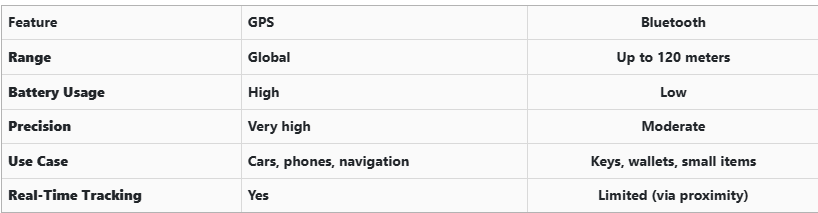
GPS provides global, real-time tracking with high precision, but it’s power-intensive and costly. Bluetooth, while more limited in range, is ideal for small items and short distances, offering a cost-effective solution for everyday use.


Global Perspectives on Key Tracking

Around the world, the adoption of key tracking technologies differs based on privacy laws, tech infrastructure, and consumer behavior. In Japan and South Korea, smart home and car integration are advanced, yet GPS-enabled keys are still not the norm. In many parts of Europe, particularly in countries like Germany, Bluetooth solutions are favored due to strict data privacy regulations. In contrast, the U.S. market has embraced personal tracking devices like Apple AirTag and Tile, making them increasingly common accessories. These differences highlight how technology adoption often reflects broader cultural and legal norms, as well as the balance between convenience and privacy.


Smart Tips to Keep Track of Your Keys

Whether your keys have advanced tech or not, you can take simple steps to avoid losing them. Attaching a Bluetooth tracker is a great first line of defense. Keeping your keys in a consistent, designated place at home reduces the chances of misplacement. Many tracking apps also offer “left behind” alerts, which notify you if you leave your keys behind when moving out of range. It's also smart to keep a spare key somewhere safe and consider going keyless if your next car allows it. Implementing a few of these habits can save you time, frustration, and the cost of replacing a lost key.


The Future of Key Tracking

While car keys may not have built-in GPS, technology continues to evolve with practical alternatives. Bluetooth trackers, supported by app alerts and community networks, already provide effective ways to find lost keys. As innovation progresses, we can expect even more seamless solutions, such as Ultra Wideband (UWB) technology and Internet of Things (IoT) integrations, to become mainstream.

As our tools become smarter, so must the way we use and manage them. With a little foresight and the right accessories, you'll never lose track of your keys again.

Related Posts

The Importance of Regularly Updating Your Car's Key Fob Software

The Importance of Regularly Updating Your Car's Key Fob Software

In the digital age, vehicle security has evolved beyond traditional locks and keys. Modern cars rely on sophisticated electronic systems, with key fobs playing a crucial role in convenience and safety. However, many car owners overlook the importance of regularly updating their key fob software. Like any other electronic device, key fobs require updates to function optimally and protect against emerging threats. This article explores why keeping your car's key fob software up-to-date is essential for security, functionality, and overall vehicle performance. Enhanced Security Against Keyless Theft One of the primary reasons to update your key fob software is to safeguard your vehicle against hacking and theft. Car thieves have become increasingly tech-savvy, using methods such as relay attacks and key cloning to gain unauthorized access to vehicles. Manufacturers frequently release software updates to counteract these evolving threats, strengthening encryption protocols and implementing new security measures. Regular updates ensure that your vehicle remains protected against the latest hacking techniques, reducing the risk of keyless car theft. Improved Functionality and Performance Software updates do more than just enhance security; they also improve the functionality of your key fob. Updates can optimize the communication between the key fob and the vehicle, ensuring seamless operation of features like remote start, keyless entry, and trunk access. Some updates may also introduce new capabilities, such as extended remote range or better battery efficiency. By keeping your key fob software up to date, you maximize the effectiveness of these features, enhancing your overall driving experience. Fixing Bugs and Resolving Malfunctions Like any software-based system, key fobs can experience glitches or bugs over time. You may notice issues such as delayed responses, intermittent connectivity, or complete failure to unlock or start your car. In many cases, these problems stem from outdated software. Manufacturers release updates to fix such bugs, ensuring that your key fob operates smoothly. If you’ve been experiencing issues with your key fob, checking for software updates is a simple yet effective solution. Compatibility with Newer Vehicle Features Automakers continuously upgrade their vehicle software, adding new safety and convenience features. To ensure compatibility, your key fob software must also stay updated. For example, if your car receives an over-the-air (OTA) update that enhances security protocols, an outdated key fob may no longer function correctly. Keeping both your vehicle and key fob software current ensures seamless integration, preventing functionality issues and maintaining an optimal driving experience. How to Update Your Key Fob Software Updating your key fob software may vary depending on the manufacturer and model of your vehicle. Here are a few common ways to ensure your key fob is up to date: Check the Manufacturer’s Website – Automakers often release software updates for key fobs and other electronic components on their official websites. Look for any available updates specific to your vehicle model. Visit a Dealership or Certified Service Center – Many car manufacturers require key fob updates to be installed at an authorized dealership or service center. Technicians can update your key fob and ensure it is properly synced with your vehicle. Use a Mobile App (If Available) – Some modern car brands offer mobile apps that allow users to update their key fob software remotely. Check if your vehicle’s manufacturer provides such an option. Consult Your Owner’s Manual – Your car’s manual may provide instructions on how to check for key fob software updates and whether they can be performed manually. Regularly updating your car's key fob software is a simple yet crucial step in maintaining vehicle security and functionality. Updates help protect against theft, fix software glitches, and ensure compatibility with new vehicle features. Given the increasing reliance on electronic key systems, staying proactive about updates is essential. Whether through a dealership visit or an online update, keeping your key fob’s software current will help you enjoy a safer and more convenient driving experience. Stay informed, stay updated, and keep your vehicle secure.

Top 5 Interesting Facts About Audi: The Legacy Behind the Four Rings

Top 5 Interesting Facts About Audi: The Legacy Behind the Four Rings

When you think of Audi , luxury, innovation, and performance probably come to mind. But behind the sleek design and advanced technology, Audi’s story is filled with fascinating history and achievements. Whether you’re a long-time fan or new to the brand, there’s a lot to discover. In this article, we’ll uncover five of the most interesting facts about Audi that every car enthusiast should know. 1. The Meaning Behind Audi’s Four Rings At first glance, Audi’s logo—four interlocking rings—seems like a simple yet stylish design. However, these rings have deep significance. Each ring represents one of the four founding companies that came together in 1932 to form Auto Union: Audi , DKW, Horch, and Wanderer. A Rich History : This merger marked the beginning of what would eventually evolve into Audi, and the four rings symbolize the unity of these brands. It’s more than just a logo; it’s a reminder of Audi’s prestigious heritage and long-standing dedication to automotive innovation. Survival Through the Ages : Despite wars, economic downturns, and changes in the automotive landscape, the legacy of these four companies continues to live on in Audi’s cutting-edge vehicles. 2. Audi Was the First to Introduce Quattro All-Wheel Drive In 1980, Audi made waves in the automotive world by introducing the Quattro all-wheel-drive system. Originally developed for rally racing, the Quattro system was revolutionary, giving drivers improved traction, handling, and stability in all types of weather conditions. A Game-Changer for Drivers : This innovative system quickly became a staple for Audi vehicles, giving them superior control and stability. Today, the Quattro system is still a key feature, especially in models designed for performance and sport. Setting the Standard : Audi’s Quattro system not only changed the way we think about driving in tough conditions but also set the benchmark for all-wheel-drive technology, making it one of the most trusted names in the industry. 3. The Name "Audi" Has Latin Origins Did you know that the name "Audi" has an interesting linguistic history? The name comes from the Latin translation of the German word “Horch,” which means “listen.” August Horch, the founder of Audi, had to change the name of his company due to legal reasons after he left the Horch company. Rather than giving up his name completely, he chose to translate it into Latin, giving birth to the name “Audi.” An International Touch : This name change added an international flair to the brand and has since become synonymous with high performance and luxury. A Tribute to the Founder : Audi’s name serves as a lasting tribute to August Horch’s vision and his pioneering spirit in the world of automobiles. 4. Audi’s Revolutionary Win at Le Mans In 2006, Audi made history by becoming the first car manufacturer to win the prestigious 24 Hours of Le Mans race using a diesel engine. Audi’s R10 TDI was not only fast but also fuel-efficient, demonstrating the potential of diesel technology in endurance racing. Fuel Efficiency Meets Performance : The victory wasn’t just about speed; it was about showcasing how efficiency and performance could work hand in hand. This win cemented Audi’s reputation for innovation and opened the door for more advanced technologies in racing. Multiple Wins : Audi’s dominance at Le Mans didn’t stop there. Over the years, the brand has secured numerous wins at the event, further proving that Audi’s commitment to excellence extends to the world of motorsports. 5. Audi’s Focus on Lightweight Design: The Audi A8 Audi has always been at the forefront of automotive design, and the Audi A8 is a testament to that. Introduced in the 1990s, the A8 was one of the first vehicles to feature an all-aluminum body, significantly reducing its weight while enhancing performance and fuel efficiency. Aluminum Innovation : By using lightweight aluminum in place of traditional steel, Audi was able to create a vehicle that not only performed better but was also more fuel-efficient and environmentally friendly. An Industry Leader : This innovative approach to vehicle design has influenced the automotive industry as a whole, and the Audi A8 remains a leader in the luxury sedan market. Audi’s Legacy of Innovation Audi is more than just a luxury car brand—it’s a company that consistently pushes the boundaries of what’s possible in automotive technology. From pioneering all-wheel-drive systems to revolutionizing motorsports, Audi has proven time and time again that it’s a brand dedicated to innovation, performance, and quality. As a car owner, whether you’re drawn to Audi for its history or its cutting-edge technology, it’s important to ensure you have reliable and convenient solutions for every aspect of car ownership, including your car keys. Audi’s legacy of innovation can serve as a reminder that planning ahead—whether in technology or practical matters like having a spare key—can save you from unexpected hassles down the road.

Smart Solutions for Car Key Removal

Smart Solutions for Car Key Removal

Different Types of Car Keys: What Are You Dealing With? First, identify the type of key you use, as this will determine your options: Traditional Metal Keys : Basic, non-electronic keys. Easy to duplicate and affordable to replace. Transponder Keys : Keys with a chip for electronic communication with your car’s ignition. Remote Key Fobs : Allow remote locking, unlocking, and sometimes starting of your car. Smart Keys : Push-button start and keyless entry, offering high-tech convenience. Skip the Dealership: Affordable Alternatives for Key Replacement Dealerships often charge premium rates for key replacements. Here are more budget-friendly options: Automotive Locksmiths : Experts in creating and programming replacement keys, including transponder and smart keys. Usually quicker and cheaper than a dealership. DIY Key Duplication Kiosks : Found in hardware stores and supermarkets. Great for duplicating traditional metal keys on the spot. Online Key Retailers : Purchase replacement keys or fobs online at competitive prices. Ensure compatibility with your vehicle and be prepared to find a professional to program electronic keys. What to Do If You’ve Lost Your Key Losing a car key is inconvenient, but following these steps can simplify the replacement process: Look for a Spare : Check whether you have a backup key available. Determine Key Type : Understand what kind of key you need replaced. Gather Car Details : Have your car’s make, model, year, and Vehicle Identification Number (VIN) handy. Contact a Professional : Reach out to an automotive locksmith or trusted replacement service for assistance. How to Remove a Broken Key From a Lock If a key snaps off in your car’s lock, don’t panic. Try one of these methods: Use Needle-Nose Pliers or Tweezers : Carefully pull out the broken part if it’s sticking out. Broken Key Extractor Tool : Insert this tool into the lock to hook and remove the key fragment. Apply Lubrication : Spray a lubricant like WD-40 to make extraction smoother. If these options don’t work, a professional locksmith can extract the key safely. Prevent Key Mishaps Before They Happen Duplicate Keys : Keep a spare key in a safe, accessible place to avoid emergencies. Attach a Key Tracker : Use a Bluetooth tracker to quickly find misplaced keys. Inspect Your Keys : Regularly check for wear and tear to avoid breaks. Quick and Smart Solutions Keep You Moving Losing or breaking your car keys doesn’t have to lead to frustration or hefty expenses. With the right approach, you can find affordable solutions and even take steps to prevent future mishaps. Why waste more time and money? Simply send us a picture of your key, and we’ll handle the rest. Quick, easy, and affordable—let Mr Key take care of your car key replacement needs today!

Which Cars Benefit Most From Hydrogel Navigation Protection? (2026 Overview)

Which Cars Benefit Most From Hydrogel Navigation Protection? (2026 Overview)

Modern cars rely heavily on large navigation and infotainment screens. These displays are used constantly and exposed to scratches, fingerprints, dust, heat and direct sunlight. Repairs are expensive, and replacement screens can cost several hundred euros. A hydrogel screen protector adds a thin, flexible layer that guards the display without affecting clarity or touch response. Premium and Luxury Models Premium brands adopted large infotainment screens early, making them among the most likely to benefit. BMW models such as the 3 Series , 5 Series and X5 use wide, high-resolution displays (up to 14.9”). Audi cars like the A4 , A6 and Q5 include 10–12” touchscreens. Mercedes-Benz models such as the C-Class , E-Class and GLC use vertically oriented 11–12” MBUX screens. Porsche vehicles (Cayenne, Macan, Panamera) and Tesla models (Model 3, Y, S) use some of the largest screens in Europe. These vehicles benefit significantly from a hydrogel protector thanks to their large surfaces and frequent touch use. Popular European Models Mainstream European cars now feature screens as large as luxury models. Volkswagen offers 10–15” displays in models such as the Golf , Tiguan and Passat . Škoda uses up to 13” screens in the Octavia , Superb and Kodiaq . Dacia equips models like the Jogger , Duster and Sandero with 7–10” displays. Toyota (Corolla, RAV4, Yaris Cross). Renault (Captur, Clio, Megane E-Tech). Peugeot (208, 3008, 5008) Citroën (C4, C5 Aircross) Nissan (Qashqai, Juke, Leaf) Ford (Focus, Kuga) Kia (Sportage, Ceed, Niro, Picanto, Stonic, Rio, Sorento) all rely on large central touchscreens. As screens grow in size across all price segments, protection becomes increasingly important. Benefits of Hydrogel Screen Protectors Hydrogel film is thin, flexible and adheres tightly. It works on flat and curved surfaces where tempered glass cannot. The material absorbs small impacts and can self-heal minor marks. With its anti-glare properties It keeps the display clear, maintains original brightness and preserves smooth touch performance. It also helps reduce smudges and makes daily cleaning easier. Once you’ve chosen a hydrogel protector for your car, the next step is applying it correctly. Follow our step-by-step guide on how to install a hydrogel navigation screen protector for a perfect bubble-free result. Who Needs Hydrogel Protection the Most? Any car with: a large touchscreen (8” or more) glossy glass prone to fingerprints curved edges high cabin sun exposure Hydrogel is especially useful for daily drivers, family cars and vehicles where multiple people interact with the system. Rental, Company and Service Vehicles Benefit Even More Cars used for business—such as rental cars , company vehicles , fleet cars , taxis , and service vehicles —experience significantly higher daily usage than private cars. Their navigation screens are touched constantly by different drivers, exposed to dust, temperature changes and frequent cleaning. Because of this heavy wear, screens in rental and company vehicles are far more likely to show scratches, fingerprints and long-term damage. A hydrogel dashboard screen protector adds a durable layer that absorbs daily abuse, keeps the display clear for every driver and reduces maintenance costs for fleet managers. For any vehicle that is shared or driven by multiple users, screen protection is not just useful—it’s essential . FAQ What is a hydrogel screen protector? A thin, flexible film that protects a car’s navigation or dashboard display. How is it installed? Clean the screen, align the film and press it down. Dry installation is recommended. What are the benefits? Scratch resistance, impact absorption, reduced fingerprints and full coverage on curved screens. Is it compatible with all cars? Yes, if you choose a protector cut for your specific model. Does it affect touch response? No. Hydrogel keeps full touch accuracy. How long does it last? Usually 1–3 years, depending on use. Easy to replace. Hydrogel vs tempered glass? Hydrogel fits curved screens and absorbs impacts. Glass is harder but can crack and does not cover complex shapes. For more in depth guide check out Hydrogel vs Tempered Glass Navigation Protectors Comparison How can I protect my car’s navigation screen from scratches and fingerprints? If you want to know more about How to Protect Your Car’s Navigation Screen from Scratches and Fingerprints check out our guide. Visit mr-key.com to find a custom-cut hydrogel protector for your car model. Related Guides How to Install a Hydrogel Navigation Screen Protector How to Protect Your Car’s Navigation Screen from Scratches, Glare & Fingerprints Hydrogel vs Tempered Glass Navigation Protectors Comparison

Chat with us