Post Name

In modern vehicles, the once simple car key has evolved into a sophisticated piece of technology. With built-in electronics, anti-theft features, and remote functions, today’s car key is part of a broader ecosystem designed for both convenience and security.

Yet with all this advancement comes confusion. Many drivers aren’t sure what terms like immobilizer, transponder chip, and key fob actually mean—or how they relate to one another.

This guide breaks down these components in detail, explains how they work together, and clarifies why it matters when you’re replacing, reprogramming, or troubleshooting your car key.

What Is an Immobilizer?

An immobilizer is an electronic security device installed in most modern cars. Its purpose is to prevent the engine from starting unless the correct key—specifically, the correct coded signal—is detected.

When you attempt to start your vehicle, the system searches for a signal from a registered transponder chip. If that signal is missing or incorrect, the immobilizer blocks the ignition system. This means the engine won’t crank or turn over, even if the physical key fits.

Immobilizers are embedded in the car’s engine control unit (ECU) and became standard in vehicles after the late 1990s in many countries, in response to rising car theft.

They offer a silent, invisible layer of protection against common theft techniques like hotwiring. Without the correct digital authentication, the car simply will not start.

What Is a Transponder Chip?

The transponder chip is a small electronic microchip located inside the car key or key fob. The word “transponder” is a combination of “transmitter” and “responder.” It is designed to emit a unique code that the car's immobilizer can recognize.

When you insert the key into the ignition or bring a key fob close to a push-start system, the chip sends a signal to the car’s ECU. If the code matches the one stored in the car’s database, the immobilizer disables itself and allows the engine to start.

Transponder chips are passive. They do not require a battery and are activated by electromagnetic energy from the ignition coil or receiver unit inside the vehicle.

Without a functioning or correctly programmed transponder chip, your car will not start—even if the metal key turns in the ignition.

What Is a Key Fob?

A key fob is the remote control device you carry that allows you to perform functions like locking or unlocking your car, opening the trunk, and activating panic alarms. In modern vehicles, key fobs may also control remote start or proximity-based unlocking features.

While key fobs often include a transponder chip inside them, they serve a different function. The key fob operates remote commands via short-range radio signals. The transponder chip, on the other hand, is responsible for enabling or disabling the engine.

Smart key fobs, found in many recent vehicles, don’t require insertion into the ignition. Instead, the car detects the fob nearby and permits the engine to start with a button press.

If your key fob battery dies, you might still be able to start the car manually if the transponder chip is present and recognized. Most fobs also have a hidden mechanical key inside, which can be used to unlock the door if the electronics fail.

How They Work Together

Although they are distinct components, the immobilizer, transponder chip, and key fob all work in harmony to secure and operate your vehicle.

The immobilizer controls whether the engine is allowed to start.

The transponder chip provides the digital identity that must be verified by the immobilizer.

The key fob provides wireless control of non-engine functions like locking, unlocking, and trunk access.

In most modern cars:

You approach the vehicle with the key fob.

The fob unlocks the doors.

When you start the vehicle, the transponder chip sends a signal to the immobilizer.

If the code matches, the engine is authorized to start.

If the code doesn’t match, or if the chip is missing or damaged, the engine remains disabled—even if the rest of the key’s functions work perfectly.

Why This Knowledge Matters

Understanding how your car key works is essential when:

Replacing a lost or broken key

Buying a spare or duplicate

Diagnosing why your car won’t start

Choosing between locksmith and dealership services

For example, if your key fob unlocks your car but won’t start it, the issue may lie with the transponder chip, not the battery. Conversely, if your fob doesn’t lock or unlock the car remotely, the chip may still be functional, and the issue could simply be a dead battery.

Replacing a key without properly programming the transponder chip will result in a non-starting vehicle, even if the key physically fits and the remote works.

For reliable replacement keys, fobs, batteries, and accessories, visit our Car Key Collection.

Car keys are no longer just mechanical tools. They’re complex, multi-function devices that combine security, convenience, and connectivity. By understanding the role of the immobilizer, transponder chip, and key fob, you’ll not only protect your vehicle better, but also avoid costly mistakes when dealing with repairs or replacements.

Whether you’re troubleshooting a non-starting car or simply trying to replace a damaged key, knowing the difference between these three elements gives you the clarity and confidence to take the right action.
Related Posts

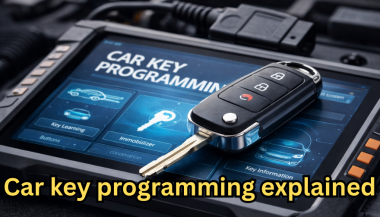
Car Key Programming Explained: Do You Really Need Dealer Software?

Car Key Programming Explained: Do You Really Need Dealer Software?

Car key programming is one of the most misunderstood parts of modern car ownership. Many drivers assume that only a dealership can program a key—and that doing anything else is risky, illegal, or impossible. That’s not true. This immobilizer key guide explains, clearly and factually, how car key programming works in Europe, what dealer software actually does, when it’s required, and when it isn’t. If you’re a car owner or DIYer, this article will save you time, money, and confusion. What “Car Key Programming” Actually Means Car key programming is the process of pairing a key with your vehicle’s immobilizer system so the engine is allowed to start. Most modern European vehicles (post-1998) use: An electronic immobilizer A transponder chip inside the key A coded handshake between the key and the car If the code is not recognized, the engine will crank—or not—but will not start . This is not about cutting metal. It’s about digital authorization. The Role of the Transponder Chip A transponder chip is a small RFID device embedded in the key head or remote. During ignition: The car sends a challenge signal The transponder responds with an encrypted code The immobilizer verifies the code The engine is enabled This process happens in milliseconds and cannot be bypassed without authorization. That’s why transponder key setup is central to modern car key programming. Immobilizer Systems in European Cars Most European manufacturers use rolling or encrypted immobilizer systems, including: Fixed code (older systems) Rolling code Crypto transponder systems (Philips, Megamos, Texas Instruments) The immobilizer typically communicates with: ECU BCM Instrument cluster (on some models) Programming a key means writing the transponder ID into one or more of these modules. What Dealer Software Really Does Dealer software (such as OEM diagnostic platforms) provides: Secure access to immobilizer modulesOnline authentication with manufacturer servers PIN or token-based authorization VIN-locked programming sessions This is not magic software —it’s a controlled access system. Dealers do not “unlock” cars manually. They authenticate with the manufacturer. Do You Always Need Dealer Software? No. Dealer software is required in some cases—but not all. You usually need dealer software if: All keys are lost The immobilizer ECU was replaced The car uses online-only key provisioning The system requires manufacturer server authorization You usually do NOT need dealer software if: You already have at least one working key The car supports onboard key learning A locksmith tool supports the immobilizer generation The system allows EEPROM or OBD learning This is why many keys are programmed outside dealerships every day across Europe. Onboard Key Programming (When It Exists) Some vehicles allow basic programming sequences, such as: Inserting keys in a specific order Turning ignition cycles Pressing buttons in sequence These methods are model-specific and increasingly rare, but they still exist. They are limited, insecure by modern standards, and usually disabled on newer cars. Aftermarket Diagnostic Tools vs Dealer Tools Professional locksmiths often use: Advanced OBD programmers EEPROM readers Token-based platforms These tools can: Add spare keys Clone certain transponders Reset immobilizer memory (model-dependent) They do not bypass security —they work within supported systems. The difference is access method , not legality. Common Myths About Car Key Programming “Only dealers can program keys.” False. Many locksmiths legally do this daily. “Programming a key damages the car.” False, if done correctly. “You can program any key yourself.” False. Many systems require professional tools. “All keys are the same.” False. Transponder types matter. Security, Law, and Reality in Europe In Europe: Programming requires proof of ownership VIN access is regulated Manufacturer servers control high-security systems This protects vehicles—but does not create a monopoly. Independent programming exists legally alongside dealers. For technical background on immobilizer systems, see: What MR-KEY Does (and Does Not Do) At MR-KEY , we: Sell replacement car keys Supply key shells , remotes , blades , and transponder-compatible keys Support many European vehicle brands We do NOT program keys. Programming must be done by: A professional locksmith A dealership A qualified automotive specialist This ensures compliance, safety, and proper immobilizer pairing. FAQ: Car Key Programming Can I program a car key myself? Sometimes. Only if your vehicle supports onboard programming. Most modern European cars do not. Is a transponder chip always required? Yes, for immobilizer-equipped vehicles. Without it, the engine will not start. Can a locksmith program a key without dealer software? Often yes—if at least one working key exists and the system supports it. What happens if all keys are lost? Dealer-level or server-authorized programming is usually required. Does replacing a key erase old keys? Sometimes. Many systems overwrite previous keys during programming. Is key cloning legal? It depends on the country, vehicle, and method. Always verify local regulations. Get the Right Key First Programming only works if the correct key is used. Wrong frequency, wrong transponder, or incompatible remote = failed programming. Visit our shop at mr-key.com to find the correct replacement car key for your vehicle before programming.

The Ultimate Guide to Opel, Peugeot, and Citroën Car Keys: Battery Replacement, Flip Key Issues, and Shell Compatibility

The Ultimate Guide to Opel, Peugeot, and Citroën Car Keys: Battery Replacement, Flip Key Issues, and Shell Compatibility

Car keys have come a long way from simple metal tools to advanced electronic devices. While they offer convenience and security, they're also prone to wear and tear over time. If you own an Opel, Peugeot, or Citroën, you've likely encountered a dead battery, faulty buttons, or a cracked key shell. These issues, though frustrating, are easy to fix with the right approach. This guide explores everything you need to know to maintain or restore your car key's functionality—without unnecessary expense. From understanding how these keys work, to step-by-step maintenance practices, we'll walk you through all the essentials to keep your keys working like new. How Car Keys Work Today Modern car keys are more than just tools to unlock and start your vehicle. They are miniaturized computers embedded with microchips, transponders, and signal systems that communicate with your car's onboard electronics. Most Opel, Peugeot, and Citroën models feature flip keys with integrated remote buttons, and inside each key fob lies a delicate configuration of electronics that perform critical functions like remote unlocking and engine ignition authorization. These keys depend heavily on power from a small coin-cell battery, usually the CR2032. While small and seemingly insignificant, the battery is the heart of your key fob. When it begins to fail, even slightly, the symptoms can range from reduced signal range to complete unresponsiveness. That’s why it’s crucial to replace it in time. Replacing the Battery in Opel Car Keys Your Opel car key is essential to your daily routine. Over time, the lithium CR2032 battery inside may weaken, resulting in slower response or reduced range. The good news is that replacing it is straightforward and requires only a few tools. Once you identify your key type—typically a flip key with two or three buttons—you can open the casing using a small screwdriver or plastic tool. Inside, you'll find a battery nestled within the key's internal framework. Carefully remove the old battery and insert a new CR2032, ideally a reliable model like the Panasonic CR2032 . Proper alignment is crucial; the wrong orientation can prevent the key from functioning entirely. Align the shell halves carefully and press them back together until they click into place. If your key shell is also showing signs of damage or wear, consider replacing it with this Opel 3-button key housing . Replacing the battery is a quick job, but it makes a world of difference in reliability and peace of mind. Plus, it spares you the inconvenience of getting stranded or needing dealer intervention. Common Peugeot Flip Key Issues and How to Fix Them Peugeot flip keys are compact and stylish, but frequent use can expose a few recurring problems. The flip mechanism may lose tension, buttons may stop responding, or the outer shell may crack. In many cases, the spring inside wears down, and the plastic buttons may degrade over time. Exposure to moisture, dirt, or accidental drops can also damage the key fob. These symptoms can often be resolved by replacing both the battery and the key shell. Thankfully, most replacement shells come with a new flip mechanism already installed, making the process quick and cost-effective. If you're dealing with a damaged shell or non-functional buttons, a compatible Peugeot key shell can restore both the look and performance of your key. To repair your key, begin by opening the shell using a thin screwdriver. Remove the internal circuit board and transponder chip carefully. Transfer them into the new shell, ensuring everything fits snugly. Insert a fresh CR2032 battery before closing the key shell, then test all functions. Unlike dealer replacements, this DIY approach is affordable and efficient, putting the control in your hands. Understanding Citroën Key Shell Compatibility Citroën keys often resemble Peugeot models but feature subtle design differences that can impact shell compatibility. Before purchasing a replacement shell, it's important to examine a few key details. First, confirm that the button layout matches exactly—some models include a trunk release, while others do not. Next, check the blade type, usually HU83 or VA2, and make sure your new shell supports that configuration. You’ll also need to ensure there’s a space for the transponder chip, as without it, your car won’t start. Lastly, confirm that your circuit board (PCB) fits securely in the new housing. If you're unsure, compare your key with this Citroën 3-button shell for reference. A mismatched shell can result in poor fitment, misaligned buttons, or failure to lock and unlock your car. That’s why it's important to compare your current key closely to any replacement product. Shell replacements are not one-size-fits-all—small deviations in size or design can render them useless. Going Beyond: Caring for Your Car Key Long-Term Maintaining your car key goes beyond occasional repairs. Think of it as part of your overall vehicle care routine. Keep your key clean by regularly wiping it down with a soft cloth. Avoid exposing it to moisture or extreme temperatures, which can damage the battery and internal electronics. If your key starts to feel loose or if the blade no longer flips smoothly, it's a sign that maintenance is due. Another often-overlooked aspect is the condition of your key ring. Overloaded or heavy keychains can put unnecessary strain on the ignition switch and the key’s blade over time. Keeping your key light and secure can prolong both the key and the ignition system’s lifespan. If you find yourself frequently pressing buttons or experiencing lag in signal response, don't ignore it. These early symptoms are usually signs that a new battery is needed, or the shell's contacts are worn. Addressing small problems before they escalate can save you from full key failure. Car Key Maintenance Caring for your car key doesn’t have to be a daunting task. Whether you drive an Opel, a Peugeot, or a Citroën, regular maintenance and minor DIY repairs can significantly extend the life of your key. Replacing a worn battery and upgrading a broken shell not only restores functionality but also revives the overall appearance of your key. Use quality components, take your time during repairs, and always test your key before final assembly. By taking these small steps, you can avoid costly replacements and enjoy reliable key performance for years to come. Explore trusted replacement parts and accessories online at mr-key.com to keep your car keys in top condition year-round.

Top 10 Fascinating Facts About BMW: Engineering Precision, Motorsport DNA, and Driving Pleasure

Top 10 Fascinating Facts About BMW: Engineering Precision, Motorsport DNA, and Driving Pleasure

BMW stands for precision engineering and pure driving pleasure. Founded in 1916 in Bavaria, BMW began as an aircraft engine manufacturer before reshaping the automotive world. Its guiding philosophy, “Aus Freude am Fahren” (Sheer Driving Pleasure), has defined the brand for decades. Today, BMW builds everything from electric city cars to high-performance M models. What connects them all is balance, control, and a driver-first mindset. These BMW facts reveal how the brand earned its reputation. 1. Munich’s Four-Cylinder Headquarters BMW’s headquarters in Munich is instantly recognizable. The building, completed in 1972, resembles four vertical engine cylinders joined together. BMW’s headquarters in Munich is instantly recognizable. The building, completed in 1972, resembles four vertical engine cylinders joined together. 2. Logical Model Names Since 1972 BMW’s naming system is deliberately simple. Introduced with the first 5 Series in 1972, the three-digit structure tells you exactly where a model sits in the lineup. The first number shows the series. The remaining digits traditionally indicated engine size. Letters like i , d , and x were later added to explain fuel type or drivetrain. BMW drivers can often decode a car before even opening the door. 3. The Only BMW With a Real Name Almost every BMW uses numbers—except one. The BMW Isetta remains the brand’s only mass-produced car with a proper name. Licensed from Italian manufacturer ISO in the 1950s, the Isetta featured a single front-opening door and ultra-compact dimensions. It helped BMW survive financially after the war and became a design icon in Europe. 4. Motorsport DNA: The Birth of BMW M BMW’s M division was created in 1972 to support racing programs. Its purpose was simple: win races and transfer that knowledge to road cars. BMW M cars quickly became benchmarks for performance sedans and coupes. The connection runs deep—BMW even powered a Formula 1 championship-winning car in 1983. Motorsport is not branding for BMW; it’s engineering validation. 5. Safety Innovations Ahead of Their Time In 1972, BMW revealed the Turbo concept car. It introduced ideas that would later become industry standards. Crumple zones, energy-absorbing steering columns, and even early collision-warning concepts were present. Decades before modern driver-assist systems, BMW was already testing how to protect drivers without compromising performance. 6. Hydrogen Engines in the 1970s BMW experimented with hydrogen power long before electrification became mainstream. In 1979, BMW tested a hydrogen-powered 5 Series sedan. The car looked ordinary but ran on modified combustion technology. This early project showed BMW’s willingness to explore alternative energy paths well ahead of regulations or market demand. 7. Project i and the Electric Breakthrough BMW’s modern electric strategy began in 2007 with Project i. The initiative was designed to rethink mobility from scratch. The result was the BMW i3, launched in 2013. It combined carbon-fiber construction, electric drive, and sustainable materials. Project i shaped BMW’s current EV lineup and proved electric cars could still deliver driving pleasure. 8. Limited-Run BMW Special Models BMW frequently builds rare, limited-production vehicles to showcase design and engineering freedom. Models like the modern 3.0 CSL tribute or special M editions celebrate milestones and motorsport heritage. These cars often sell out instantly, reinforcing BMW’s reputation for exclusivity and craftsmanship. 9. Precision Manufacturing With BMW iFACTORY BMW applies the same precision to manufacturing as it does to driving dynamics. The BMW iFACTORY concept integrates AI, robotics, and digital twins into production. Quality control is automated and continuously monitored. The result is consistent build quality across plants in Europe and beyond—something BMW drivers notice long after purchase. 10. Steering-Wheel Controls Before Anyone Else BMW introduced steering-wheel-mounted controls in the early 1990s. Inspired by Formula 1, the goal was simple: keep the driver’s hands on the wheel. Functions like audio and cruise control became easier to manage. Today this feature is universal, but BMW was among the first to make it standard in luxury cars. FAQ What does BMW stand for? BMW means Bayerische Motoren Werke (Bavarian Motor Works). The company was founded in Munich in 1916 and originally produced aircraft engines. Why do BMW drivers value the brand so highly? Balance, rear-wheel-drive heritage, motorsport DNA, and consistent engineering philosophy all contribute to BMW’s loyal following. What should you do if you lose your BMW key? BMW keys are coded and must match the vehicle’s security system. Owners usually replace them through dealers, but specialist suppliers can also provide compatible keys and cases . Platforms like MR-KEY help BMW owners replace worn or lost keys while maintaining proper ownership verification. Visit our shop at mr-key.com

The Impact of Artificial Intelligence on Automotive Innovation: A Glimpse into the Future of Driving

The Impact of Artificial Intelligence on Automotive Innovation: A Glimpse into the Future of Driving

The automotive industry is experiencing a transformative shift, and at the center of this revolution is artificial intelligence (AI). From the development of fully autonomous vehicles to enhancements in key systems, AI is changing how we drive, maintain our vehicles, and secure them. While these advancements promise increased efficiency and convenience, they also raise new questions, particularly regarding cost, accessibility, and how car owners will interact with their vehicles in the future. Let’s take a closer look at how AI is reshaping the automotive world and why it’s important for car owners to understand these changes. Smarter Cars, Smarter Keys Artificial intelligence isn’t just revolutionizing self-driving cars—it’s also transforming the traditional car key. What once required a physical key is now being replaced by more advanced, secure alternatives. With the rise of smart keys, biometric access, and mobile apps, car keys are becoming increasingly sophisticated. AI-powered keyless entry systems allow you to unlock and start your car without needing to take a physical key out of your pocket or bag. The car senses your presence and communicates wirelessly to grant access. Additionally, biometric keys such as fingerprint or facial recognition are gaining traction, ensuring that only authorized users can access the vehicle. These systems are nearly impossible to duplicate, offering an unparalleled level of security. While these innovations add layers of convenience, they also highlight the growing need for professional key replacement services to ensure your car's security isn’t compromised. Autonomous Vehicles: A Step Toward the Future The idea of self-driving cars has long been a futuristic concept, but AI is making it a reality. Although fully autonomous vehicles are not yet mainstream, the technology is evolving quickly. AI algorithms are able to process data from sensors, cameras, and radars in real-time, allowing the car to navigate without human input. While fully autonomous driving has the potential to reduce accidents caused by human error—responsible for over 90% of crashes today—there are still many challenges to overcome. Self-driving cars must be equipped with robust systems capable of handling emergencies and unpredictable situations, which are crucial for ensuring safety. Even if true autonomy is still a few years away, many modern vehicles already feature semi-autonomous capabilities, such as adaptive cruise control, automatic emergency braking, and automated parking. These features, powered by AI, offer significant improvements in driving safety and convenience. Predictive Maintenance: Preventing Problems Before They Happen Imagine a world where your car could tell you when it’s about to break down. With AI, this is becoming a reality. Predictive maintenance, powered by AI, is revolutionizing how we approach vehicle care. AI-driven systems can analyze your car’s performance in real-time, predicting when parts need servicing before they fail. Examples of Predictive Maintenance : Notifications for upcoming maintenance, such as oil changes or brake pad replacements. Alerts about issues like low tire pressure or a battery nearing its end. Suggestions for repairs based on your driving patterns, reducing the chances of unexpected breakdowns. By identifying potential issues before they become major problems, AI helps save you time and money, providing a smoother, more reliable driving experience. Enhanced Driving Experience AI is not only about improving vehicle performance but also enhancing your overall driving experience. Through smart technologies, driving has become more intuitive and enjoyable. Voice assistants, for example, allow you to control various functions hands-free, from adjusting climate settings to managing calls and navigation. AI also customizes your vehicle experience based on your preferences. Over time, AI learns your favorite seating positions, climate control settings, and even your regular routes, making every drive more comfortable. With AI-powered infotainment systems, you can enjoy real-time traffic updates, personalized music playlists, and even hands-free control over entertainment choices. These innovations make driving safer, more enjoyable, and tailored to your individual needs. Transforming Vehicle Security The introduction of AI in automotive security is setting new standards. As vehicles become increasingly connected, the potential for cyber threats rises. Fortunately, AI is being implemented to protect against these risks, offering peace of mind for car owners. AI-enhanced Security Features: Advanced Theft Protection : AI systems can detect unusual activities, like attempted break-ins, and alert you immediately via your smartphone. Geo-fencing : Some vehicles now allow you to create safe zones. If your car moves outside the designated area, you’ll receive an instant notification. Anti-Hacking Measures : As cars become more integrated with the internet, AI helps protect against cyberattacks, ensuring your vehicle's systems remain secure. These features not only protect your vehicle from theft but also provide you with more control over your car’s safety, no matter where you are. What This Means for Key Replacements As AI continues to evolve in the automotive industry, the process of replacing and programming car keys is becoming more complex. Advanced keys, such as those based on biometric authentication or smartphone applications, are more expensive to replace than traditional metal keys. Furthermore, these modern systems require specialized equipment and expertise to program properly. For car owners, it’s essential to stay informed about your vehicle’s key system. Always keep a spare key on hand and familiarize yourself with emergency unlocking features, so you're prepared if something goes wrong. Challenges of AI in Cars While the benefits of AI in automotive innovation are clear, there are also some challenges to consider. AI can drive up the cost of manufacturing and repairs, and adapting to new features can sometimes be overwhelming for drivers. High Costs : Implementing AI technologies in vehicles can increase both the initial price and the cost of repairs. Learning Curve : Some drivers may find it difficult to adapt to new, AI-driven features, especially if they are not technologically inclined. Dependence on Connectivity : Many AI-powered systems require an internet connection, which can be problematic in remote areas or locations with poor service. Being aware of these challenges will help you navigate the evolving automotive landscape and make informed decisions about your car’s technology. Embracing the Future of Driving Artificial intelligence is rapidly transforming the automotive industry, changing everything from how we drive to how we secure and maintain our vehicles. For car owners, these innovations bring immense convenience and enhanced security. But they also require a deeper understanding of the systems that power your car, from keyless entry to semi-autonomous driving features. As AI continues to develop, staying informed will help you make the best decisions for your lifestyle and budget. Whether you’re exploring new key technologies or considering a fully autonomous vehicle, the future of driving is undeniably shaped by AI—and it’s already here.

Chat with us