
Post Name

Unlocking the World of Car Keys

Car keys have come a long way from simple metal tools to high-tech devices designed to enhance convenience and security. As vehicles evolve, so do the keys that unlock and operate them. Whether you’re a car enthusiast or a driver navigating modern technology, understanding the different types of car keys and their functions can help you appreciate their role in your vehicle’s performance and safety. This guide explores various car key types, their unique features, and the technologies behind them.

Traditional Car Keys: The Classics

Traditional car keys, often referred to as mechanical keys, are the simplest type of car keys. These are commonly found in older vehicles and rely on a basic metal blade that fits into the car’s ignition and door locks.

Key Features of Traditional Keys:

  • Require no electronic components.
  • Depend on physical alignment to operate the lock or ignition.
  • Can be duplicated easily using a standard key-cutting machine.

While these keys are straightforward to use and replace, they lack the advanced security features of modern alternatives, making them more vulnerable to theft.

Transponder Keys: Enhanced Security

Transponder keys are a significant upgrade from traditional keys, incorporating a small electronic chip inside the plastic head of the key. This chip communicates with the vehicle's computer system to authenticate the key before the car starts.

How Transponder Keys Work:

  • The chip transmits a unique signal to the car’s receiver when the key is turned in the ignition.
  • If the signal matches, the car starts; if not, the engine remains immobilized.

Benefits of Transponder Keys:

  • Reduced risk of car theft due to their encryption technology.
  • Widely used in most vehicles manufactured after the mid-1990s.

However, duplicating or replacing a transponder key requires specialized equipment, making it more expensive than traditional keys.

Smart Keys: The Modern Marvels

Smart keys represent a leap into advanced automotive technology. These keys are typically used in vehicles with keyless entry and push-button start systems. Instead of inserting a key into the ignition, drivers simply need to have the smart key inside the vehicle.

Key Features of Smart Keys:

  • Allow for keyless entry and ignition.
  • Use radio frequency identification (RFID) or Bluetooth technology to communicate with the car.
  • Often come with additional functions, such as opening the trunk or remotely starting the vehicle.

Advantages of Smart Keys:

  • Enhanced convenience and ease of use.
  • Advanced security features to deter theft.

Despite their benefits, smart keys are expensive to replace and rely heavily on battery power.

Remote Keys: A Blend of Mechanical and Digital

Remote keys, often combined with transponder technology, offer the ability to lock and unlock car doors at the push of a button. They are commonly included in modern car key fobs and sometimes have a physical blade as a backup.

Features of Remote Keys:

  • Control doors, windows, and sometimes the trunk remotely.
  • Combine traditional key functions with modern convenience.

These keys are versatile and user-friendly but may require reprogramming if the battery is replaced or the signal becomes disrupted.

Key Cards: Compact and Stylish

Key cards are a relatively new addition to the world of car keys, commonly used in high-end and electric vehicles. These slim, credit card-sized devices function like smart keys and communicate wirelessly with the vehicle.

Advantages of Key Cards:

  • Compact and easy to carry.
  • Offer the same functionality as smart keys, including keyless entry and ignition.

While key cards are sleek and innovative, they are prone to damage due to their thin design and may not be as durable as traditional keys.

Valet Keys: Limited Access

Valet keys are designed to offer restricted functionality, allowing a valet or another driver to operate the car without accessing certain areas, such as the glove compartment or trunk.

Purpose of Valet Keys:

  • Provide limited access to the vehicle for security purposes.
  • Prevent unauthorized access to personal belongings.

Valet keys are a practical solution for safeguarding your possessions while still enabling temporary access to your car.

Digital Keys: The Future of Key Technology

Digital keys are the latest innovation in car key technology, allowing drivers to use their smartphones or smartwatches to unlock and start their vehicles.

How Digital Keys Work:

  • Use NFC (Near Field Communication) or Bluetooth to interact with the vehicle.
  • Allow for remote access, such as locking or unlocking the car from a distance.

Benefits of Digital Keys:

  • Eliminate the need for a physical key.
  • Offer enhanced customization, such as granting temporary access to other users.

As convenient as they are, digital keys rely on smartphone technology and can be vulnerable to hacking if not properly secured.

Choosing the Right Key for Your Needs

Car keys have evolved into sophisticated devices that combine functionality, convenience, and security. Whether you’re using a traditional key or embracing the future with a digital key, understanding the type of key your vehicle uses can help you maintain it properly and replace it if necessary.

By staying informed about the different types of car keys and their unique functions, you can make smarter choices when it comes to safeguarding your vehicle and enjoying the driving experience to the fullest.
Related Posts

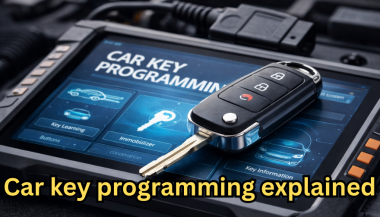
Car Key Programming Explained: Do You Really Need Dealer Software?

Car Key Programming Explained: Do You Really Need Dealer Software?

Car key programming is one of the most misunderstood parts of modern car ownership. Many drivers assume that only a dealership can program a key—and that doing anything else is risky, illegal, or impossible. That’s not true. This immobilizer key guide explains, clearly and factually, how car key programming works in Europe, what dealer software actually does, when it’s required, and when it isn’t. If you’re a car owner or DIYer, this article will save you time, money, and confusion. What “Car Key Programming” Actually Means Car key programming is the process of pairing a key with your vehicle’s immobilizer system so the engine is allowed to start. Most modern European vehicles (post-1998) use: An electronic immobilizer A transponder chip inside the key A coded handshake between the key and the car If the code is not recognized, the engine will crank—or not—but will not start . This is not about cutting metal. It’s about digital authorization. The Role of the Transponder Chip A transponder chip is a small RFID device embedded in the key head or remote. During ignition: The car sends a challenge signal The transponder responds with an encrypted code The immobilizer verifies the code The engine is enabled This process happens in milliseconds and cannot be bypassed without authorization. That’s why transponder key setup is central to modern car key programming. Immobilizer Systems in European Cars Most European manufacturers use rolling or encrypted immobilizer systems, including: Fixed code (older systems) Rolling code Crypto transponder systems (Philips, Megamos, Texas Instruments) The immobilizer typically communicates with: ECU BCM Instrument cluster (on some models) Programming a key means writing the transponder ID into one or more of these modules. What Dealer Software Really Does Dealer software (such as OEM diagnostic platforms) provides: Secure access to immobilizer modulesOnline authentication with manufacturer servers PIN or token-based authorization VIN-locked programming sessions This is not magic software —it’s a controlled access system. Dealers do not “unlock” cars manually. They authenticate with the manufacturer. Do You Always Need Dealer Software? No. Dealer software is required in some cases—but not all. You usually need dealer software if: All keys are lost The immobilizer ECU was replaced The car uses online-only key provisioning The system requires manufacturer server authorization You usually do NOT need dealer software if: You already have at least one working key The car supports onboard key learning A locksmith tool supports the immobilizer generation The system allows EEPROM or OBD learning This is why many keys are programmed outside dealerships every day across Europe. Onboard Key Programming (When It Exists) Some vehicles allow basic programming sequences, such as: Inserting keys in a specific order Turning ignition cycles Pressing buttons in sequence These methods are model-specific and increasingly rare, but they still exist. They are limited, insecure by modern standards, and usually disabled on newer cars. Aftermarket Diagnostic Tools vs Dealer Tools Professional locksmiths often use: Advanced OBD programmers EEPROM readers Token-based platforms These tools can: Add spare keys Clone certain transponders Reset immobilizer memory (model-dependent) They do not bypass security —they work within supported systems. The difference is access method , not legality. Common Myths About Car Key Programming “Only dealers can program keys.” False. Many locksmiths legally do this daily. “Programming a key damages the car.” False, if done correctly. “You can program any key yourself.” False. Many systems require professional tools. “All keys are the same.” False. Transponder types matter. Security, Law, and Reality in Europe In Europe: Programming requires proof of ownership VIN access is regulated Manufacturer servers control high-security systems This protects vehicles—but does not create a monopoly. Independent programming exists legally alongside dealers. For technical background on immobilizer systems, see: What MR-KEY Does (and Does Not Do) At MR-KEY , we: Sell replacement car keys Supply key shells , remotes , blades , and transponder-compatible keys Support many European vehicle brands We do NOT program keys. Programming must be done by: A professional locksmith A dealership A qualified automotive specialist This ensures compliance, safety, and proper immobilizer pairing. FAQ: Car Key Programming Can I program a car key myself? Sometimes. Only if your vehicle supports onboard programming. Most modern European cars do not. Is a transponder chip always required? Yes, for immobilizer-equipped vehicles. Without it, the engine will not start. Can a locksmith program a key without dealer software? Often yes—if at least one working key exists and the system supports it. What happens if all keys are lost? Dealer-level or server-authorized programming is usually required. Does replacing a key erase old keys? Sometimes. Many systems overwrite previous keys during programming. Is key cloning legal? It depends on the country, vehicle, and method. Always verify local regulations. Get the Right Key First Programming only works if the correct key is used. Wrong frequency, wrong transponder, or incompatible remote = failed programming. Visit our shop at mr-key.com to find the correct replacement car key for your vehicle before programming.

How to Easily Find Your Key Code for a Hassle-Free Replacement

How to Easily Find Your Key Code for a Hassle-Free Replacement

When it comes to replacing a car key , knowing your key code is essential. This code allows you to obtain a precise duplicate, ensuring that your new key fits seamlessly without any issues. Whether you've lost your key, broken it, or simply need a spare, understanding where to locate this code can make the replacement process faster and more affordable. In this guide, we’ll walk you through what a key code is, where to find it, and tips to ensure a smooth replacement process. Why Is the Key Code Important? A key code is more than just a number; it's a unique identifier that tells a key cutter exactly how to replicate your key. Without it, the process can be longer, more complicated, and potentially costly if the key doesn’t match your vehicle’s lock. Ensures a Perfect Fit : The key code guarantees that your new key will be cut to match your original one precisely. Saves Time and Money : With the correct code, you can avoid trial and error, reducing the risk of needing multiple key replacements. Improves Security : Knowing the exact specifications of your key can prevent unauthorized duplicates. Types of Key Codes Key codes come in different types depending on the key and vehicle model. Here are the main types: Direct Code : Often a 4 to 8-digit code, this code can be entered directly into a key-cutting machine for accurate replication. Indirect Code : This type of code requires a conversion chart to find the direct key code. Though indirect codes aren’t as common, they may still appear on some older models. Blind Code : Sometimes, the code may not be directly readable or is hidden in the key's design. These require decoding using a specialized tool or software. Understanding which type of code you have can make the process smoother when you’re ready to replace your key. Common Locations for Key Codes Finding the key code isn’t always straightforward, but with a few tips, you can track it down more easily. Here are the most common places to check: 1. Vehicle Manual Your vehicle’s manual often contains useful information, including the key code. It’s usually found in the section detailing the vehicle’s locking system. The manual may also provide guidance on other important security features, so it’s a great place to start. Tip : If you can’t find it in the manual, try looking in the index under “keys” or “security.” 2. Key Fob or Key Itself For some keys, the code is printed directly on the key or key fob. Look closely at the metal part of the key or the plastic casing for a small series of numbers. This code may be faint, so you may need a magnifying glass or good lighting. Tip : Be cautious when handling the key to avoid damaging the code. A worn key can sometimes obscure the code, so check carefully. 3. Vehicle Registration and Documents Some vehicle documents, especially those you receive when you first purchase the car, may include the key code. Check any paperwork related to the purchase, including sales documents, registration, and the car title. Tip : Keep these documents safe as they contain essential information for ownership and replacement needs. 4. Original Key Packaging If you have access to the original packaging of the key, such as a bag or box, the key code is sometimes printed there. This is especially common if the key came from a dealer or as part of a new car purchase. Tip : Always save key packaging, as it can provide helpful information for future reference. 5. Contacting the Dealership If you’re unable to locate the code yourself, you can reach out to the dealership where you purchased the vehicle. Dealerships often keep records of key codes, especially if the vehicle is still under warranty. Some may provide the code for free, while others might charge a fee. Tip : Have your vehicle identification number (VIN) handy when contacting the dealership, as it can help verify your ownership. Tips for Safe Key Code Storage Once you have located your key code, it’s important to keep it safe to make future replacements easier. Here are some tips: Store Digitally : Save the code in a secure document on your phone or computer. You can even use a password-protected note or cloud storage. Keep a Physical Copy : Write down the code and store it with other important vehicle documents, like your insurance and registration. Avoid Sharing the Code : Treat the key code like a password; only share it with trusted professionals when necessary for replacements. What to Do if You Can’t Find the Code If your search for the code has been unsuccessful, don’t worry—there are still options. Here’s what to do: Contact a Professional : Some professionals can create a new key by decoding the lock without needing the original key code. This is particularly helpful if you’ve lost all copies of your key. Request Assistance from the Manufacturer : In some cases, you can contact the vehicle’s manufacturer for support. They may ask for documentation proving ownership and might provide the code directly or guide you through the next steps. Benefits of Knowing Your Key Code Having the key code at your fingertips offers several advantages, whether you need a quick replacement or simply want peace of mind. Saves Time in Emergencies : If you lose your key unexpectedly, having the code handy allows for faster replacements. Lower Replacement Costs : With the exact code, key makers can avoid unnecessary recutting, saving you money. Simplifies Multiple Key Requests : If you need multiple copies, the code makes it easy to obtain several accurate replacements without errors. Locating and safely storing your key code can simplify the replacement process significantly. By knowing exactly where to look for the code and keeping it secure, you can avoid potential stress and save both time and money when the need for a replacement arises. Taking these steps now ensures that, should you ever need a new key, the process will be as smooth and efficient as possible.

How to Locate Your Key Code for a Replacement

How to Locate Your Key Code for a Replacement

Losing a key can be a hassle, but the process of getting a replacement becomes much easier if you can locate the key code. The key code is a unique combination of letters and numbers that identifies the specific cut and type of your key. This code is essential for accurately replicating a new key, whether it’s for your car, house, or another type of lock. This guide will help you understand where to find your key code and what steps you can take if the code isn’t easily accessible. Why the Key Code is Important The key code is essentially a blueprint for your key. It tells a locksmith or dealer exactly how to cut a new key that will work with your lock. Without this code, creating a replacement key can be a trial-and-error process, which can be time-consuming and costly. Additionally, for certain types of keys, such as those for cars with transponder chips, the key code is necessary for programming the electronic components of the key. Step 1: Inspect Your Key and Lock The first and most straightforward step is to inspect your key and lock for the key code. For many keys, especially older models, the code is engraved or stamped directly onto the key itself. This is common with car keys, where the code may be found on the metal part of the key blade. In some cases, the code might be on the plastic casing of the key, especially if it’s a newer model with electronic components. If the key itself doesn’t have the code, check the lock. The key code is sometimes inscribed on the lock’s cylinder or on a small metal plate attached to the lock. This is more common with padlocks or specialized security locks. If you’re dealing with a door lock, you might need to remove the lock from the door to inspect it closely. Step 2: Review Documentation and Original Packaging If you can’t find the key code on the key or lock, the next step is to review any documentation or packaging that came with the key. For vehicles, the key code is often provided in the owner’s manual or on a key tag that was given to you at the time of purchase. This tag is usually small and easily misplaced, so it’s worth checking any old documentation or vehicle paperwork you might have. For other types of keys, such as those for padlocks, cabinets, or office furniture, the key code might be printed on the original packaging or on warranty cards. These are often overlooked, but they can be invaluable when you need a replacement key. Step 3: Contact the Manufacturer or Dealer If the key code isn’t visible on the key, lock, or documentation, your next step should be to contact the manufacturer or dealer. Most car manufacturers, for example, keep a record of key codes based on the Vehicle Identification Number (VIN). By providing your VIN to a dealership, they can usually retrieve the key code and either cut a new key for you or give you the information needed to get one cut elsewhere. For other types of keys, such as those for cabinets or padlocks, contacting the manufacturer can also be helpful. Provide them with details about the product, such as the model number and any serial numbers, and they may be able to provide the key code or a replacement key directly. Step 4: Professional Locksmith Assistance If you’ve exhausted all other options, a professional locksmith is your best bet. Locksmiths have specialized tools and knowledge that allow them to decode locks or determine the correct key code even when it’s not visible or available through documentation. They can often cut a new key based on the lock itself, bypassing the need for the original key code entirely. Locksmiths are particularly useful if you’re dealing with older locks, unique security systems, or if the key code is no longer accessible through traditional means. They can also help with programming transponder keys for vehicles, ensuring that your new key not only fits the lock but also communicates correctly with your car’s electronic systems. Additional Tips for Key Code Location Record Key Codes: If you find your key code, make sure to record it somewhere safe. This will save you time if you need another replacement in the future. Ask About Spare Keys: If you’re contacting a dealership or manufacturer, ask if they can provide a spare key at the same time, especially if you’re prone to losing keys. Consider a Key Tracking System: For those who frequently lose keys, consider investing in a key tracking system or a digital key organizer where you can store key codes and important information. Locating your key code is a crucial step in the process of replacing a lost or broken key. By carefully inspecting your key and lock, reviewing any relevant documentation, contacting the manufacturer or dealer, or seeking help from a professional locksmith, you can ensure that your replacement key is accurate and functional. Taking these steps not only saves time and money but also provides peace of mind in knowing that you have a reliable solution for key replacement.

Key Fob vs. Transponder vs. Smart Key: What’s the Difference?

Key Fob vs. Transponder vs. Smart Key: What’s the Difference?

Unlocking the Modern Car Key In the past, a car key was a simple piece of metal. You inserted it into the door, turned it, and the car unlocked. You repeated the process in the ignition to start the engine. Today, however, a car key might be a sleek device that never even leaves your pocket. It may unlock your doors remotely, start the car with a button, or communicate with your vehicle without you even touching it. This evolution in key technology has introduced convenience, security, and — for many drivers — a bit of confusion. What kind of key do you actually have? Is it a transponder key , a key fob , or a smart key ? And why does it matter? In this blog, we break down each type of modern car key, explain how they work, and highlight what makes them different — so you can better understand, maintain, and protect the device that starts your vehicle. What Is a Transponder Key? The transponder key was the first major step toward electronic vehicle security. Introduced in the 1990s, it features a small microchip embedded in the plastic head of a standard metal key. This chip communicates with the car's immobilizer system. When you insert the key into the ignition and turn it, the car sends out a low-frequency signal. If the chip responds with the correct, pre-programmed code, the vehicle starts. If the code is incorrect — or missing — the car won’t start at all. Key characteristics: Looks like a traditional key Contains a passive chip (no battery needed) Requires physical insertion and turning Designed to prevent hotwiring and unauthorized key copies Transponder keys are still widely used, especially in vehicles produced between the late 1990s and early 2010s. They’re simple, reliable, and provide basic but effective protection against theft. What Is a Key Fob? The term key fob typically refers to a small, handheld remote that controls access to your car without inserting a key into a lock. Most modern fobs include buttons for locking and unlocking the doors, opening the trunk, and triggering a panic alarm. Some also support remote engine start. In many vehicles, the fob is attached to — or integrated with — a mechanical key that includes a transponder chip. Others are "flip keys," with a metal blade that folds inside the fob casing. Key fob features: Enables remote locking/unlocking May include a transponder chip Often includes a mechanical backup key Battery-powered (usually coin cell batteries) May include passive entry on some models Key fobs offer a balance between convenience and control. While you still need to press buttons or insert a key in many cases, they streamline the process and add useful features. What Is a Smart Key? The smart key is the most advanced and convenient type of car key available today. It communicates with your vehicle wirelessly using radio frequency or low-energy Bluetooth. As long as the smart key is within range — often in your pocket or bag — the car will unlock automatically when you touch the handle, and start when you press the ignition button. Unlike a key fob, there’s no need to press buttons or insert anything into the ignition. The system detects the key’s presence and grants access and engine start as needed. Smart key features include: Passive keyless entry (PKE) Push-button start Proximity detection Fully hands-free operation Often includes comfort access features like memory seating and climate control However, smart keys also introduce new considerations. They rely entirely on battery power, so a dead battery can temporarily disable key functions. Because smart keys are always transmitting a signal, they are also vulnerable to relay attacks , in which thieves use signal amplifiers to trick the car into unlocking. Key Comparison Table To help clarify the differences between each type of key, here’s a side-by-side comparison: Feature Transponder Key Key Fob Smart Key Physical key required Yes Sometimes (flip blade) No Remote locking/unlocking No Yes (buttons) Yes (proximity-based) Push-button start No No Yes Battery required No Yes Yes Security level Moderate High (with chip) High Common years of use 1995–2012 2000–present 2015–present Risk of relay attack None Low (in some cases) High (without signal shield) Why It Matters: Practical Impacts for Drivers Understanding what kind of car key you have can save you time, money, and stress in several situations: 1. Replacing Lost or Broken Keys Smart keys can cost anywhere from $200–$600+ to replace and usually require dealership programming. Transponder keys are cheaper and often programmable by locksmiths. 2. Diagnosing Key Issues If your car won’t start, it could be due to a dead battery in your fob or smart key. But if you have a transponder key, the issue might be with the chip or immobilizer system. 3. Security Awareness Smart keys are vulnerable to digital theft via relay attacks. If you have one, consider using a Faraday pouch or signal-blocking case to protect your vehicle while parked. Want to protect your key? Browse Mr Key's security accessories here. 4. Choosing Accessories Batteries, protective covers, signal-blocking cases, and replacement parts vary depending on your key type. Buying the wrong product can lead to frustration or compatibility issues. Know Your Key, Protect Your Car Your car key is more than a tool — it’s an entry system, a security feature, and a communication device. Whether you’re carrying a traditional transponder key, a button-operated key fob, or a proximity-based smart key, knowing the difference is the first step toward better security, smarter repairs, and fewer surprises. In a world where cars are smarter than ever, your key plays a more important role than most drivers realize. Take a moment to identify which type you have — and take steps to protect it.

Chat with us