Post Name

In an age where smartphones can locate us with pinpoint accuracy and lost luggage can be tracked halfway around the world, it’s easy to assume car keys are just as smart. But for many frustrated drivers, losing a car key feels like sending it into a black hole. The lack of a clear way to find them often leads to stress, wasted time, and sometimes costly replacements. So here’s the big question: Do car keys have GPS, and can they be tracked like other smart devices?

This article explains the technology behind key tracking, compares GPS with Bluetooth, and offers practical ways to find lost keys in a connected world.


The Truth About GPS in Car Keys

While GPS technology has become common in many consumer devices, the vast majority of car keys do not include built-in GPS. Even the most modern remote key fobs, which allow for keyless entry and push-button start, generally lack the components necessary for GPS functionality. These components include a satellite GPS receiver, a data transmission module, and a sustainable power source—none of which are typically found in a key fob. The design of a car key prioritizes compactness, cost-efficiency, and low energy usage. Adding GPS would not only increase manufacturing costs but also introduce battery life challenges. That’s why most manufacturers have opted against including GPS tracking in car keys.

GPS requires constant power and data transmission — something a small coin cell battery in a typical key fob can’t support." – Marcus Lee, Automotive Tech Analyst


How Can Car Keys Be Tracked?

Although your keys may not have GPS, there are other technologies that make it possible to track or locate them when they’re lost. These include Bluetooth trackers, crowdsourced networks, and GPS systems that track the vehicle instead of the key itself.

1. Bluetooth Trackers (Apple AirTag, Tile, Chipolo)

These small, attachable gadgets can be added to your keychain and linked to a mobile app. They rely on Bluetooth to provide location data when within a certain range. If your keys are somewhere nearby—like in your home or office—these trackers can play a sound or show you their last known position on a map. The range is generally up to 120 meters (400 feet), and battery life can last up to a year, making them a practical, low-maintenance option for most users.

2. Crowdsourced Networks (Find My, Tile Network)

If your Bluetooth tracker is out of range, some brands offer a smart workaround. Apple’s AirTag, for instance, uses the “Find My” network, which consists of millions of iPhones around the world. If someone with an Apple device passes near your lost keys, the location is anonymously and securely sent to your phone. This creates a global, decentralized tracking system that mimics GPS functionality without requiring satellites or cellular connections.

3. Car GPS Systems (Vehicle Only, Not the Key)

Some high-end cars offer integrated GPS systems, but these track the vehicle, not the keys. Brands like Tesla, BMW, and Mercedes-Benz allow owners to locate their car through mobile apps. If your keys are left inside the car, you may be able to find them by locating the vehicle. However, once the keys are removed, they cannot be tracked unless equipped with a separate Bluetooth tracker.


GPS vs Bluetooth: What’s the Difference?

To better understand why GPS isn’t commonly included in car keys, it’s useful to compare the two technologies:
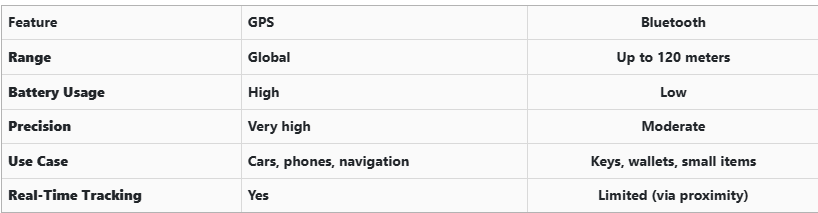
GPS provides global, real-time tracking with high precision, but it’s power-intensive and costly. Bluetooth, while more limited in range, is ideal for small items and short distances, offering a cost-effective solution for everyday use.


Global Perspectives on Key Tracking

Around the world, the adoption of key tracking technologies differs based on privacy laws, tech infrastructure, and consumer behavior. In Japan and South Korea, smart home and car integration are advanced, yet GPS-enabled keys are still not the norm. In many parts of Europe, particularly in countries like Germany, Bluetooth solutions are favored due to strict data privacy regulations. In contrast, the U.S. market has embraced personal tracking devices like Apple AirTag and Tile, making them increasingly common accessories. These differences highlight how technology adoption often reflects broader cultural and legal norms, as well as the balance between convenience and privacy.


Smart Tips to Keep Track of Your Keys

Whether your keys have advanced tech or not, you can take simple steps to avoid losing them. Attaching a Bluetooth tracker is a great first line of defense. Keeping your keys in a consistent, designated place at home reduces the chances of misplacement. Many tracking apps also offer “left behind” alerts, which notify you if you leave your keys behind when moving out of range. It's also smart to keep a spare key somewhere safe and consider going keyless if your next car allows it. Implementing a few of these habits can save you time, frustration, and the cost of replacing a lost key.


The Future of Key Tracking

While car keys may not have built-in GPS, technology continues to evolve with practical alternatives. Bluetooth trackers, supported by app alerts and community networks, already provide effective ways to find lost keys. As innovation progresses, we can expect even more seamless solutions, such as Ultra Wideband (UWB) technology and Internet of Things (IoT) integrations, to become mainstream.

As our tools become smarter, so must the way we use and manage them. With a little foresight and the right accessories, you'll never lose track of your keys again.
Related Posts

Car Key Programming Explained: Do You Really Need Dealer Software?

Car Key Programming Explained: Do You Really Need Dealer Software?

Car key programming is one of the most misunderstood parts of modern car ownership. Many drivers assume that only a dealership can program a key—and that doing anything else is risky, illegal, or impossible. That’s not true. This immobilizer key guide explains, clearly and factually, how car key programming works in Europe, what dealer software actually does, when it’s required, and when it isn’t. If you’re a car owner or DIYer, this article will save you time, money, and confusion. What “Car Key Programming” Actually Means Car key programming is the process of pairing a key with your vehicle’s immobilizer system so the engine is allowed to start. Most modern European vehicles (post-1998) use: An electronic immobilizer A transponder chip inside the key A coded handshake between the key and the car If the code is not recognized, the engine will crank—or not—but will not start . This is not about cutting metal. It’s about digital authorization. The Role of the Transponder Chip A transponder chip is a small RFID device embedded in the key head or remote. During ignition: The car sends a challenge signal The transponder responds with an encrypted code The immobilizer verifies the code The engine is enabled This process happens in milliseconds and cannot be bypassed without authorization. That’s why transponder key setup is central to modern car key programming. Immobilizer Systems in European Cars Most European manufacturers use rolling or encrypted immobilizer systems, including: Fixed code (older systems) Rolling code Crypto transponder systems (Philips, Megamos, Texas Instruments) The immobilizer typically communicates with: ECU BCM Instrument cluster (on some models) Programming a key means writing the transponder ID into one or more of these modules. What Dealer Software Really Does Dealer software (such as OEM diagnostic platforms) provides: Secure access to immobilizer modulesOnline authentication with manufacturer servers PIN or token-based authorization VIN-locked programming sessions This is not magic software —it’s a controlled access system. Dealers do not “unlock” cars manually. They authenticate with the manufacturer. Do You Always Need Dealer Software? No. Dealer software is required in some cases—but not all. You usually need dealer software if: All keys are lost The immobilizer ECU was replaced The car uses online-only key provisioning The system requires manufacturer server authorization You usually do NOT need dealer software if: You already have at least one working key The car supports onboard key learning A locksmith tool supports the immobilizer generation The system allows EEPROM or OBD learning This is why many keys are programmed outside dealerships every day across Europe. Onboard Key Programming (When It Exists) Some vehicles allow basic programming sequences, such as: Inserting keys in a specific order Turning ignition cycles Pressing buttons in sequence These methods are model-specific and increasingly rare, but they still exist. They are limited, insecure by modern standards, and usually disabled on newer cars. Aftermarket Diagnostic Tools vs Dealer Tools Professional locksmiths often use: Advanced OBD programmers EEPROM readers Token-based platforms These tools can: Add spare keys Clone certain transponders Reset immobilizer memory (model-dependent) They do not bypass security —they work within supported systems. The difference is access method , not legality. Common Myths About Car Key Programming “Only dealers can program keys.” False. Many locksmiths legally do this daily. “Programming a key damages the car.” False, if done correctly. “You can program any key yourself.” False. Many systems require professional tools. “All keys are the same.” False. Transponder types matter. Security, Law, and Reality in Europe In Europe: Programming requires proof of ownership VIN access is regulated Manufacturer servers control high-security systems This protects vehicles—but does not create a monopoly. Independent programming exists legally alongside dealers. For technical background on immobilizer systems, see: What MR-KEY Does (and Does Not Do) At MR-KEY , we: Sell replacement car keys Supply key shells , remotes , blades , and transponder-compatible keys Support many European vehicle brands We do NOT program keys. Programming must be done by: A professional locksmith A dealership A qualified automotive specialist This ensures compliance, safety, and proper immobilizer pairing. FAQ: Car Key Programming Can I program a car key myself? Sometimes. Only if your vehicle supports onboard programming. Most modern European cars do not. Is a transponder chip always required? Yes, for immobilizer-equipped vehicles. Without it, the engine will not start. Can a locksmith program a key without dealer software? Often yes—if at least one working key exists and the system supports it. What happens if all keys are lost? Dealer-level or server-authorized programming is usually required. Does replacing a key erase old keys? Sometimes. Many systems overwrite previous keys during programming. Is key cloning legal? It depends on the country, vehicle, and method. Always verify local regulations. Get the Right Key First Programming only works if the correct key is used. Wrong frequency, wrong transponder, or incompatible remote = failed programming. Visit our shop at mr-key.com to find the correct replacement car key for your vehicle before programming.

Can a Locksmith Cut a Key from a Photo or Code?

Can a Locksmith Cut a Key from a Photo or Code?

Short answer: yes— for many keys, a locksmith can cut accurately from a photo or a code . The details depend on the key type, the quality of the image/data. Key cutting from code vs from photo By code (most precise). A key code (often printed on locks, key tags, or documentation) translates into a series of cut depths called the bitting . On a code machine, a locksmith dials those depths and cuts a new key without the original present . This is the preferred method for many utility keys (e.g., caravan, retro auto, e-bike battery, furniture, mailboxes, ATVs, roof racks, towbars), but also for car keys. By photo (works in many cases). From a clear, square-on image, a trained technician can decode the cut depths and reproduce the bitting. Research has shown keys can be recreated from ordinary or telephoto shots if the profile and scale are known. This is why publishing close-ups of your keys is discouraged. When a photo is “good enough” If you’re ordering car keys cut by photo or utility keys by photo , expect guidelines like: Flat, well-lit, high-resolution image; key blade perfectly side-on. Ruler/coin in frame for scale; entire blade visible, shoulder to tip. For double-sided/laser keys, shots of both sides. Keyway/profile identification (brand/series). Automotive: cutting from photo or code—plus programming Cutting the blade is only step one for modern cars. Since the late 1990s, most vehicles have immobilisers ; the key’s transponder chip must be recognised or the engine won’t start. In practice: Get the correct blank and cut it (photo or code). Program the transponder/remote (OBD or on-board procedures), or pair a proximity fob. Test mechanical operation and ignition start. Main points UK readers should know: Immobiliser/transponder tech became standard in the mid-1990s; without a programmed chip, a correctly cut key usually won’t start the car. A key code specific to your vehicle lets a locksmith/dealer cut precisely without an original; some guides explain where owners can find it. Utility keys we commonly see cut by code If you have the key code , these are routinely cut accurately online: Retro automobile keys (classic patterns; often stamped codes). Caravan & motorhome key s (e.g., ZADI, FAP/FAWO—codes on barrels). E-bike battery keys (e.g., ABUS/AXA series). Furniture, mailboxes keys (office furniture, cam locks). ATV/quad ignition and compartment keys. Roof racks (e.g., Thule N*** series). Towbars (e.g., Westfalia/Brink code series). For these categories, supplying the printed code (from the lock face, key head, manual, or tag) usually yields the fastest, most reliable result compared to photos. Accuracy expectations & limitations What typically works well Flat cylinder keys with standard depth systems (common utility keys). Many car blades (including laser/sidewinder) if the image is clean and scaled. Keys where the lock/brand series is known and the bitting can be derived . What may be restricted or not feasible from a photo Patented/restricted keyways (require authorised proof and controlled blanks). Highly worn, bent, or obscured keys in photos. Complex security keys that need factory or authorised dealer processes. Car keys where programming tokens, PINs, or security codes are required. For security and consumer protection in the UK, look for MLA-approved locksmiths and insist on identity/ownership checks for sensitive work. Real-world risk: why photos can be enough Academic work and well-reported incidents show that key geometry can be decoded from images at surprising distances. Media have covered expensive lock replacements after keys appeared on camera, underlining the practical risk of sharing key images online. Keep your keys out of frame. What an online order typically requires For car keys (photo or code): Vehicle make/model/year, blade type, and VIN if needed for code retrieval. Clear photos (both sides). Programming method: mobile visit, on-site, or mail-in ECU/fob (varies by model). Expect additional steps for remote locking and proximity systems. For utility keys (cut by code): The code from the lock face or original key (e.g., N123 , Z **). Brand or system (Thule, Zadi, Westfalia, etc.). Quantity and turnaround needs (next-day options often available). Speed and success rates By code : fastest and most consistent for; minimal adjustment needed. By photo : slightly more validation and back-and-forth; still accurate when images meet spec. Why choose an online key cutting service like MR-KEY Unlike traditional emergency locksmiths who mainly handle urgent lockouts, MR-KEY specialises in precision key cutting from photos or codes — ideal when you’re not locked out but need an exact replacement or spare . Through our online platform, you can: Order from anywhere in the UK — simply upload a clear photo or enter your key code. Get fast, expert cutting using professional decoding software and calibrated machines. Receive your key by post , ready to use or, for vehicles, to be programmed locally. With MR-KEY, you save the cost and time of a mobile visit while still getting locksmith-level precision. Each key is verified before dispatch to ensure perfect fitting and reliable operation. FAQs Can a locksmith cut a car key from a photo? Often yes, the blade can be cut from a high-quality photo , but modern cars also need transponder/immobiliser programming before the engine will start. Is cutting by code more accurate than using a photo? For most utility keys , yes . A verified key code maps to exact cut depths, making the process highly repeatable and quick. Can someone copy my key from a social media photo? It’s technically possible; public cases and research have shown keys can be decoded from images . Avoid posting close-ups of keys online. What’s the difference between “key cutting,” “key replacement,” and an “emergency locksmith”? Key cutting : the physical milling of a blade (by code/copy/photo). Key replacement : end-to-end service supplying a working key/fob (cutting + programming if needed). Emergency locksmith : rapid response for lockouts or urgent access/security issues. Order your new key today at mr-key.com — fast, accurate, and cut by professionals from your photo or code.

What to Do If You Lose Your Caravan, Motorhome or Camper Keys?

What to Do If You Lose Your Caravan, Motorhome or Camper Keys?

Imagine This Situation… You’ve arrived at your campsite after a long drive, set up your caravan, and enjoyed a relaxing afternoon. The awning is out, the chairs are ready, and the smell of food is still in the air from lunch. You decide to go on a hike in the hills nearby. The scenery is breathtaking, the walk refreshing. But when you return, ready to rest, you reach into your pocket — and your caravan keys are gone . You search your backpack, check the ground around you, even retrace your steps on the trail. Nothing. Now you’re locked out of your caravan or motorhome, with your belongings inside and no easy way in. It’s a nightmare scenario that many campers face — but the good news is that losing caravan, motorhome, or camper keys doesn’t have to ruin your holiday. Step 1: Stay Calm and Search Thoroughly Before panicking, take these first steps: • Check pockets and bags again. Keys can easily slip into hidden corners. • Look inside the caravan windows. They might be left on a table or bed. • Retrace your route. Sometimes keys drop near the campsite or along short trails. • Ask at campsite reception. Fellow campers often hand in lost keys. If your keys are truly gone, you’ll need a replacement quickly. Step 2: Know Your Brand and Lock Type Different caravans and motorhomes use different locks and keys. Identifying your brand and model is the first step to finding the right replacement. At MR-KEY , we supply keys for many popular brands, including: • Caravans & Motorhomes: Abbey, Ace, Adria, ABI, Auto-Sleeper, Auto-Trail, Autocruise, Avondale, Bailey, Burstner, Caretta, Compass, Dethleffs, Elddis, Fendt, Hymer, Knaus, Mobilvetta, Rapido, Sterling, Swift, Tabbert, Weinsberg, Chausson, Danbury • Locks & Accessories: Caraloc and more We also cover locker keys, water filler caps, gas bottle compartments, roof racks, and storage boxes , not just entry doors. Step 3: Replacement Options Through the Dealer • Pros: Original keys, guaranteed fit. • Cons: Expensive, slow (can take weeks), requires paperwork. Through MR-KEY • Keys cut to code – provide your key code and we’ll cut a precise replacement. • Keys cut by photo – send us a clear picture of your existing key. • Blank keys – order blanks and have them cut locally. Why MR-KEY is better than the dealer: • Fast delivery across Europe • Affordable pricing • Wide range of caravan, motorhome, and camper brands • Guaranteed accuracy with professional cutting Step 4: Don’t Get Stranded Again – Order a Spare If you’ve lost your keys once, it’s smart to prepare for next time: • Keep a spare set at home or with a trusted family member. • Store a second set in a safe place inside the caravan. • Use a Bluetooth key tracker (like Tile or AirTag) to find lost keys quickly. Why MR-KEY? • Largest range of caravan, motorhome & camper keys in Europe • Fast delivery to your campsite or home • Cheaper than dealerships without long waiting times • Precision cutting for a perfect fit every time Final Word Losing your caravan or motorhome keys can turn a dream holiday into a stressful experience. But with MR-KEY , getting a replacement is quick and simple. Whether you need a door key, locker key, or gas compartment key, we’ve got you covered. Order your Caravan, Motorhome & Camper Keys today from MR-KEY and get back to enjoying your adventure without worry.

The Real Cost of Replacing a Motorcycle TFT Display: Prices, Causes, and Hidden Costs

The Real Cost of Replacing a Motorcycle TFT Display: Prices, Causes, and Hidden Costs

Motorcycle TFT displays are no longer simple speedometers. They are high-resolution computers bonded to glass, sealed against weather, coded to the bike’s electronics, and integrated into safety systems. When a broken TFT display happens, the bill is rarely just “a screen.” Below is the most complete, Europe-focused breakdown of motorcycle display replacement cost you’ll find online—built for riders who are actively searching for replacement prices and real-world risks. What Actually Breaks When a TFT Display Fails A TFT failure is rarely cosmetic. Modern displays are laminated units. Damage spreads. Common failure modes Cracked outer glass → moisture ingress follows Dead pixels or pixel lines → panel failure, not fixable Water ingress / condensation → corrosion of PCB and connectors Sun delamination → layers separate, image fades or ghosts Complete blackout → power board or CAN communication fault Once moisture enters, replacement—not repair—is the only OEM-approved path. Motorcycle Display Replacement Cost (Europe, Real Numbers) These are OEM replacement ranges in Europe, excluding insurance, based on dealer parts pricing, labour, and required coding. Brand Typical TFT Replacement Cost (€) Yamaha €650 – €1,400 BMW €1,200 – €2,500 Honda €800 – €1,800 Triumph €900 – €2,000 Kawasaki €700 – €1,600 Important: These are not worst-case numbers. They are normal dealer outcomes once a display is declared faulty. Why TFT Replacement Is So Expensive 1. The screen is bonded, not modular You cannot replace “just the glass.” The LCD, digitizer, polarizer, and control board are sealed together. 2. Coding & pairing is often mandatory Many TFT units must be coded to the ECU / immobiliser . Without dealer software: Warning lights remain Ride modes may not function Service intervals can’t be reset This adds labour and eliminates cheap aftermarket options. 3. Dead pixels = full replacement Unlike TVs or phones, dead pixels on motorcycle TFTs are not serviceable . OEM policy treats this as a safety-critical component. 4. Water ingress escalates damage fast Condensation today becomes corrosion tomorrow. Displays that “still work” often fail weeks later. The Most Expensive Damage Types (Ranked) Water ingress / condensation Often invisible at first Leads to PCB corrosion Almost always ends in full replacement Dead pixels / pixel columns Caused by pressure, UV heat, or micro-fractures No repair path Cracked glass Immediate usability loss Allows moisture entry Sun delamination Common on bikes parked outdoors Progressive, irreversible Real-World Cost Example (BMW vs Yamaha) BMW adventure / sport models TFT unit: €1,500–€2,200 Coding & labour: €200–€400 Total: €1,700–€2,600 Yamaha mid-range models TFT unit: €700–€1,100 Labour: €100–€250 Total: €800–€1,350 Same problem. Vastly different outcomes. Why “Used” or eBay TFT Displays Are Risky Many riders try to save money this way. Most regret it. VIN or ECU mismatch Immobiliser conflicts No warranty Hidden moisture damage Dealer refusal to code A used TFT that fails after installation means paying twice . The Preventable Part: Surface Damage That Starts It All Most catastrophic failures start small: Fine scratches Stone impacts UV exposure Heat cycling Once the protective surface is compromised, water ingress and pixel failure follow . That’s why many riders choose hydrogel motorcycle screen protectors —they absorb impact, self-heal micro-scratches, and add a moisture barrier without affecting visibility. You can browse motorcycle screen protectors by brand and model here → Motorcycle TFT screen protectors for Yamaha, BMW, Honda, Triumph & Kawasaki . (Exact fit matters. Generic films do not.) What Dealers Rarely Warn You About Condensation voids goodwill claims Pixel defects worsen with time Sun damage is considered “wear” Even hairline cracks can invalidate warranty By the time you ask for a quote, the outcome is usually decided. FAQ — Motorcycle TFT Display Replacement How much does a motorcycle TFT display cost to replace? In Europe, expect €650 to €2,500+ , depending on brand, model, and coding requirements. Can dead pixels be repaired? No. Dead pixels mean full TFT replacement on modern motorcycles. Is condensation inside the display dangerous? Yes. Condensation indicates seal failure and usually leads to corrosion and total failure. Can I ride with a broken TFT display? Often no. Many bikes rely on the TFT for warnings, modes, and diagnostics. Does a screen protector really help? Yes—for scratch prevention, impact absorption, and moisture protection . It cannot fix damage, but it significantly reduces risk. Are aftermarket TFT displays a safe option? Rarely. Most lack proper integration, coding support, or durability. Protecting a €1,500 Part Costs a Fraction A motorcycle TFT display is one of the most expensive components on your bike that faces direct impact, UV exposure, heat, and water—every ride . If you want model-specific protection designed for your exact display shape, visit our shop at mr-key.com and choose the right motorcycle screen protector for your bike.

Chat with us