A brand-new Westfalia towbar key that won't enter or turn is almost never a faulty key. Start by flushing the lock generously with WD-40 to clear the grit and moisture inside it; if the key enters the lock but does not turn, file its shoulder back a little bit at a time until it does. Most new keys fit less than 1mm removed from the shoulder.
You ordered a replacement Westfalia towbar key, it arrived, and it enters the lock but cant be turned. Frustrating, but here's the thing: with new cut-to-code keys this is common, expected, and fixable at home. The lock has usually been sitting unused outside since the old key went missing and aftermarket blanks sometimes need one tiny fitting adjustment. The issue will be solved in minutes.
Who this guide is for. New, recently purchased Westfalia towbar keys that enter but do not turn on first use.
IN THIS GUIDE
Why a brand-new key can refuse to unlock
Three causes cover nearly every case and they map to the three steps. A code mix-up, where the key was cut to a different code than the lock. A dirty lock, because towbar locks live outside in road spray and the cylinder has often sat unused for weeks. And the classic one: the new blank's shoulder sits a fraction too far forward, so the key stops just short of seating. Work through them in order. Checking the code costs nothing, the spray is zero-risk, and the file is permanent, so it goes last.
Here's how the symptoms map:
- The new key won't go in at all. Wrong code, a burr on the fresh blade, or debris in the keyway. Start at Step 1 →
- It goes in but won't turn. A gummed lock, most of the time. The wafers are binding on grit, not on the key. Step 2 sorts it →
- It stops just short of fully seating. The textbook shoulder symptom on aftermarket blanks. Confirm the code, spray, then adjust. Step 3 is the fix →
- Your old key also sticks in the same lock. Then the lock is the problem, not your new key. Go to Step 2 →
The order matters. Checking the code costs nothing. The spray is zero-risk. The file is permanent. Keep that order.
Step 1: Check the code against the lock
Before you spray or file anything, confirm the new key was cut for that exact lock. Westfalia towbar locks are coded. The code is stamped into the metal face of the lock barrel, and your new key should carry the same code on its bow or blade, matching what you gave the seller when you ordered.
The code sits on the lock face, circled here. This lock takes key code 2W10.
So: read the code on the lock, read the code on the new key and check them against your order confirmation. While you're at it, hold the new blade against the old key if you still have it. The profile should be identical.
If the codes don't match, stop right there. No spray or filing will make a wrong-code key turn, and modifying it just ruins a key that was cut for someone else's lock. Contact the seller with a photo of both codes and have the correct key cut instead. Codes match? Carry on to Step 2.
Step 2: Flush the lock generously with WD-40
Now rule out the lock, because a brand-new key gets blamed for a dirty cylinder all the time. Think about it: if you're holding a replacement, the old key has probably been gone for weeks, and the lock has spent that whole time outside in road spray and grime with nothing turning it. Dirt and moisture settle in until the wafers bind. A generous burst of WD-40 into the keyway, enough to flood the mechanism, dissolves the gunk and drives the water out.
Aim the straw straight into the keyway and be generous.
Flush the keyway. Fit the straw to the nozzle and spray generously straight into the keyway. Don't be shy with it; you want the fluid right through the mechanism.
Work the new key in and out. Insert it and work it in and out a dozen times to carry the fluid through the wafers and loosen the mechanism.
Wipe and test. Wipe the key and the face of the lock, then test the turn. Repeat once if it's still gritty.
Finish with a dry lube. WD-40 alone won't last. WD-40 cleans and displaces water, but it was never meant to stay in there as a lubricant. Left on its own, the residue slowly collects grit and the lock gums up again, which is why locksmiths finish a cleaned lock with a PTFE dry lube instead of oil. So once the lock turns freely and has dried out, give it a quick shot of PTFE dry lube or graphite. That's what keeps it smooth for the long run.
Lock clean, new key still refusing? Then the key needs one small fitting adjustment. On to Step 3.
Step 3: File the key's shoulder so it seats fully
Here's the part nobody tells you when you order an aftermarket key: this adjustment is normal. It is not a defect. The shoulder is the small flat stop where the blade meets the head of the key, and it decides how deep the blade sits in the lock. On some aftermarket blanks it sits a fraction too far forward, so the freshly cut key stops just short of seating and the cuts never quite reach the wafers. Locksmiths fit new keys with exactly this tweak, and it takes minutes.

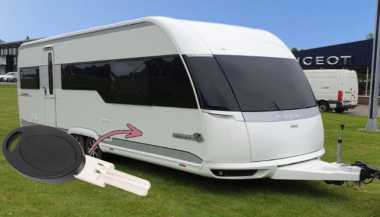
The arrow marks the shoulder: the small stop where the blade meets the head. That is the spot you file, nothing else.
Compare against your old key. If you still have it, line the two up. If the new shoulder sits further forward, that extra length is what's stopping it seating.
File the shoulder a little at a time. Using a fine flat file, take the shoulder back with a few light strokes only. Keep the face square — don't round it off.
Test after every few strokes. Insert the key and try it. Repeat in small increments until the key enters fully and the wafers line up.
Stop the moment it turns. As soon as the key seats and turns cleanly, stop filing. Lightly deburr any rough edge on the blade tip if it snags going in.
Filing can't be undone, so go slowly. You can't put metal back. Take off too much and the key sits too deep, the cuts miss the other way, and the key is ruined for good. Two or three strokes, test, repeat — slow is fast here. Not comfortable with a file? Any locksmith does this fitting in a couple of minutes, or contact the seller before you start.
Still not working? Contact the seller
If you've confirmed the code, cleaned the lock, and eased the shoulder back and the key still won't enter or turn, stop there. Don't keep forcing it, and don't keep filing past the point where the shoulder matches your old key. At that stage the cut itself needs checking against the code, and that's the seller's job, not yours.
Don't force it. A key jammed under pressure can snap off in the barrel, and then you're paying for an extractor or a locksmith before any key can go in. Stopping early costs nothing.
Send the seller three things: sharp photos of both sides of the new key, a photo of the lock face with the code readable, and your order number. That's enough to check the cut against the code. A genuinely miscut key is on the seller to replace. If your key came from us, send those photos through our contact page and we'll check the cut and sort it out.
Frequently asked questions
Is it normal for a brand-new Westfalia key to need adjusting?
Yes. Aftermarket blanks sometimes carry the shoulder a fraction too far forward, so the key stops just short of seating. Easing the shoulder back is a standard fitting step locksmiths do routinely, not a sign of a bad key.
My new key goes in but won't turn. Is it cut wrong?
Usually not. A lock that has sat unused outside binds on grit and moisture, and the new key gets the blame. Flush the lock generously with WD-40 first, then judge the key in a clean cylinder.
The code on my new key doesn't match the lock. What now?
Don't file or force anything. A wrong-code key can never work in that lock. Photograph both codes and contact the seller so the correct key can be cut to your lock's code.
Does filing the shoulder ruin the key or the return?
Done gradually, no. Easing the shoulder back is the expected fitting adjustment for aftermarket keys. If the key still fails after all three steps, contact the seller with photos; a genuinely miscut key should be replaced.
Does a new Westfalia towbar key need programming?
No. A towbar key is a mechanical key cut to code, with no chip or electronics, so there is no programming involved. It works as soon as it physically fits your lock.
Can a locksmith fit the new key for me?
Yes. Fitting an aftermarket key is a routine two-minute job for any locksmith: they check the seating, ease the shoulder, and deburr the blade. Worth it if you'd rather not use a file yourself.
What should I send the seller if the key still doesn't work?
Sharp photos of both sides of the new key, a photo of the lock face with the code readable, and your order number. That's enough to check the cut against the code and replace the key if it was miscut.
Need a Westfalia Towbar Key Cut to Code?
We cut Westfalia towbar keys to your lock's code and ship them across Europe, ready to use. No programming required.
Browse Our Collection of Westfalia Towbar Keys →_1752144685.jpeg)
 (1)_1736343668.jpg)