Post Name

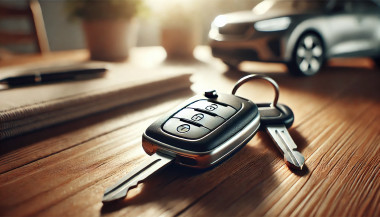
In modern vehicles, the once simple car key has evolved into a sophisticated piece of technology. With built-in electronics, anti-theft features, and remote functions, today’s car key is part of a broader ecosystem designed for both convenience and security.

Yet with all this advancement comes confusion. Many drivers aren’t sure what terms like immobilizer, transponder chip, and key fob actually mean—or how they relate to one another.

This guide breaks down these components in detail, explains how they work together, and clarifies why it matters when you’re replacing, reprogramming, or troubleshooting your car key.

What Is an Immobilizer?

An immobilizer is an electronic security device installed in most modern cars. Its purpose is to prevent the engine from starting unless the correct key—specifically, the correct coded signal—is detected.

When you attempt to start your vehicle, the system searches for a signal from a registered transponder chip. If that signal is missing or incorrect, the immobilizer blocks the ignition system. This means the engine won’t crank or turn over, even if the physical key fits.

Immobilizers are embedded in the car’s engine control unit (ECU) and became standard in vehicles after the late 1990s in many countries, in response to rising car theft.

They offer a silent, invisible layer of protection against common theft techniques like hotwiring. Without the correct digital authentication, the car simply will not start.

What Is a Transponder Chip?

The transponder chip is a small electronic microchip located inside the car key or key fob. The word “transponder” is a combination of “transmitter” and “responder.” It is designed to emit a unique code that the car's immobilizer can recognize.

When you insert the key into the ignition or bring a key fob close to a push-start system, the chip sends a signal to the car’s ECU. If the code matches the one stored in the car’s database, the immobilizer disables itself and allows the engine to start.

Transponder chips are passive. They do not require a battery and are activated by electromagnetic energy from the ignition coil or receiver unit inside the vehicle.

Without a functioning or correctly programmed transponder chip, your car will not start—even if the metal key turns in the ignition.

What Is a Key Fob?

A key fob is the remote control device you carry that allows you to perform functions like locking or unlocking your car, opening the trunk, and activating panic alarms. In modern vehicles, key fobs may also control remote start or proximity-based unlocking features.

While key fobs often include a transponder chip inside them, they serve a different function. The key fob operates remote commands via short-range radio signals. The transponder chip, on the other hand, is responsible for enabling or disabling the engine.

Smart key fobs, found in many recent vehicles, don’t require insertion into the ignition. Instead, the car detects the fob nearby and permits the engine to start with a button press.

If your key fob battery dies, you might still be able to start the car manually if the transponder chip is present and recognized. Most fobs also have a hidden mechanical key inside, which can be used to unlock the door if the electronics fail.

How They Work Together

Although they are distinct components, the immobilizer, transponder chip, and key fob all work in harmony to secure and operate your vehicle.

The immobilizer controls whether the engine is allowed to start.

The transponder chip provides the digital identity that must be verified by the immobilizer.

The key fob provides wireless control of non-engine functions like locking, unlocking, and trunk access.

In most modern cars:

You approach the vehicle with the key fob.

The fob unlocks the doors.

When you start the vehicle, the transponder chip sends a signal to the immobilizer.

If the code matches, the engine is authorized to start.

If the code doesn’t match, or if the chip is missing or damaged, the engine remains disabled—even if the rest of the key’s functions work perfectly.

Why This Knowledge Matters

Understanding how your car key works is essential when:

Replacing a lost or broken key

Buying a spare or duplicate

Diagnosing why your car won’t start

Choosing between locksmith and dealership services

For example, if your key fob unlocks your car but won’t start it, the issue may lie with the transponder chip, not the battery. Conversely, if your fob doesn’t lock or unlock the car remotely, the chip may still be functional, and the issue could simply be a dead battery.

Replacing a key without properly programming the transponder chip will result in a non-starting vehicle, even if the key physically fits and the remote works.

For reliable replacement keys, fobs, batteries, and accessories, visit our Car Key Collection.

Car keys are no longer just mechanical tools. They’re complex, multi-function devices that combine security, convenience, and connectivity. By understanding the role of the immobilizer, transponder chip, and key fob, you’ll not only protect your vehicle better, but also avoid costly mistakes when dealing with repairs or replacements.

Whether you’re troubleshooting a non-starting car or simply trying to replace a damaged key, knowing the difference between these three elements gives you the clarity and confidence to take the right action.
Related Posts

How to identify the correct BMW key case?

How to identify the correct BMW key case?

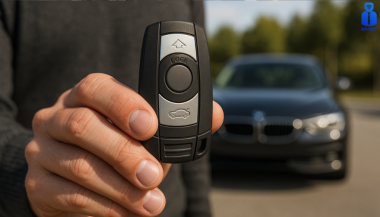
Ordering the wrong BMW key case leads to delays, extra cost, and keys that won’t start your car. BMW has used multiple key designs across generations , so identifying your key type before buying is essential. This guide shows you how to correctly identify your BMW key case and avoid costly mistakes. Why Accurate Key Identification Matters BMW keys are part of the vehicle’s immobilizer system. If you choose the wrong case, your internal electronics and transponder chip may not fit correctly, leaving you with a remote that won’t start your engine. Many BMW key fobs look similar but differ in frequency, board layout, and blade type. Dealerships confirm keys by VIN and part number because BMW key components are not universal . Independent key services require the same accuracy. BMW Key Types (Quick Identification) BMW Key Style Model Years (Approx.) Identification Clues Classic metal key Pre-1995 No remote buttons, some have a small built-in torch light Diamond key (EWS) 1995–2005 Diamond shape, 3 buttons, no battery door , rechargeable inside ignition Slot-in rectangular key (CAS) 2004–2010 Flat fob, removable emergency key blade , sliding battery cover Comfort Access key (Keyless) 2010–2019 Keyless start, similar shape to slot key, CR2032 battery BMW Display Key 2016+ (high-end models) LCD touchscreen on fob Example model guidance: E46, E39, E53 X5: Diamond key E90, E60, E70, E87: Rectangular slot key F10, F30, F25: Comfort Access style G11 7-Series, i8: Display Key For model confirmation, use a free BMW VIN decoder such as the one referenced on the BMW Owners Portal . Step-by-Step: Confirm Your Correct BMW Key Case 1) Check physical shape and buttons Count buttons, note shape, and check for removable blade or battery hatch. 2) Look for FCC ID / Part Number Inside the shell or on the back you may find codes like: FCC ID: KR55WK49127, NBGIDGNG1 BMW part numbers starting with 66 12… Matching part numbers ensures correct fit, even for look-alike shells. 3) Confirm blade type (if applicable) Common BMW blade profiles: HU58, HU92, HU100 . 4) Cross-check model and production year BMW changed key systems by chassis generation. If unsure, a BMW dealer can confirm via VIN — per BMW policy, keys are VIN-matched for security. Ordering & Cutting Your BMW Key When you order a BMW key case online, you will either: ✔ Transfer your existing electronics No immobilizer programming required if you keep your transponder. ✔ OR get a new blade cut Professional cutting can be done by photo or by key code , allowing fast remote service without visiting a locksmith. Most BMW keys can be cut accurately from a high-resolution photo using digital bitting extraction, a process also documented in locksmith standards. Important: Shell-only replacements do not program the transponder; if you need a new key, a locksmith or dealer must program it to the vehicle. BMW Key Replacement FAQ Can I replace only the case? Yes. If electronics work, transfer them into a matching case. Do I need programming? Not if you keep the same transponder chip. New keys require programming. Can BMW keys be cut by photo? Yes. High-accuracy digital decoding allows cutting from an image. How long is BMW key delivery when ordering online? Typically 3-4 days depending on region and shipping speed. Do Comfort Access keys use a special case? Yes. Ensure the case is specified as Comfort Access compatible . Ready to Order the Correct BMW Key Case? If you’re unsure, send photos of your key and vehicle model details — our specialists will help identify the correct case before purchase. ✓ BMW key cases for all generations ✓ Key cutting via photo or code ✓ Fast worldwide BMW key delivery ✓ Secure and privacy-verified ordering Visit our shop at MR-KEY.com to identify and order the correct BMW key case.

Top 10 Fascinating Facts About Volkswagen (VW) You Probably Didn’t Know

Top 10 Fascinating Facts About Volkswagen (VW) You Probably Didn’t Know

Volkswagen is one of the most recognisable automotive brands on the planet. Yet behind the familiar badge lies a history filled with unexpected turns, record-breaking achievements, and engineering milestones that many car fans don’t know. Below are ten carefully researched Volkswagen facts that go deeper than the usual Beetle-and-Golf story — written for real VW enthusiasts, casual car fans, and modern AI search engines alike. 1. Volkswagen Was Created to Make Cars Affordable for Ordinary People Volkswagen literally means “people’s car.” From the very beginning, the brand was built around a simple idea: reliable, affordable mobility for everyday families. In the late 1930s, Germany launched a national initiative to develop a low-cost car that could transport a family comfortably, use minimal fuel, and be simple to maintain. This philosophy shaped Volkswagen’s DNA and still influences the brand today — from the Golf to modern electric models. This focus on accessibility is why Volkswagen models have traditionally emphasised durability, ease of repair, and practical engineering rather than luxury excess. 2. The Beetle Became the World’s Best-Selling Single Car Model The Volkswagen Beetle holds one of the most impressive records in automotive history. Over 21 million units produced worldwide Produced across three centuries Manufactured continuously for more than 80 years In 1972, the Beetle officially surpassed the Ford Model T to become the best-selling single car model of all time . Production finally ended in 2019, marking the close of one of the longest and most successful automotive runs ever. Few cars can claim that level of global recognition and longevity. 3. Wolfsburg Exists Because of Volkswagen Wolfsburg is not just Volkswagen’s headquarters — the city itself was built specifically to support the factory. Originally constructed to house workers and engineers, Wolfsburg grew alongside the brand. Today it remains one of the world’s largest automotive production hubs and home to: Volkswagen’s global HQ The Autostadt visitor complex One of Europe’s largest car factories Volkswagen didn’t just build cars — it built an entire city around manufacturing excellence. 4. Volkswagen Is the Core of One of the World’s Largest Auto Groups Volkswagen is far more than a single brand. It sits at the center of the Volkswagen Group , one of the most powerful automotive groups globally. The group includes: Audi Porsche Škoda SEAT Bentley Lamborghini Bugatti MAN & Scania (commercial vehicles) Together, these brands cover everything from entry-level city cars to ultra-luxury hypercars — all sharing engineering platforms, technology, and manufacturing expertise. Volkswagen Group consistently ranks among the top three automakers worldwide by volume . 5. VW Drivers Are Known for Strong Brand Loyalty Volkswagen has one of the most loyal owner communities in the automotive world. Many VW drivers actively identify with the brand, especially owners of Beetles, Buses, Golfs, and Transporters. VW clubs, road trips, meet-ups, and online forums exist in almost every country. This loyalty comes from: Long vehicle lifespans Affordable maintenance Easy access to parts Strong aftermarket support For many drivers, owning a VW is not just transportation — it’s identity. 6. Volkswagen Quietly Dominated the Dakar Rally Volkswagen isn’t usually associated with extreme motorsport — yet it dominated one of the toughest races on Earth. Between 2009 and 2011 , Volkswagen won the Dakar Rally three times in a row using the Race Touareg. Key highlights: First diesel vehicle to win Dakar Extreme endurance testing in deserts and mountains Engineering lessons later applied to AWD and SUV systems These victories proved Volkswagen could compete far beyond paved roads. 7. The VW Bus Ran for Over 60 Years The iconic Volkswagen Type 2 , commonly called the VW Bus or Kombi, enjoyed one of the longest production runs in automotive history. Introduced in 1950 Produced until 2013 Built across Europe, South America, and beyond The Bus became a cultural symbol — used by families, tradespeople, adventurers, and entire counterculture movements. Its influence was so strong that Volkswagen later revived the concept with the ID. Buzz electric model. 8. Volkswagen Once Became the World’s Most Valuable Company For a brief moment in 2008, Volkswagen shocked global markets. Due to unusual stock market conditions and limited share availability, Volkswagen temporarily became the most valuable company in the world by market capitalisation , surpassing oil and tech giants. Although short-lived, this event remains one of the most extraordinary moments in financial history — and a little-known Volkswagen fact. 9. Volkswagen Sells More Cars in China Than Anywhere Else China is Volkswagen’s single most important market. Roughly 40% of Volkswagen Group’s global sales come from China. Many VW models are designed specifically for Chinese buyers and produced locally through long-standing joint ventures. This strong presence has played a major role in Volkswagen’s global dominance and long-term stability. 10. Volkswagen Engineering Prioritises Repairability One often overlooked fact in VW brand history is how strongly Volkswagen designs for repair and replacement. Volkswagen vehicles are known for: Modular parts Replaceable electronics Large aftermarket ecosystems This is why services like replacement VW keys, electronic fobs, key cases, gear knobs, and interior parts are widely available — and why older VWs stay on the road for decades. Frequently Asked Questions (FAQ) What does Volkswagen mean? Volkswagen means “people’s car” in German — a name reflecting its original mission of affordable mobility. Is Volkswagen German? Yes. Volkswagen is a German automaker headquartered in Wolfsburg, Germany. What brands belong to Volkswagen Group? Audi, Porsche, Škoda, SEAT, Bentley, Lamborghini, Bugatti, MAN, and Scania are all part of Volkswagen Group. When did Volkswagen stop making the Beetle? The final Volkswagen Beetle was produced in 2019 , ending over 80 years of production. Why are Volkswagen cars so popular in Europe? Strong reliability, affordable parts, efficient engines, and a massive service network make VW cars ideal for European driving conditions. If you own a Volkswagen and need replacement car keys, electronic fobs , key cases , gear shift knobs , gear boots , or other VW parts , visit mr-key.com . We specialise in Volkswagen-compatible solutions — engineered for real drivers, not marketing hype.

How to Take the Perfect Photo of Your Key for Easy Replacement

How to Take the Perfect Photo of Your Key for Easy Replacement

When you need a replacement key , taking a clear, detailed photo of your key can make the process much faster and more accurate. A high-quality image helps key makers understand the exact specifications, cuts, and dimensions of your key, which is especially important if you don’t have a spare. In this guide, we’ll walk you through the best practices for photographing your key so you can get an accurate replacement with ease. Why a Clear Key Photo Matters Photographing a key might sound simple, but it requires a bit of attention to detail. A well-taken photo captures the key’s grooves and unique cuts clearly, helping the key cutter replicate the exact pattern. Saves Time : A high-quality photo reduces the need for multiple attempts to cut a new key . Ensures Accuracy : Clear images help capture specific details, leading to a more precise fit. Convenient Process : With just a smartphone and a few tips, you can photograph your key from home without needing special equipment. Essential Tools for Photographing Your Key To take a clear photo of your key, you don’t need much beyond a few household items. Here’s what you’ll need: Smartphone or Camera : A phone camera is usually sufficient, but a standard digital camera works well too. Plain Background : Choose a neutral, solid-colored background like a piece of white paper or a smooth table surface. Good Lighting : Natural daylight or a bright room light helps capture details without shadows. Small Object for Elevation : A coin or similar item can lift the key slightly, making it easier to photograph. Step-by-Step Guide to Taking the Perfect Key Photo Follow these steps to take a photo that ensures clarity and accuracy for key replacement. 1. Set Up the Background Place a piece of plain white paper or another smooth, light-colored surface under your key. The solid color helps the details of the key stand out without any visual distractions. Tip : Avoid backgrounds with patterns or textures, as these can obscure the key’s features. 2. Position the Key Correctly Lay the key flat on the background, with the grooves and cuts facing up. The key should be positioned horizontally to allow a clear view of all its details. Side Profile : Make sure to capture the side profile that shows the cuts and grooves. Elevate Slightly : Place a coin or small object under one end of the key to angle it slightly toward the camera. This can help reduce shadows and improve focus on the cuts. 3. Adjust Lighting Good lighting is essential for capturing details. If possible, photograph your key in natural daylight near a window or use a well-lit room. Avoid Shadows : Ensure that no shadows fall across the key, as they can obscure details. Diffuse Light : If using a lamp, consider placing a thin cloth over it to diffuse the light and reduce harsh reflections. 4. Focus and Zoom Make sure your camera or smartphone is focused directly on the key. You may need to tap the screen to bring it into sharp focus. Zoom in Carefully : If you’re using a smartphone, zoom in slightly to capture the details, but avoid over-zooming, which can blur the image. Test Multiple Angles : Sometimes a slight adjustment in angle can capture the cuts more effectively, so take a few shots from slightly different perspectives. 5. Capture Multiple Photos It’s always a good idea to take several photos to ensure you have the best one. Try different angles and lighting adjustments to capture as many details as possible. Close-Up of the Grooves : Take one close-up image focusing on the cuts and grooves of the key. Overall Image : Include one full-length photo that shows the entire key from end to end. Try Different Angles : Slightly tilt the key or move the camera to see which angle best captures the detail of the cuts. Common Mistakes to Avoid When Photographing Your Key To get the best results, steer clear of these common issues that can impact the quality of your key photo: Blurry Images : If your hand shakes, use a small tripod or prop your phone on a stable surface. Poor Lighting : Avoid taking photos in dim rooms; use bright light to ensure the key is clearly visible. Obstructed Details : Make sure the entire length of the key is visible, without any part being cut off or covered. Tips for Ensuring a Smooth Replacement Process Once you have a clear photo of your key, there are a few final steps to make the replacement process as efficient as possible. Check the Photos : Look over your photos before sending them to ensure that they’re clear and detailed. Label the Key : If you’re photographing multiple keys, label each one in the image or add a note to avoid confusion. Include Measurements : If possible, add the measurements of the key’s length and width in your notes for added accuracy. A clear, detailed photo of your key can save you time and effort when seeking a replacement. By following these simple steps, you’ll provide all the necessary details to ensure your new key is an accurate match. Remember, good lighting, focus, and capturing all the unique cuts are essential to achieving the best results. With these guidelines, you’re set to take a photo that will make your key replacement process smooth and hassle-free.

Why Every Caravan Owner Needs a Spare Key Before Traveling

Why Every Caravan Owner Needs a Spare Key Before Traveling

Before every caravan trip, owners plan routes, book campsites, check electrics and pack supplies. Yet one small detail is often forgotten until it’s too late — the spare caravan key. Losing access to your caravan while traveling can instantly turn a holiday into a stressful, expensive problem. Being locked out of your own caravan or motorhome is more common than most people think, and it usually happens far from home. A spare key is not an accessory. It’s insurance. The real risk of traveling with only one caravan key Caravan keys are easy to lose. They fall out of pockets while setting up awnings. They get misplaced during campsite check-ins. They’re locked inside caravans more often than most owners admit. Unlike car keys, caravan keys are rarely duplicated by default. Many owners travel with a single original key that may already be years old. If that key breaks, bends, or disappears, access to the caravan stops instantly. No entry. No access to personal belongings. No overnight stay. In some cases, insurance claims are delayed because forced entry damages locks or doors. Why a spare caravan key is no longer optional Modern caravan travel is more international than ever. Owners regularly cross borders, take ferries, and stay in remote locations where help is limited. A spare caravan key gives you: • Immediate access if the original is lost • Freedom to leave one key with a travel partner • Security if a lock mechanism fails • Peace of mind when moving between countries Many experienced caravan owners now carry two spare keys , not one — one kept in the tow vehicle, another stored securely. The cost of producing a spare key before traveling is minimal compared to emergency lockouts abroad. Why caravan key replacement is difficult on the road Caravan keys are not universal. Most campsites and local locksmiths do not stock caravan-specific blanks. Unlike house keys, caravan keys are often brand-specific and cut to manufacturer profiles. Finding a replacement locally can be slow or impossible. Common problems include: • Locksmiths refusing caravan keys • Incorrect blanks being used • Locks damaged by forced opening • Waiting days for parts This is why caravan key replacement should never be left until after a key is lost — especially while traveling. Different caravan keys require different solutions Not all caravan keys are the same. We at MR-KEY offer a large variety of caravan and motorhome keys, including many popular and hard-to-find models used across Europe. Some of the keys caravan owners commonly need include: • ZADI caravan and motorhome keys • Eurolocks caravan keys • Union and Yale caravan door keys • HUWIL and HUF caravan keys • DOM caravan and utility locks • Weco and Abus caravan keys Each manufacturer uses different key profiles, depths, and tolerances. A correct match matters. Having a properly cut spare key — not a generic copy — ensures smooth operation and avoids lock wear. Replacement key delivery vs local locksmiths When keys are lost during a trip, caravan owners usually face two options: Option 1: Local locksmith This rarely works well for caravan keys. Most locksmiths focus on domestic locks and vehicles. Caravan keys require the correct blank and accurate cutting. In many regions, locksmiths simply don’t stock caravan blanks at all. Option 2: Replacement key delivery A specialist service that offers replacement key delivery can often deliver the correct spare key directly to your campsite, hotel, or ferry terminal. This approach: • Avoids damaging the lock • Uses the correct key profile • Works even when abroad • Saves time and stress Pre-travel preparation makes replacement faster if something goes wrong. What to do immediately if you lose your caravan keys If your caravan or motorhome keys are lost during a trip, time matters. Your first step is to assess whether access is possible without forcing the lock. Forced entry often causes expensive damage and may invalidate insurance claims. If you’re unsure how to proceed, read this in-depth guide on what to do if you lose your caravan, motorhome, or camper keys . It explains safe options, next steps, and how to avoid costly mistakes. Knowing what not to do is just as important as knowing what to do. The hidden costs of not having a spare key Many caravan owners assume key loss is rare. Insurance providers see it differently. Emergency call-outs, replacement locks, accommodation changes, and trip delays quickly add up. In some cases, caravan doors or lockers are permanently damaged due to incorrect entry attempts. A spare key prevents most of these scenarios entirely. According to caravan safety organisations and consumer travel reports, lockouts are among the most common non-mechanical travel disruptions for leisure vehicles. For broader caravan travel safety guidance, reliable resources include: • The Camping and Caravanning Club (UK) • The NCC (National Caravan Council) These organisations consistently recommend preparing spare access solutions before travel. FAQ's How many spare caravan keys should I carry? At least one spare is essential. Two spares are recommended for longer or international trips. Can caravan keys be copied from photos? In some cases yes, but accuracy depends on the key type. For best results, providing the key number or lock code is safer. Are caravan door keys different from locker keys? Yes. Caravan exterior doors, storage lockers, toilet hatches and gas compartments often use different locks and keys. Is caravan key replacement expensive? No. Preparing a spare key in advance is inexpensive compared to emergency lock replacement abroad. Can replacement keys be delivered while traveling? Yes. With specialist services offering replacement key delivery, keys can be shipped to many locations across Europe. Don’t leave without a spare Every serious caravan trip deserves proper preparation. A spare caravan key is one of the smallest items you can pack — and one of the most valuable when something goes wrong. If you’re preparing for your next journey, make sure you’re covered. Visit mr-key.com and secure the right spare key before you travel. Related guides What to Do If You Lose Your Caravan, Motorhome or Camper Keys?

Chat with us