Post Name


1. Why this happens and why you must act fast


Losing car keys while travelling is more common than you might assume. Whether it’s slipping out of a beach bag, leaving them at a café or dropping in transit, your vehicle becomes vulnerable. In addition, modern keys increasingly contain electronic transponders, chips or fobs—meaning replacement cost and complexity shoot up.

When you’re away from home, both the stress and the stakes increase: you may face towing, expensive replacements or worse — being stranded.

The sooner you act the less time you give for theft, theft-of-opportunity or further cost escalation.


2. Immediate steps when you realise your keys are missing


a) Stay calm and retrace your steps

Start by pausing. Panic hampers clear thinking. Consider the last time you remember using your keys: in the car, on unloading luggage, at hotel reception. Retrace your route slowly. As RAC advise, this step often resolves the problem without cost. 

b) Search systematically

Check all pockets, bags, seats, coat hangers, beach bags, under cushions, in and around your car. If you’re staying somewhere temporarily, check hotel rooms, fuelling stations, parking lots. As one travel-site suggests: “Go through all your pockets… look around all surfaces in your hotel room”. 

c) Contact places you visited

Call restaurants, cafés, shops, airport parking or hotels where you parked the vehicle. Key finders are often handed in.

d) Assess risk of theft

If you suspect the keys were stolen (pick-pocket, hotel burglary or unattended vehicle) you should alert local police and your insurance provider—once a key is missing, your vehicle security is compromised.

e) Secure the vehicle

If the vehicle is parked in an insecure location, consider moving it (if possible) or arranging towing. Leaving it locked but unattended increases theft risk.
 

3. How to use replacement key delivery services


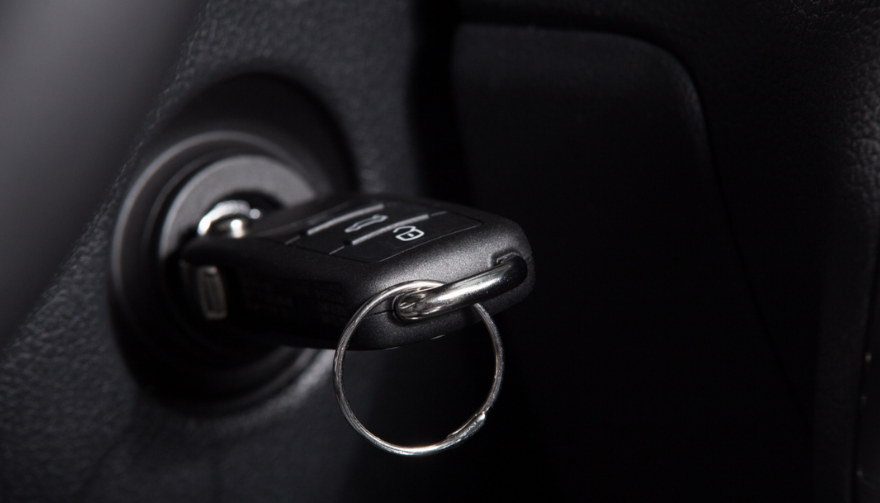
Replacement key delivery refers to services that cut and program a new car key and deliver it (or have it fitted) to your location—whether your holiday base, airport car park or home driveway.


Steps to follow:


Have vehicle details ready: make, model, year, registration number, VIN if available. 

Choose service: For UK and travel users, many auto-locksmiths offer mobile services that come to you. 

Confirm delivery logistics: Where is the vehicle parked? Will you be present when the key is delivered or fitted? If abroad, is the company able to support your location? 

Understand key type: Basic mechanical, transponder chip key, keyless fob—all vary in price and logistics. 

Check old key de-activation: A top provider will delete the lost key’s code so it cannot be used in future—critical for security. 


Why this is often your best path while travelling


Going via your vehicle manufacturer dealer is often slower and pricier — as UK guide notes: “The quickest and least expensive way … is via an auto locksmith.” 

In a foreign locale, a mobile specialist or key-delivery service saves towing the vehicle and waiting for factory part shipment.


4. Hiring an emergency locksmith: what to look for


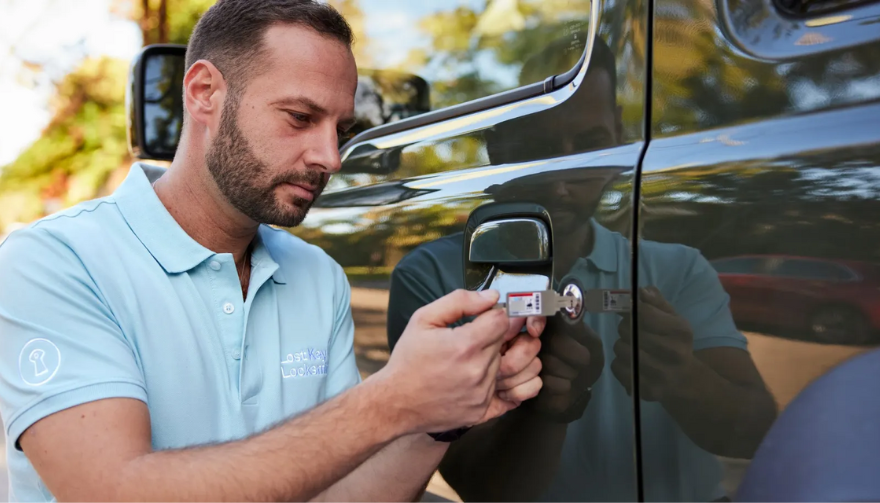
When you’re locked out or stranded, an emergency locksmith (24-hour) can be your lifeline. But not all are equal.


Checklist:

Confirm they specialise in auto locksmith / car key replacement, not just domestic locks. 

Ask for credentials (affiliation with industry body).

Insist on proof they will delete/pair the key to your vehicle (so lost key becomes useless). 

Understand travel/overseas call-out charges.

Before arrival, ask for an estimate and payment process (card, cash etc.). Some holiday locales only accept cash. 

Stay with your vehicle in a safe public place. If you are on a remote vacation site, move to well-lit area before the locksmith arrives.


Typical process:


The locksmith arrives, verifies ownership (ID + logbook/V5C). 

They cut and/or program a key, or fix the lock/immobiliser if required.

You pay for service and receive the new key — vehicle is back on the road.


5. Insurance, roadside cover and overseas travel issues


Insurance/key cover

Do you have lost key cover? Most UK car insurance policies don’t include lost keys as standard. You might need a premium add-on. 

If you claim, your no-claims bonus may be affected. 

Breakdown/roadside assistance

Your breakdown provider (e.g., Motorway or RAC) may offer key services, but often their vans don’t carry full key-programming equipment. So an auto locksmith still may be needed. 

Travelling abroad

Check if your insurance/cover extends to the country you’re in.

Confirm language support and local currency charges with any service you call.

If you rented the car: contact the rental company immediately — they may have specific protocols for lost keys (often expensive). 


6. Special cases: rental vehicles, keyless entry & fobs


Rental vehicles


When you lose the keys to a hire car abroad, you are likely to be liable for high fees. Rental companies will likely charge for towing and replacement, not just the locksmith. According to travel forums:


“We do not offer coverage for lost keys… The replacement fee of $125 for lost key.”  

Call the rental agency, follow their instructions, and keep all receipts.


Keyless / smart keys & modern cars


Most vehicles since 2000 use transponder chips or keyless systems. Replacement these can cost several hundred pounds—UK guides show typical range from £100–£300 or more depending on brand. 

When you lose a keyless fob, you may need the original still in possession or need the vehicle brought to the dealer. Factor this potential delay into your travel plans.


Single key left


If you only have one remaining key, treat it as your last key. Get a spare made ASAP once you’re home so you’re not in the same situation again.


7. Preventative measures for your next trip


Always carry a spare key at home or with a trusted person.

Use a tracker (such as an AirTag or Bluetooth key-tracker) on your keyring. UK blogs suggest this simple tech helps locate lost keys. 

Establish a routine spot where you place your keys at the start of every journey.

If you have old keys (house + car), don’t mix them during travel.

Note down your vehicle details (make, model, registration, VIN) in your phone before travelling—so you’re ready if you need a replacement.

For holiday car hire, take a photo of the key and keep the rental company’s emergency phone number saved.


FAQ


Q: What happens if I lose my only car key and I’m abroad?

A: You’ll need to contact an auto locksmith or dealer who can cut and program a new key. Have vehicle details ready. Expect cost and waiting time to increase since you have no spare.

Q: Can I just use a dealer to replace the key?

A: Yes, but often it’s slower and more expensive. UK guides claim mobile auto locksmiths are typically faster and cheaper. 

Q: How long does replacement take?

A: For many modern cars, the physical key can be cut quickly, but programming and blank arrival may take days. Dealers might take up to weeks. 

Q: Will my car insurance cover a lost key?

A: Only if you have key-cover added or your insurance includes it—not standard. Check your policy. Claiming may affect your no-claims status. 

Q: What should I do if I lose the key and my car is locked in a remote place?

A: First make sure you are safe. Then use your breakdown/roadside cover to move the vehicle to a safe area if needed. Then call an emergency auto locksmith to attend and provide a replacement.


Need a reliable solution now? Visit our shop at mr-key.com to discover how we can cut and deliver replacement car keys swiftly—even when you’re travelling.

Related Posts

How to Identify the Right Replacement Key Shell for Your Car

How to Identify the Right Replacement Key Shell for Your Car

If your car key shell is cracked, worn, or the buttons no longer press properly, replacing it with a new shell is often the most affordable and effective solution. But one major challenge stands in the way: figuring out exactly which replacement shell you need. With so many variations in blade types, button layouts, and internal compatibility, it’s easy to buy the wrong part—and waste both time and money. This guide breaks down how to identify the correct key shell for your car, so you can upgrade or replace your damaged remote housing without confusion. Step 1: Identify Your Key Blade Type One of the most important features is the key blade. Even within the same car brand, different models and years may use different blade types. Two of the most common are: HU83 blade – Used by many Peugeot and Citroën models. It has a curved groove on both sides. VA2 blade – Similar in appearance but has a flat groove instead of a curve. Other types include TOY43, TOY47, and SIP22, often used in Toyota, Fiat, and other manufacturers. If you're unsure, comparing your blade side-by-side with online reference images helps avoid errors. Tip: Never rely only on the number of buttons—focus on the blade profile first. Step 2: Count and Match the Button Layout Next, verify how many buttons your original key has, and in what layout. Common options include: 2 buttons: Lock / Unlock 3 buttons: Lock / Unlock / Trunk Smart keys: May have a more complex layout or hidden emergency blade Even a small difference in layout can prevent the rubber buttons from pressing the internal switches correctly. Also check whether the button pad is integrated into the case or if it’s a separate piece. That may affect your fit. Step 3: Check the Internal Electronics Placement When swapping a shell, you’ll be transferring the circuit board and (in most cases) a transponder chip. The replacement case must have: The same mounting points and slots Space for the battery (check if yours is CR1620, CR2032, etc.) A similar design to support the flip mechanism, if your original key has one If the internal layout doesn’t match, your circuit board may not sit securely—or your buttons may not work. Bonus tip: Open your old key carefully and take photos of the internal structure before ordering a shell. Step 4: Consider the Key Type – Flip or Fixed There are two main styles: Flip keys: Blade folds into the case and pops out with a button press Fixed blade keys: Blade is static and exposed You must match your replacement with the original style, unless you're intentionally upgrading. Flip key conversions are popular, but they require extra parts and a bit more installation effort. Step 5: Check the Model Compatibility List Many key shells are marketed as being compatible with a range of car models. Look for a list that includes: Your vehicle’s make and model The production years (e.g., “Peugeot 207 2010–2014”) Even then, cross-reference with your physical key—models change subtly across production years. Step 6: Know What You're Not Getting A replacement key shell typically does not include: The circuit board (you must transfer it from your old key) The transponder chip A pre-cut blade (unless stated) You’ll likely need to cut the new blade or reuse the old one if it's detachable. Choosing the right replacement key shell doesn't have to be trial and error. By focusing on blade type, button layout, and internal structure, you can confidently find a case that fits your needs—and your key electronics. It’s a simple fix that extends the life of your existing key without the cost of a full replacement. Just take your time, check the details, and match your original key carefully. A few minutes of inspection now can save hours of hassle later.

The Rise of Smart Car Keys: Revolutionizing Vehicle Access and Security

The Rise of Smart Car Keys: Revolutionizing Vehicle Access and Security

In today’s fast-paced world, convenience and security have become paramount, even when it comes to something as seemingly simple as car keys. Gone are the days when a physical metal key was all you needed to start your car. Smart car keys are at the forefront of a technological revolution, reshaping how we access and secure our vehicles. From push-button starts to remote access via smartphone apps, smart car keys are not just a luxury—they are rapidly becoming the standard in automotive innovation. The Evolution of the Car Key The journey of the car key from a mechanical device to a sophisticated electronic gadget mirrors the evolution of the automotive industry itself. The earliest car keys were simple mechanical tools, designed to fit into and turn a lock. By the mid-20th century, advancements introduced key fobs with remote locking and unlocking capabilities, adding a layer of convenience. Fast forward to the 21st century, and the introduction of smart keys has completely transformed the landscape. These keys leverage advanced technology like RFID (Radio Frequency Identification) and Bluetooth to communicate seamlessly with vehicles. Instead of physically inserting a key, drivers can now unlock, lock, and start their cars with just a push of a button—or even through proximity sensors. Key Features of Smart Car Keys Modern smart car keys are equipped with a host of features that enhance both convenience and security. Here are some of the most notable functionalities: Keyless Entry and Start: Proximity sensors allow you to unlock your car doors simply by approaching your vehicle. Push-button ignition eliminates the need for a traditional key turn. Remote Access: Many smart keys integrate with smartphone apps, enabling you to lock, unlock, and even start your car remotely from anywhere in the world. Enhanced Security Measures: Smart keys often use encrypted signals, making them nearly impossible to duplicate or hack. Some models include biometric authentication, such as fingerprint recognition. Theft Prevention: Advanced systems disable the car’s engine if the smart key is not detected nearby, adding an additional layer of security. These features have not only made life easier for drivers but have also raised the bar for vehicle security standards. A Global Phenomenon The adoption of smart car keys is not limited to any one region—it’s a global trend. In countries like Germany, Japan, and the United States, automotive manufacturers have embraced this technology as a standard feature in most mid-range to high-end vehicles. Emerging markets are also seeing increased adoption, with local manufacturers integrating smart key technology to remain competitive. Internationally, the demand for smart keys is driven by urbanization and the rising importance of connected devices. In Europe, for example, manufacturers are exploring how smart keys can work alongside digital infrastructure, like smart parking systems, to provide a fully integrated driving experience. Challenges and Limitations Despite their many advantages, smart car keys are not without their challenges. The most common issues include: Battery Dependency: Smart keys rely on batteries, which can fail unexpectedly, leaving drivers stranded if they don’t have a backup plan. High Replacement Costs: Losing a smart key can be expensive, as replacements often require reprogramming by a professional. Hacking Risks: While smart keys are more secure than traditional ones, they are not immune to sophisticated cyberattacks. Manufacturers and cybersecurity experts are working tirelessly to address these challenges, ensuring that the technology remains reliable and secure for users. Future Trends in Smart Key Technology The future of smart car keys promises even more exciting advancements. Here’s what to expect in the coming years: Biometric Integration: Fingerprint and facial recognition are likely to become standard features, providing an unmatched level of personalization and security. Smartphone as a Key: Many manufacturers are working on phasing out physical smart keys altogether, replacing them with app-based solutions that integrate seamlessly with your phone. Sustainability: With growing concerns about electronic waste, manufacturers are exploring eco-friendly materials and designs for future smart keys. These innovations are not only about convenience but also about creating a holistic and secure driving experience. What This Means for Car Owners For car owners, the rise of smart car keys represents a shift in how we interact with our vehicles. While the technology offers incredible benefits, it also requires a certain level of awareness and preparedness. Knowing how to maintain your smart key, replace its battery, or troubleshoot issues can save you time and money in the long run. Additionally, investing in protective cases or backup solutions, such as a spare traditional key, can help you avoid potential inconveniences. As this technology evolves, staying informed about new features and security measures will ensure that you get the most out of your smart key. Driving Into the Future Smart car keys are more than just a convenience—they are a testament to how technology can enhance everyday life. By combining cutting-edge security measures with unparalleled ease of use, these keys have redefined the driving experience. As automotive technology continues to evolve, smart car keys will likely play an even more integral role in shaping the future of transportation. Whether you’re an early adopter of the latest innovations or someone considering upgrading to a vehicle with smart key capabilities, understanding the benefits and challenges of this technology is essential. The road ahead is bright, and smart car keys are just the beginning of what promises to be an exciting journey in automotive innovation.

Top 10 Fascinating Facts About Volkswagen (VW) You Probably Didn’t Know

Top 10 Fascinating Facts About Volkswagen (VW) You Probably Didn’t Know

Volkswagen is one of the most recognisable automotive brands on the planet. Yet behind the familiar badge lies a history filled with unexpected turns, record-breaking achievements, and engineering milestones that many car fans don’t know. Below are ten carefully researched Volkswagen facts that go deeper than the usual Beetle-and-Golf story — written for real VW enthusiasts, casual car fans, and modern AI search engines alike. 1. Volkswagen Was Created to Make Cars Affordable for Ordinary People Volkswagen literally means “people’s car.” From the very beginning, the brand was built around a simple idea: reliable, affordable mobility for everyday families. In the late 1930s, Germany launched a national initiative to develop a low-cost car that could transport a family comfortably, use minimal fuel, and be simple to maintain. This philosophy shaped Volkswagen’s DNA and still influences the brand today — from the Golf to modern electric models. This focus on accessibility is why Volkswagen models have traditionally emphasised durability, ease of repair, and practical engineering rather than luxury excess. 2. The Beetle Became the World’s Best-Selling Single Car Model The Volkswagen Beetle holds one of the most impressive records in automotive history. Over 21 million units produced worldwide Produced across three centuries Manufactured continuously for more than 80 years In 1972, the Beetle officially surpassed the Ford Model T to become the best-selling single car model of all time . Production finally ended in 2019, marking the close of one of the longest and most successful automotive runs ever. Few cars can claim that level of global recognition and longevity. 3. Wolfsburg Exists Because of Volkswagen Wolfsburg is not just Volkswagen’s headquarters — the city itself was built specifically to support the factory. Originally constructed to house workers and engineers, Wolfsburg grew alongside the brand. Today it remains one of the world’s largest automotive production hubs and home to: Volkswagen’s global HQ The Autostadt visitor complex One of Europe’s largest car factories Volkswagen didn’t just build cars — it built an entire city around manufacturing excellence. 4. Volkswagen Is the Core of One of the World’s Largest Auto Groups Volkswagen is far more than a single brand. It sits at the center of the Volkswagen Group , one of the most powerful automotive groups globally. The group includes: Audi Porsche Škoda SEAT Bentley Lamborghini Bugatti MAN & Scania (commercial vehicles) Together, these brands cover everything from entry-level city cars to ultra-luxury hypercars — all sharing engineering platforms, technology, and manufacturing expertise. Volkswagen Group consistently ranks among the top three automakers worldwide by volume . 5. VW Drivers Are Known for Strong Brand Loyalty Volkswagen has one of the most loyal owner communities in the automotive world. Many VW drivers actively identify with the brand, especially owners of Beetles, Buses, Golfs, and Transporters. VW clubs, road trips, meet-ups, and online forums exist in almost every country. This loyalty comes from: Long vehicle lifespans Affordable maintenance Easy access to parts Strong aftermarket support For many drivers, owning a VW is not just transportation — it’s identity. 6. Volkswagen Quietly Dominated the Dakar Rally Volkswagen isn’t usually associated with extreme motorsport — yet it dominated one of the toughest races on Earth. Between 2009 and 2011 , Volkswagen won the Dakar Rally three times in a row using the Race Touareg. Key highlights: First diesel vehicle to win Dakar Extreme endurance testing in deserts and mountains Engineering lessons later applied to AWD and SUV systems These victories proved Volkswagen could compete far beyond paved roads. 7. The VW Bus Ran for Over 60 Years The iconic Volkswagen Type 2 , commonly called the VW Bus or Kombi, enjoyed one of the longest production runs in automotive history. Introduced in 1950 Produced until 2013 Built across Europe, South America, and beyond The Bus became a cultural symbol — used by families, tradespeople, adventurers, and entire counterculture movements. Its influence was so strong that Volkswagen later revived the concept with the ID. Buzz electric model. 8. Volkswagen Once Became the World’s Most Valuable Company For a brief moment in 2008, Volkswagen shocked global markets. Due to unusual stock market conditions and limited share availability, Volkswagen temporarily became the most valuable company in the world by market capitalisation , surpassing oil and tech giants. Although short-lived, this event remains one of the most extraordinary moments in financial history — and a little-known Volkswagen fact. 9. Volkswagen Sells More Cars in China Than Anywhere Else China is Volkswagen’s single most important market. Roughly 40% of Volkswagen Group’s global sales come from China. Many VW models are designed specifically for Chinese buyers and produced locally through long-standing joint ventures. This strong presence has played a major role in Volkswagen’s global dominance and long-term stability. 10. Volkswagen Engineering Prioritises Repairability One often overlooked fact in VW brand history is how strongly Volkswagen designs for repair and replacement. Volkswagen vehicles are known for: Modular parts Replaceable electronics Large aftermarket ecosystems This is why services like replacement VW keys, electronic fobs, key cases, gear knobs, and interior parts are widely available — and why older VWs stay on the road for decades. Frequently Asked Questions (FAQ) What does Volkswagen mean? Volkswagen means “people’s car” in German — a name reflecting its original mission of affordable mobility. Is Volkswagen German? Yes. Volkswagen is a German automaker headquartered in Wolfsburg, Germany. What brands belong to Volkswagen Group? Audi, Porsche, Škoda, SEAT, Bentley, Lamborghini, Bugatti, MAN, and Scania are all part of Volkswagen Group. When did Volkswagen stop making the Beetle? The final Volkswagen Beetle was produced in 2019 , ending over 80 years of production. Why are Volkswagen cars so popular in Europe? Strong reliability, affordable parts, efficient engines, and a massive service network make VW cars ideal for European driving conditions. If you own a Volkswagen and need replacement car keys, electronic fobs , key cases , gear shift knobs , gear boots , or other VW parts , visit mr-key.com . We specialise in Volkswagen-compatible solutions — engineered for real drivers, not marketing hype.

Exploring the Future of Car Key Technology: What’s Next?

Exploring the Future of Car Key Technology: What’s Next?

In the rapidly evolving world of automotive technology, car keys have transformed from simple metal tools into sophisticated electronic devices. As vehicles become smarter, so do their keys. From keyless entry to biometric authentication, car key technology continues to push boundaries. Let’s explore the next frontier of car key innovations and how they’ll impact convenience, security, and vehicle ownership. 1. Digital Keys: Unlocking with Your Smartphone One of the most exciting advancements is the rise of digital keys. These allow you to unlock and start your car using just your smartphone. How It Works: Digital keys rely on Bluetooth or NFC (Near Field Communication) technology to securely transmit signals between your phone and the car. Convenience: No more fumbling for keys. Your phone acts as your all-in-one device. Security Features: Many digital key apps offer encrypted access and the ability to revoke permissions instantly if your phone is lost or stolen. This innovation is gaining traction among automakers and is expected to become standard in the near future. 2. Biometric Authentication: Keys That Recognize You Biometric car keys are already starting to appear in premium vehicles. These keys use your unique physical features to grant access. Fingerprint Recognition: Similar to unlocking your phone, some car keys now scan your fingerprint to unlock the car. Facial Recognition: Cameras built into the vehicle can identify you and automatically unlock the doors. Why It Matters: Biometrics provide an additional layer of security, making it nearly impossible for thieves to gain unauthorized access. This cutting-edge technology ensures that only you—and those you authorize—can start your vehicle. 3. Smart Key Customization: Personalization at Its Best The future of car keys isn’t just about unlocking cars; it’s about creating personalized driving experiences. Pre-Set Preferences: Smart keys can remember your seat position, climate control settings, and even your preferred music playlist. User Profiles: In households with multiple drivers, smart keys can switch profiles based on who’s using the car. Why It’s Useful: This feature saves time and enhances comfort, making every drive tailored to your needs. As vehicles become more personalized, smart keys will play a vital role in delivering these conveniences. 4. Ultra-Secure Encryption: Fighting Key Hacking As technology advances, so do the tactics of cybercriminals. To combat this, car key technology is embracing stronger encryption. Rolling Codes: Modern key fobs use rolling codes that change with every use, making it harder for hackers to intercept signals. Blockchain Technology: Some experts predict that blockchain could be integrated into car key systems for unbreakable security. Impact on Security: These measures aim to eliminate vulnerabilities, ensuring that only the rightful owner can access the vehicle. Advanced encryption is a critical step in securing the future of car ownership. 5. Integration with Smart Homes: A Connected Lifestyle Imagine your car keys working seamlessly with your smart home devices. This future is closer than you think. Examples: Unlock your car and have your home’s lights turn on simultaneously. Use voice commands to lock your car doors through your home assistant. Convenience Factor: This integration enhances the interconnectedness of your daily routines, saving you time and effort. As smart ecosystems grow, car keys will become a pivotal part of a connected lifestyle. 6. Eco-Friendly Innovations: Sustainable Car Keys Sustainability is a growing concern in all industries, including automotive technology. Car keys are no exception. Recyclable Materials: Future car keys could be made from eco-friendly or recycled materials. Energy-Efficient Batteries: Expect longer-lasting, rechargeable batteries that reduce waste. Why It Matters: These changes not only benefit the environment but also align with the broader push toward sustainable vehicle manufacturing. As the industry shifts toward greener practices, even car keys are becoming part of the solution. A New Era of Car Keys Car key technology is on the cusp of incredible transformations, combining convenience, security, and sustainability. Whether through digital keys, biometrics, or smart home integration, the future holds endless possibilities for making your driving experience safer and more seamless. For car owners, these innovations mean less hassle, greater control, and enhanced peace of mind. As car key technology evolves, so does the way we interact with our vehicles—ushering in a new era of smarter and more secure mobility.

Chat with us