
Post Name

In an age where smartphones can locate us with pinpoint accuracy and lost luggage can be tracked halfway around the world, it’s easy to assume car keys are just as smart. But for many frustrated drivers, losing a car key feels like sending it into a black hole. The lack of a clear way to find them often leads to stress, wasted time, and sometimes costly replacements. So here’s the big question: Do car keys have GPS, and can they be tracked like other smart devices?

This article explains the technology behind key tracking, compares GPS with Bluetooth, and offers practical ways to find lost keys in a connected world.


The Truth About GPS in Car Keys

While GPS technology has become common in many consumer devices, the vast majority of car keys do not include built-in GPS. Even the most modern remote key fobs, which allow for keyless entry and push-button start, generally lack the components necessary for GPS functionality. These components include a satellite GPS receiver, a data transmission module, and a sustainable power source—none of which are typically found in a key fob. The design of a car key prioritizes compactness, cost-efficiency, and low energy usage. Adding GPS would not only increase manufacturing costs but also introduce battery life challenges. That’s why most manufacturers have opted against including GPS tracking in car keys.

GPS requires constant power and data transmission — something a small coin cell battery in a typical key fob can’t support." – Marcus Lee, Automotive Tech Analyst


How Can Car Keys Be Tracked?

Although your keys may not have GPS, there are other technologies that make it possible to track or locate them when they’re lost. These include Bluetooth trackers, crowdsourced networks, and GPS systems that track the vehicle instead of the key itself.

1. Bluetooth Trackers (Apple AirTag, Tile, Chipolo)

These small, attachable gadgets can be added to your keychain and linked to a mobile app. They rely on Bluetooth to provide location data when within a certain range. If your keys are somewhere nearby—like in your home or office—these trackers can play a sound or show you their last known position on a map. The range is generally up to 120 meters (400 feet), and battery life can last up to a year, making them a practical, low-maintenance option for most users.

2. Crowdsourced Networks (Find My, Tile Network)

If your Bluetooth tracker is out of range, some brands offer a smart workaround. Apple’s AirTag, for instance, uses the “Find My” network, which consists of millions of iPhones around the world. If someone with an Apple device passes near your lost keys, the location is anonymously and securely sent to your phone. This creates a global, decentralized tracking system that mimics GPS functionality without requiring satellites or cellular connections.

3. Car GPS Systems (Vehicle Only, Not the Key)

Some high-end cars offer integrated GPS systems, but these track the vehicle, not the keys. Brands like Tesla, BMW, and Mercedes-Benz allow owners to locate their car through mobile apps. If your keys are left inside the car, you may be able to find them by locating the vehicle. However, once the keys are removed, they cannot be tracked unless equipped with a separate Bluetooth tracker.


GPS vs Bluetooth: What’s the Difference?

To better understand why GPS isn’t commonly included in car keys, it’s useful to compare the two technologies:
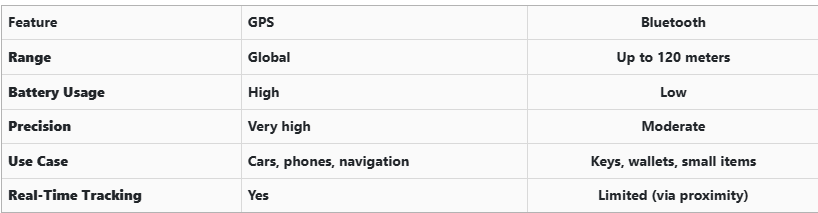
GPS provides global, real-time tracking with high precision, but it’s power-intensive and costly. Bluetooth, while more limited in range, is ideal for small items and short distances, offering a cost-effective solution for everyday use.


Global Perspectives on Key Tracking

Around the world, the adoption of key tracking technologies differs based on privacy laws, tech infrastructure, and consumer behavior. In Japan and South Korea, smart home and car integration are advanced, yet GPS-enabled keys are still not the norm. In many parts of Europe, particularly in countries like Germany, Bluetooth solutions are favored due to strict data privacy regulations. In contrast, the U.S. market has embraced personal tracking devices like Apple AirTag and Tile, making them increasingly common accessories. These differences highlight how technology adoption often reflects broader cultural and legal norms, as well as the balance between convenience and privacy.


Smart Tips to Keep Track of Your Keys

Whether your keys have advanced tech or not, you can take simple steps to avoid losing them. Attaching a Bluetooth tracker is a great first line of defense. Keeping your keys in a consistent, designated place at home reduces the chances of misplacement. Many tracking apps also offer “left behind” alerts, which notify you if you leave your keys behind when moving out of range. It's also smart to keep a spare key somewhere safe and consider going keyless if your next car allows it. Implementing a few of these habits can save you time, frustration, and the cost of replacing a lost key.


The Future of Key Tracking

While car keys may not have built-in GPS, technology continues to evolve with practical alternatives. Bluetooth trackers, supported by app alerts and community networks, already provide effective ways to find lost keys. As innovation progresses, we can expect even more seamless solutions, such as Ultra Wideband (UWB) technology and Internet of Things (IoT) integrations, to become mainstream.

As our tools become smarter, so must the way we use and manage them. With a little foresight and the right accessories, you'll never lose track of your keys again.

Related Posts

Everything You Should Know About Key Fob Battery Life, Leaks, and Temperature Effects

Everything You Should Know About Key Fob Battery Life, Leaks, and Temperature Effects

The convenience of a modern car key fob is hard to overstate — it unlocks doors, starts engines, and sometimes even controls your car remotely. But at the heart of all these features lies a small coin battery, usually a CR2032, that powers your fob’s every function. Like all batteries, it doesn’t last forever, and certain conditions can shorten its lifespan or cause unexpected problems like leaks. In this guide, we’ll explore how long your key fob battery should last, what causes leaks, and how temperature plays a critical role in battery performance. How Long Do Key Fob Batteries Typically Last? Most key fobs use lithium coin batteries like the CR2032. These are designed for small electronic devices and typically last between two to four years, depending on how often you use your fob and how close it stays to your vehicle. Constant use — such as frequent locking and unlocking — can deplete the battery faster. If your smart key remains within range of your car at all times, it may draw more power passively. Another key factor is the quality of the battery. High-grade batteries like those from Panasonic usually last longer and offer more consistent voltage. You’ll know it’s time for a replacement when the fob works only at short distances, you need to press buttons more than once, or the indicator light becomes dim or fails to light up at all. Catching these early signs is important, as a simple battery replacement can prevent unexpected lockouts or costly service calls. Battery Leaks in Key Fobs: Risks and Prevention Though not as common, a leaking battery can be far more destructive than a dead one. Leakage can corrode the internal components of your key fob, sometimes making it unusable. Signs of a leak include white residue inside the battery compartment, visible corrosion on the metal contacts, or a strange smell or dampness near the battery slot. Leaks often occur in batteries that are expired, low-quality, or exposed to extreme heat or moisture. To reduce the risk of leaks, it's a good idea to replace your key fob battery every two years, regardless of performance. Always use reputable brands such as Panasonic CR2032 , and store spare batteries in a cool, dry place. Also avoid mixing new and old batteries, even temporarily. If you notice any signs of leakage, remove the battery promptly and clean the compartment using a cotton swab and isopropyl alcohol. If the corrosion is severe, replacing the key fob casing or consulting a specialist may be necessary. How Temperature Affects Your Key Fob Battery Life Ambient temperature can have a major effect on battery efficiency. In cold conditions, the chemical reactions within a lithium coin battery slow down, resulting in reduced voltage and sluggish or inconsistent performance. A key fob left overnight in freezing temperatures might stop working until it warms up. On the flip side, high temperatures accelerate battery depletion. Leaving your key fob inside a hot car or near a heat source can shorten its lifespan and, in rare cases, even cause the battery to leak. Heat can also warp internal components, especially in compact spaces like key fobs. To protect your battery, avoid exposing your key fob to direct sunlight or intense heat for long periods. Don’t store it in jackets or compartments that get hot in summer, and try to keep a spare battery handy if you live in an area with extreme seasonal swings. Choosing temperature-resistant batteries — like those from Panasonic — adds another layer of protection. Key fob batteries are small but essential parts of modern car ownership. Understanding their typical lifespan, recognizing early signs of failure or leakage, and knowing how temperature affects their performance can help you avoid unpleasant surprises. With a little foresight, you can keep your key fob working smoothly for years. Replace the battery every two to three years, choose high-quality brands, and take precautions during temperature extremes. A few minutes of care now can save you from frustration later.

The Essential Car Parts Guide: Understanding Your Vehicle's Core Components

The Essential Car Parts Guide: Understanding Your Vehicle's Core Components

Unveiling the Anatomy of Your Car Your car is more than just a mode of transportation—it's a complex machine composed of various parts working in harmony to ensure smooth and safe driving. Understanding these essential car parts not only helps you appreciate your vehicle better but also empowers you to identify issues, perform basic maintenance, and communicate effectively with mechanics. In this guide, we’ll explore the key components that keep your car running and why they’re vital for optimal performance. 1. Engine: The Heart of Your Vehicle The engine is the powerhouse of your car, converting fuel into energy to propel the vehicle forward. There are various types of engines, including: Internal Combustion Engines (ICE): Common in most vehicles, using gasoline or diesel. Hybrid Engines: Combining a traditional engine with an electric motor for better efficiency. Electric Motors: Found in EVs, powered by rechargeable batteries. Key components within the engine include pistons, the crankshaft, and the timing belt. Regular maintenance like oil changes and timely inspections are crucial for keeping the engine in good condition. 2. Transmission: Changing Gears Made Easy The transmission system ensures that power from the engine is transferred to the wheels at the correct speed and torque. There are two main types of transmissions: Manual Transmission: Requires the driver to shift gears manually. Automatic Transmission: Shifts gears automatically, providing greater convenience. Proper transmission fluid levels are essential for smooth gear transitions and the longevity of the system. 3. Battery: Your Vehicle's Power Source The car battery supplies the electrical power needed to start the engine and operate various electrical systems, such as lights, wipers, and infotainment. Modern vehicles may also include auxiliary batteries for additional power needs. Maintenance Tip: Regularly check battery terminals for corrosion and ensure proper voltage levels, especially in extreme weather conditions. 4. Braking System: Your Lifeline on the Road The braking system ensures the vehicle slows down or stops when needed, making it a critical safety component. Key parts include: Brake Pads and Rotors: Convert kinetic energy into heat, slowing the car down. Brake Fluid: Transfers force from the brake pedal to the braking mechanism. Regular inspection of the braking system can prevent wear and ensure reliability. 5. Tires and Wheels: Where the Rubber Meets the Road Tires and wheels are vital for traction, handling, and overall vehicle stability. There are various types of tires designed for specific conditions, such as all-season, winter, and performance tires. Maintenance Tip: Regularly check tire pressure, alignment, and tread depth to ensure safe driving and optimal fuel efficiency. 6. Suspension System: Smoothing Out the Ride The suspension system absorbs shocks from uneven road surfaces, ensuring a smooth and stable ride. Key components include: Shock Absorbers: Reduce impact from road irregularities. Struts and Springs: Provide structural support and maintain balance. A well-maintained suspension system enhances comfort and handling. 7. Exhaust System: Keeping Emissions in Check The exhaust system directs harmful gases away from the engine and reduces emissions. Key components include the muffler, catalytic converter, and exhaust pipes. Environmental Note: A faulty exhaust system can increase emissions and negatively impact air quality. Regular checks are essential for compliance with emission standards. 8. Cooling System: Preventing Overheating The cooling system regulates the engine's temperature to prevent overheating. It includes components like the radiator, coolant, and thermostat. Maintenance Tip: Regularly check coolant levels and inspect hoses for leaks to ensure efficient cooling. 9. Fuel System: Delivering Energy to the Engine The fuel system stores and supplies fuel to the engine for combustion. Key parts include the fuel pump, injectors, and fuel tank. Efficiency Tip: Clean fuel injectors and replace the fuel filter as needed to maintain optimal fuel efficiency. 10. Electrical System: Powering Your Vehicle's Features From the headlights to the infotainment system, the electrical system powers numerous features in your car. It includes wiring, alternators, and fuses. Maintenance Tip: Inspect fuses and ensure the alternator is functioning properly to avoid electrical issues. Empowering Yourself Through Knowledge Understanding the essential parts of your car equips you with the knowledge to maintain your vehicle effectively and address issues proactively. By staying informed, you can extend the life of your car, save on repair costs, and ensure a safer driving experience. Whether you’re a car enthusiast or a regular driver, knowing your vehicle’s anatomy is the first step toward smarter car ownership.

How to Tell If Your Car Key Needs a Battery or a Full Replacement

How to Tell If Your Car Key Needs a Battery or a Full Replacement

In an age where technology is at the core of almost every part of a vehicle, car keys are no longer simple pieces of metal. They’ve become compact, electronic tools that combine convenience with security — from remote locking systems to transponder chips and push-start capabilities. However, like any piece of technology, car keys are not immune to wear, damage, or electronic failure. And when they stop working, most drivers are left with one essential question: does my key just need a new battery, or is it time for a full replacement? This article dives deep into that very question. Understanding how to recognize the early signs of battery failure versus a complete key malfunction can save drivers from unnecessary frustration and expensive dealership visits. Whether you're dealing with a FIAT flip key, a HYUNDAI remote, or any modern fob, this guide will help you identify the issue and make an informed decision on what to do next. The Anatomy of a Modern Car Key To understand why a key might stop working, it’s helpful to know what’s actually inside it. Most modern car keys—especially those from brands like FIAT, Hyundai, Kia, Peugeot, or Volkswagen—are composed of several key components. At the core is a small lithium coin battery , typically a CR2032 or CR2025, which powers the key's remote functions. There's also a circuit board that contains the remote buttons and signal transmission systems. Some keys include a transponder chip , a tiny RFID device that communicates with your vehicle’s immobilizer system. Then there's the key blade —mechanical or flip-style—and the outer shell , which holds it all together and includes physical buttons. When something goes wrong, the issue can stem from any one of these components. But most commonly, the culprit is either a drained battery or damage to the internal electronics or casing . Early Warning Signs: Is It Just the Battery? Many car key issues start with subtle signs that most drivers overlook. The key may still work occasionally, or it might only respond when standing close to the car. These are common indicators that the battery is on its way out, but hasn’t failed completely yet. One of the first things a driver might notice is that the range of the remote decreases . You may find yourself needing to stand much closer to the vehicle than usual to lock or unlock it. In some cases, the key might require multiple button presses to get a response. If the key has a small LED light (common in many models), you might see it flicker weakly or stop lighting up altogether. These are signs that the battery still has some life, but it's not providing the power needed for consistent performance. The good news? Replacing the battery is often a quick and inexpensive fix, especially if there are no signs of physical damage or moisture exposure. How Long Does a Key Battery Last? The battery inside your key is designed to last between 2 to 3 years under regular use. Factors like frequent use, temperature changes, or prolonged storage can reduce that lifespan. If your key has never had a battery change and it's approaching that age, a weak battery is the most likely cause of any issues. Changing the battery is a simple task in most cases. Many key fobs can be gently pried open using a flathead screwdriver or a plastic tool. Inside, you’ll find the round battery, which can be swapped out for a new one. Always use a high-quality battery from a trusted brand like Panasonic or Maxell to ensure optimal performance. After inserting a fresh battery, the key should immediately start functioning normally again. If it doesn't, then the issue likely runs deeper. When It’s More Than Just the Battery So what happens if you've replaced the battery and the key still doesn't work? This is when it’s time to look at other possibilities. A complete key failure doesn’t just affect the remote functions—it can also affect the chip, the buttons, or even the mechanical components. For instance, if your car uses a push-to-start system and it no longer recognizes your key after a battery replacement, the issue may lie with the transponder chip . This chip is essential for starting the engine, and if it’s been damaged by a drop or water exposure, the car may not respond at all. Keys that have been exposed to moisture , such as rain or accidental washing, are also at high risk. Even small amounts of water can short out the internal electronics or cause corrosion on the contacts, rendering the key useless. Similarly, keys that have been dropped or stepped on can suffer internal damage even if the outer shell looks fine. Another common reason for total failure is button wear . Over time, the rubber buttons on a key can wear down or detach completely, making it difficult to send a signal to the car—even if the electronics are still working underneath. Shell Damage vs. Internal Failure It's important to distinguish between cosmetic damage and a true functional failure. A key with a cracked or broken shell may still work perfectly well, but using it daily becomes inconvenient—or risky, as it can fall apart further over time. In these cases, replacing only the key shell is often the most cost-effective solution. Shell replacement kits are available for most makes and models, including popular FIAT and Hyundai keys. They allow users to transfer the internal electronics and battery into a new casing, restoring the look and feel of the original key without needing reprogramming or electronic parts. However, if the circuit board inside the key is broken , or the transponder chip is no longer recognized by the vehicle , a complete key replacement will be necessary. This often requires purchasing a new key and having it programmed to your vehicle , either through a locksmith or via dealership-level tools. Identifying the Right Replacement Solution The path forward depends entirely on the root cause of the issue. Here’s how to decide: If your key works intermittently and shows no physical damage, start with a battery replacement . If the buttons are worn or the casing is cracked , but the electronics are fine, consider a shell replacement . If the key doesn’t respond at all , even with a new battery, and has no LED or signal , a full replacement is likely needed. If the mechanical blade is damaged , but the remote still functions, you can often just replace the key blade . Replacing just the parts you need can save time and money. Reliable sellers, like mr-key.com , offer a wide range of high-quality key shells, batteries, blades, and even full replacement keys—including options for programming and compatibility details. When your car key stops working, it’s natural to panic. But in most cases, the fix is far simpler than expected. A weak or dead battery accounts for the majority of key-related issues, and replacing it can restore full function within minutes. However, when the damage goes beyond the battery, identifying whether it’s the shell, chip, or internal electronics at fault will determine whether a full replacement is necessary. Being able to recognize the difference between a temporary battery issue and a deeper hardware failure empowers car owners to take quick, cost-effective action. With the right tools and parts—and a little guidance—almost anyone can resolve a car key issue without visiting a dealership. For a full range of replacement parts, including key shells, blades, batteries, and complete remote keys, visit mr-key.com and explore quality products that help restore your car key to like-new condition.

How Long Does a Car Key Battery Last? Can You Use a CR2025 Instead of a CR2032?

How Long Does a Car Key Battery Last? Can You Use a CR2025 Instead of a CR2032?

When was the last time you thought about the battery inside your car key? For most drivers, the answer is probably never—until the key suddenly stops working. A car key battery is a small but essential part of modern driving. It powers keyless entry, remote locking, and in many cases, keyless ignition systems. When the battery fails, it can leave you locked out of your car or stranded in inconvenient situations. Understanding how long a car key battery typically lasts and knowing when and how to replace it can save you time, money, and unnecessary frustration. In this detailed guide, you will learn how long a typical car key battery lasts, what factors shorten its life, the most common signs that your battery needs replacement, and whether you can substitute a CR2025 for a CR2032 battery in your car key fob. How Long Does a Car Key Battery Last? The average car key battery lasts between two to four years. However, the actual lifespan of your key battery depends on several factors, including how often you use the key, whether your car uses a proximity key system, the type of battery installed, the climate where you live, and the quality of the battery brand. If your car has a keyless entry system or keyless ignition that constantly communicates with your vehicle when nearby, your battery may drain more quickly. Frequent use—such as multiple lock and unlock cycles each day—also leads to faster battery depletion. What Can Shorten the Life of Your Car Key Battery? Frequent Use: Keys that are used many times per day will naturally consume more battery power. Keyless Proximity Systems: Smart keys that communicate continuously with the vehicle tend to use more energy. Extreme Temperatures: Exposure to both heat and cold can degrade battery performance and lifespan. Low-Quality Batteries: Cheap, no-name batteries often have a shorter life and can fail unexpectedly. Many drivers wait for their key to stop working before replacing the battery, but it is recommended to replace it proactively every one to two years to avoid surprise failures, especially before long trips or the winter season. Signs That Your Car Key Battery Is Failing Your car key usually gives warning signs before the battery completely dies. Knowing these symptoms can help you avoid being caught in an inconvenient situation. Reduced Range: You may need to stand closer to your car for the key to work properly. Delayed Response: The car may not immediately lock or unlock when you press the button. Intermittent Operation: Sometimes the key works, sometimes it does not. Dashboard Alerts: Some vehicles display a "low key battery" warning on the dashboard. Complete Failure: If ignored, the key will eventually stop working entirely. If you notice any of these warning signs, it is best to replace the battery immediately to ensure continuous, reliable operation. When Should You Change Your Car Key Battery? The best time to change your car key battery is before it fully fails. Most experts recommend replacing the battery every two years as preventive maintenance. You should also replace the battery immediately if you notice that your key’s range has reduced or if it sometimes stops working without warning. Seasonal changes also play a role. During winter, cold temperatures can reduce battery performance significantly, which is why it is wise to replace your battery before the onset of cold weather. Additionally, if you are planning a long trip or vacation, it is a good idea to install a new battery beforehand to avoid potential inconvenience. Can You Use a CR2025 Instead of a CR2032 Battery in a Car Key? One of the most common questions drivers ask is whether a CR2025 battery can be used as a substitute for a CR2032 in a car key fob. Although the two batteries are similar in many ways, there are critical differences to consider. CR2025 vs. CR2032: What Is the Difference? Both the CR2025 and CR2032 batteries are 3-volt lithium coin cells and have the same diameter of 20 millimeters. However, their thickness and capacity differ. Feature CR2025 CR2032 Diameter 20 mm 20 mm Thickness 2.5 mm 3.2 mm Voltage 3 volts 3 volts Capacity Approximately 150 mAh Approximately 220 mAh The CR2032 is thicker and has a higher energy capacity, meaning it will typically last longer than a CR2025 in the same device. Can a CR2025 Fit in a CR2032 Slot? Technically, a CR2025 can physically fit into a car key fob designed for a CR2032 battery because they have the same diameter. However, because the CR2025 is thinner, it may not make stable contact with the battery terminals inside the key. Some people attempt to compensate for the thinner battery by adding a small piece of paper, cardboard, or aluminum foil to hold it in place. Although this may temporarily restore functionality in an emergency, it is not a reliable or recommended solution for long-term use. Should You Use a CR2025 Instead of a CR2032? The short answer is that using a CR2025 in place of a CR2032 is acceptable as a temporary, emergency solution but is not advisable as a permanent fix. Using the incorrect battery size can lead to poor contact, inconsistent performance, and a much shorter operating life. Risks of Using the Wrong Battery: Unstable contact may cause the key to work intermittently. Lower battery capacity means the key will require more frequent battery replacements. A loose battery inside the fob can shift during handling, potentially damaging the internal components. For long-term reliability and to protect your car key from unnecessary wear, it is always best to use the exact battery size specified for your key fob. Where to Buy the Right Car Key Battery If you are looking for a high-quality CR2032 battery for your car key, Mr Key offers reliable options from trusted brands such as Panasonic. Choosing a premium battery will ensure your key functions properly for as long as possible and reduces the risk of sudden failure. Mr Key also provides a wide range of car key shells, key fobs, and accessories compatible with popular brands like Peugeot, Citroën, Nissan, Suzuki, Fiat, Ford, and more. Whether you need to replace the battery, the shell, or the entire key, Mr Key can help you find the right product at an affordable price. You can browse the full selection in the Mr Key online store and get the parts you need delivered directly to your door. Car key batteries are often forgotten until they stop working, but with proper care and timely replacement, you can avoid the inconvenience of being locked out or dealing with a non-functional key. Understanding how long a car key battery typically lasts and knowing the signs of failure can help you stay ahead of the problem. While a CR2025 battery can sometimes be used in an emergency, the CR2032 is the correct and recommended option for most car key fobs due to its longer life and better fit. Using the right battery size ensures that your key works reliably, protects your key's internal components, and provides peace of mind. Regularly check your key, replace the battery proactively, and always use the correct parts for the best performance. When you need a new battery or key shell, Mr Key is your trusted partner for fast, easy, and affordable car key repairs.

Chat with us