Post Name

In an age where smartphones can locate us with pinpoint accuracy and lost luggage can be tracked halfway around the world, it’s easy to assume car keys are just as smart. But for many frustrated drivers, losing a car key feels like sending it into a black hole. The lack of a clear way to find them often leads to stress, wasted time, and sometimes costly replacements. So here’s the big question: Do car keys have GPS, and can they be tracked like other smart devices?

This article explains the technology behind key tracking, compares GPS with Bluetooth, and offers practical ways to find lost keys in a connected world.


The Truth About GPS in Car Keys

While GPS technology has become common in many consumer devices, the vast majority of car keys do not include built-in GPS. Even the most modern remote key fobs, which allow for keyless entry and push-button start, generally lack the components necessary for GPS functionality. These components include a satellite GPS receiver, a data transmission module, and a sustainable power source—none of which are typically found in a key fob. The design of a car key prioritizes compactness, cost-efficiency, and low energy usage. Adding GPS would not only increase manufacturing costs but also introduce battery life challenges. That’s why most manufacturers have opted against including GPS tracking in car keys.

GPS requires constant power and data transmission — something a small coin cell battery in a typical key fob can’t support." – Marcus Lee, Automotive Tech Analyst


How Can Car Keys Be Tracked?

Although your keys may not have GPS, there are other technologies that make it possible to track or locate them when they’re lost. These include Bluetooth trackers, crowdsourced networks, and GPS systems that track the vehicle instead of the key itself.

1. Bluetooth Trackers (Apple AirTag, Tile, Chipolo)

These small, attachable gadgets can be added to your keychain and linked to a mobile app. They rely on Bluetooth to provide location data when within a certain range. If your keys are somewhere nearby—like in your home or office—these trackers can play a sound or show you their last known position on a map. The range is generally up to 120 meters (400 feet), and battery life can last up to a year, making them a practical, low-maintenance option for most users.

2. Crowdsourced Networks (Find My, Tile Network)

If your Bluetooth tracker is out of range, some brands offer a smart workaround. Apple’s AirTag, for instance, uses the “Find My” network, which consists of millions of iPhones around the world. If someone with an Apple device passes near your lost keys, the location is anonymously and securely sent to your phone. This creates a global, decentralized tracking system that mimics GPS functionality without requiring satellites or cellular connections.

3. Car GPS Systems (Vehicle Only, Not the Key)

Some high-end cars offer integrated GPS systems, but these track the vehicle, not the keys. Brands like Tesla, BMW, and Mercedes-Benz allow owners to locate their car through mobile apps. If your keys are left inside the car, you may be able to find them by locating the vehicle. However, once the keys are removed, they cannot be tracked unless equipped with a separate Bluetooth tracker.


GPS vs Bluetooth: What’s the Difference?

To better understand why GPS isn’t commonly included in car keys, it’s useful to compare the two technologies:
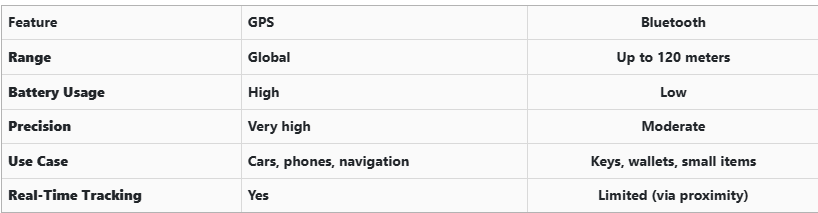
GPS provides global, real-time tracking with high precision, but it’s power-intensive and costly. Bluetooth, while more limited in range, is ideal for small items and short distances, offering a cost-effective solution for everyday use.


Global Perspectives on Key Tracking

Around the world, the adoption of key tracking technologies differs based on privacy laws, tech infrastructure, and consumer behavior. In Japan and South Korea, smart home and car integration are advanced, yet GPS-enabled keys are still not the norm. In many parts of Europe, particularly in countries like Germany, Bluetooth solutions are favored due to strict data privacy regulations. In contrast, the U.S. market has embraced personal tracking devices like Apple AirTag and Tile, making them increasingly common accessories. These differences highlight how technology adoption often reflects broader cultural and legal norms, as well as the balance between convenience and privacy.


Smart Tips to Keep Track of Your Keys

Whether your keys have advanced tech or not, you can take simple steps to avoid losing them. Attaching a Bluetooth tracker is a great first line of defense. Keeping your keys in a consistent, designated place at home reduces the chances of misplacement. Many tracking apps also offer “left behind” alerts, which notify you if you leave your keys behind when moving out of range. It's also smart to keep a spare key somewhere safe and consider going keyless if your next car allows it. Implementing a few of these habits can save you time, frustration, and the cost of replacing a lost key.


The Future of Key Tracking

While car keys may not have built-in GPS, technology continues to evolve with practical alternatives. Bluetooth trackers, supported by app alerts and community networks, already provide effective ways to find lost keys. As innovation progresses, we can expect even more seamless solutions, such as Ultra Wideband (UWB) technology and Internet of Things (IoT) integrations, to become mainstream.

As our tools become smarter, so must the way we use and manage them. With a little foresight and the right accessories, you'll never lose track of your keys again.
Related Posts

KEY COVERS: WHAT DO YOU NEED TO KNOW?

KEY COVERS: WHAT DO YOU NEED TO KNOW?

What is a Key Cover? A key cover , often referred to as a key shell or key case, is the outer part of your key. It houses the electronic board, chip, and battery but excludes the internal electronics themselves. If your key casing is damaged, there’s no need to replace the entire key – just changing the key cover can restore its durability and usability while saving you money. When Do You Need a New Key Cover? You might need a key cover replacement when: The buttons on your key become worn out or stop responding. The outer case cracks, exposing the internal electronics. The key mechanism no longer functions smoothly. You want to refresh the appearance of your key with a new, sturdy shell. Instead of struggling with a faulty key, simply replace the cover and extend the lifespan of your original key! How to Choose the Right Key Cover? When selecting a replacement key cover, consider the following factors: Button Layout: Ensure that the number of buttons and their symbols match your existing key. Blade Shape: If your key includes an integrated blade, make sure the new shell accommodates it correctly. Quality: A good-quality key cover ensures a snug fit, smooth functionality, and long-lasting durability. At MR-KEY , we offer a variety of key covers designed to match your specific car model perfectly, providing both aesthetics and functionality. How to Change Your Key Cover? Replacing your key cover is simple and doesn’t require professional assistance. Here’s how: Purchase a compatible key cover from our website. Open your old key case carefully. Transfer the electronic board and chip from your original key to the new key cover . Reassemble the key, ensuring all components fit securely. Test the buttons and functions to confirm everything is working properly. For step-by-step guidance, we provide video tutorials on our website, showing you exactly how to change your key shell and even replace the battery if needed. What Else Can You Change When Replacing the Key Cover? While changing your key cover, it's the perfect time to: Replace non-functional click buttons on your key’s electronic board. Change the battery since you're already disassembling the key, ensuring it lasts longer. At MR-KEY , we strive to make key replacements easy, affordable, and accessible to everyone. Explore our website to find the perfect key cover, key cutting services, and useful video guides to help you maintain your car key like a pro!

The Ultimate Guide to Car Key Replacement: What You Need to Know

The Ultimate Guide to Car Key Replacement: What You Need to Know

Locked Out? Here’s What to Do Next Imagine this: you’re rushing to an important meeting or trying to get your kids to school, only to discover you’ve lost your car keys or locked them inside your vehicle. Panic sets in, and the inconvenience seems insurmountable. Losing or damaging your car keys is a frustrating, but surprisingly common problem. Luckily, car key replacement services are more advanced and accessible than ever. But where do you start? From understanding key types to navigating costs and services, this guide breaks down everything you need to know about car key replacement. Understanding Car Key Types: The First Step to Replacement Before diving into the replacement process, it’s essential to identify the type of car key you have. The complexity of your key determines the cost and the effort required for replacement. Traditional Mechanical Keys The simplest and most common in older vehicles. Easily duplicated at hardware stores or locksmiths. Transponder Keys Equipped with a microchip that communicates with the car’s ignition system. Offers enhanced security, as the car won’t start without the correct chip signal. Remote Key Fobs Allows remote locking, unlocking, and other functions like opening the trunk. Replacing a lost or damaged fob can be more expensive due to programming needs. Smart Keys Found in modern luxury cars, these keys provide keyless entry and start. Operate via proximity sensors, making them highly convenient but costly to replace. Each key type requires a different replacement approach, so understanding your key’s functionality is crucial. The Replacement Process: What to Expect Replacing a car key can range from a quick, inexpensive fix to a more involved process requiring specialized tools and expertise. Here's a step-by-step overview of what to expect: Determine Your Replacement Options Authorized Dealership : Best for complex keys, but often the most expensive option. Local Locksmith : Typically faster and more affordable for mechanical keys and some transponders. Online Services : Websites offering key duplication or fob replacements can be convenient, though programming may still require a locksmith. Gather Essential Information Vehicle identification number (VIN) and proof of ownership. Details about the key type and car make and model. Programming and Testing Keys with transponders or fobs often require programming to match your car’s system. A professional locksmith or dealership will ensure the new key functions seamlessly. Costs: How Much Should You Expect to Pay? The cost of car key replacement varies significantly based on the key type, service provider, and your location. Here’s a general breakdown: Mechanical Keys : $10–$50 for duplication. Transponder Keys : $75–$200, including programming. Remote Key Fobs : $150–$400, depending on the car make and model. Smart Keys : $250–$600, with luxury models at the higher end. Factors affecting cost include the car's age, whether you need key programming, and the urgency of the service. Always compare prices across locksmiths, dealerships, and online providers for the best deal. A Global Perspective: Trends and Innovations in Car Key Replacement Car key replacement practices vary worldwide, influenced by technology, availability of services, and local regulations. United States and Europe : Locksmiths and dealerships dominate the market, with online platforms gaining traction for basic duplications. Asia : With the rise of smart keys in markets like Japan and South Korea, dealerships often handle replacements due to proprietary technology. Emerging Markets : Mechanical keys are still prevalent, and costs are generally lower, though advanced key systems are increasingly common. Global trends indicate a shift toward digital and biometric key systems, with smartphone-based replacements and app-controlled access gaining popularity. However, these advancements also raise concerns about cybersecurity and hacking. Tips to Avoid Future Key Emergencies While no one can predict when a key might be lost or damaged, a few preventative measures can save you from headaches down the road: Invest in a Spare Key : Having a duplicate ready can save time and money. Use a Key Finder Device : Attach a Bluetooth tracker to your keyring to locate lost keys easily. Protect Smart Keys : Store them in a signal-blocking pouch to prevent relay attacks. Plan Ahead and Stay Prepared Car key replacement might seem daunting, but with the right knowledge and preparation, it’s a manageable process. Understanding your key type, exploring your replacement options, and taking preventative steps can save you time and money. If you’re facing a key emergency, start by identifying your options and gathering the necessary information. And for the future, consider investing in a spare or upgrading to a more secure system. Losing your car keys may be inconvenient, but it doesn’t have to derail your plans. With modern solutions and a little foresight, you’ll be back on the road in no time.

Can a Locksmith Cut a Key from a Photo or Code?

Can a Locksmith Cut a Key from a Photo or Code?

Short answer: yes— for many keys, a locksmith can cut accurately from a photo or a code . The details depend on the key type, the quality of the image/data. Key cutting from code vs from photo By code (most precise). A key code (often printed on locks, key tags, or documentation) translates into a series of cut depths called the bitting . On a code machine, a locksmith dials those depths and cuts a new key without the original present . This is the preferred method for many utility keys (e.g., caravan, retro auto, e-bike battery, furniture, mailboxes, ATVs, roof racks, towbars), but also for car keys. By photo (works in many cases). From a clear, square-on image, a trained technician can decode the cut depths and reproduce the bitting. Research has shown keys can be recreated from ordinary or telephoto shots if the profile and scale are known. This is why publishing close-ups of your keys is discouraged. When a photo is “good enough” If you’re ordering car keys cut by photo or utility keys by photo , expect guidelines like: Flat, well-lit, high-resolution image; key blade perfectly side-on. Ruler/coin in frame for scale; entire blade visible, shoulder to tip. For double-sided/laser keys, shots of both sides. Keyway/profile identification (brand/series). Automotive: cutting from photo or code—plus programming Cutting the blade is only step one for modern cars. Since the late 1990s, most vehicles have immobilisers ; the key’s transponder chip must be recognised or the engine won’t start. In practice: Get the correct blank and cut it (photo or code). Program the transponder/remote (OBD or on-board procedures), or pair a proximity fob. Test mechanical operation and ignition start. Main points UK readers should know: Immobiliser/transponder tech became standard in the mid-1990s; without a programmed chip, a correctly cut key usually won’t start the car. A key code specific to your vehicle lets a locksmith/dealer cut precisely without an original; some guides explain where owners can find it. Utility keys we commonly see cut by code If you have the key code , these are routinely cut accurately online: Retro automobile keys (classic patterns; often stamped codes). Caravan & motorhome key s (e.g., ZADI, FAP/FAWO—codes on barrels). E-bike battery keys (e.g., ABUS/AXA series). Furniture, mailboxes keys (office furniture, cam locks). ATV/quad ignition and compartment keys. Roof racks (e.g., Thule N*** series). Towbars (e.g., Westfalia/Brink code series). For these categories, supplying the printed code (from the lock face, key head, manual, or tag) usually yields the fastest, most reliable result compared to photos. Accuracy expectations & limitations What typically works well Flat cylinder keys with standard depth systems (common utility keys). Many car blades (including laser/sidewinder) if the image is clean and scaled. Keys where the lock/brand series is known and the bitting can be derived . What may be restricted or not feasible from a photo Patented/restricted keyways (require authorised proof and controlled blanks). Highly worn, bent, or obscured keys in photos. Complex security keys that need factory or authorised dealer processes. Car keys where programming tokens, PINs, or security codes are required. For security and consumer protection in the UK, look for MLA-approved locksmiths and insist on identity/ownership checks for sensitive work. Real-world risk: why photos can be enough Academic work and well-reported incidents show that key geometry can be decoded from images at surprising distances. Media have covered expensive lock replacements after keys appeared on camera, underlining the practical risk of sharing key images online. Keep your keys out of frame. What an online order typically requires For car keys (photo or code): Vehicle make/model/year, blade type, and VIN if needed for code retrieval. Clear photos (both sides). Programming method: mobile visit, on-site, or mail-in ECU/fob (varies by model). Expect additional steps for remote locking and proximity systems. For utility keys (cut by code): The code from the lock face or original key (e.g., N123 , Z **). Brand or system (Thule, Zadi, Westfalia, etc.). Quantity and turnaround needs (next-day options often available). Speed and success rates By code : fastest and most consistent for; minimal adjustment needed. By photo : slightly more validation and back-and-forth; still accurate when images meet spec. Why choose an online key cutting service like MR-KEY Unlike traditional emergency locksmiths who mainly handle urgent lockouts, MR-KEY specialises in precision key cutting from photos or codes — ideal when you’re not locked out but need an exact replacement or spare . Through our online platform, you can: Order from anywhere in the UK — simply upload a clear photo or enter your key code. Get fast, expert cutting using professional decoding software and calibrated machines. Receive your key by post , ready to use or, for vehicles, to be programmed locally. With MR-KEY, you save the cost and time of a mobile visit while still getting locksmith-level precision. Each key is verified before dispatch to ensure perfect fitting and reliable operation. FAQs Can a locksmith cut a car key from a photo? Often yes, the blade can be cut from a high-quality photo , but modern cars also need transponder/immobiliser programming before the engine will start. Is cutting by code more accurate than using a photo? For most utility keys , yes . A verified key code maps to exact cut depths, making the process highly repeatable and quick. Can someone copy my key from a social media photo? It’s technically possible; public cases and research have shown keys can be decoded from images . Avoid posting close-ups of keys online. What’s the difference between “key cutting,” “key replacement,” and an “emergency locksmith”? Key cutting : the physical milling of a blade (by code/copy/photo). Key replacement : end-to-end service supplying a working key/fob (cutting + programming if needed). Emergency locksmith : rapid response for lockouts or urgent access/security issues. Order your new key today at mr-key.com — fast, accurate, and cut by professionals from your photo or code.

Simple and Affordable Solutions for Car Key Replacement and Repairs

Simple and Affordable Solutions for Car Key Replacement and Repairs

Misplacing or damaging your car keys can be a major inconvenience, but it doesn't have to be a costly ordeal. As a car owner seeking budget-friendly and efficient solutions, understanding your options is crucial. Here's a comprehensive guide to help you navigate the process of replacing your car keys without breaking the bank. Understanding Your Car Key Type Identifying the specific type of car key you have is the first step toward an effective replacement: Traditional Metal Keys : Simple, non-electronic keys that are easy and inexpensive to duplicate. Transponder Keys : Equipped with a chip that communicates with your vehicle's ignition system for added security. Remote Key Fobs : Allow remote locking and unlocking of your vehicle, often integrated with a transponder chip. Smart Keys : Provide keyless entry and start features, utilizing advanced technology for convenience. Cost-Effective Alternatives to Dealership Key Replacement Dealerships are known for charging premium prices for key replacements. Consider these more affordable options: Professional Locksmiths : Specialize in cutting and programming various types of car keys, often at a fraction of dealership costs. Online Key Retailers : Offer replacement keys and fobs that can be purchased and then programmed either by yourself or a professional. Hardware Stores : Some stores can duplicate traditional metal keys on the spot, providing a quick and inexpensive solution. Steps to Take When You've Lost Your Car Key Losing your car key can be stressful, but following these steps can streamline the replacement process: Verify Your Vehicle Identification Number (VIN) : Locate your VIN, typically found on the dashboard or inside the driver's side door, as it is essential for key replacement. Gather Necessary Documentation : Prepare proof of ownership, such as your vehicle registration and personal identification. Contact a Professional : Reach out to a reputable locksmith or key replacement service with your vehicle details to obtain a new key. Removing a Broken Key from the Ignition or Door Lock A broken key can be a frustrating obstacle. Here's how to address it: Use Needle-Nose Pliers : If a portion of the key is protruding, gently extract it using pliers. Apply Lubricant : Spray a graphite-based lubricant into the lock to ease the removal process. Seek Professional Assistance : If the key fragment is lodged deep or these methods fail, contact a locksmith to prevent further damage. Preventative Measures to Avoid Future Key Issues Keep a Spare Key : Having a duplicate stored safely can save time and money in emergencies. Regular Maintenance : Inspect your keys and locks periodically for signs of wear and address issues promptly. Use Key Protectors : Invest in key covers or cases to minimize physical damage.

Chat with us